An association’s loss ratio is the ratio of claims paid by the insurance company compared to the premiums paid over a period of time. The loss ratio is calculated by taking the amount of loss damage paid, divided by the premium paid to the carrier. An association’s loss ratio is one of the tools underwriters use to analyze an account. Many carriers review up to five years of prior losses and look unfavorably at accounts with a loss ratio higher than about 50%. Some carriers increase premiums to justify insuring an account with a higher loss ratio due to the increased risk the carrier accepts. However, a poor loss ratio could make high-risk insurance the only option. It can also impact an association when negotiating other insurance options and it can increase premiums with an existing carrier.
Let’s look at an example. ABC Association paid $99,500 in premiums over the last five years, and the carrier paid $102,700 in claim damage. The association’s loss ratio is 103% ($102,700 ÷ $99,500 = 103%). For the insurance carrier, this is not sustainable because they will continue to pay more in claims than they collect in premiums.
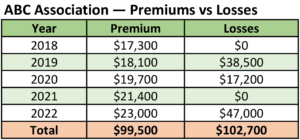
This association had only two, claim-free years in the last five. Due to the unfavorable and negative loss history, the association should consider increasing the deductible to help spread the risk of damage to all owners. Yes, owners take on more of the damage upfront for smaller claims. However, it protects the association’s policy which should be utilized for bigger and more catastrophic claims. Typically, an owner who increases coverage on the HO6 policy pays an additional $50-$100 annually. This amount is much less than if the association’s policy faced insuring in the high-risk market. If the association finds themselves being forced to take insurance in the high-risk market, owners’ dues could go up hundreds of dollars. Overall, it’s a better strategic plan to share the risk of damage and be more accountable for unit maintenance. If the association keeps a low loss ratio, premiums will stabilize in the future.




 The Light Side of Home Security