Small business owners face a constant balancing act: protecting their company while managing tight budgets. The right insurance strategy can make all the difference between staying afloat during a crisis and facing financial ruin.
BOP and workers comp coverage work together to shield your business from the risks that matter most. We at ABI Insurance help small business owners combine these policies into a streamlined protection plan that makes sense for their operations.
What BOP and Workers Compensation Actually Cover
How a Business Owners Policy Protects Your Assets
A Business Owners Policy bundles three essential protections into one: commercial property coverage, general liability, and business income. The property section covers your building and equipment against named perils like fire, theft, and weather damage, while general liability protects you if a customer or third party gets injured on your premises or suffers property damage that your business caused. Business income coverage replaces lost revenue if a covered event forces you to temporarily close, including payroll and ongoing expenses during restoration.
The Hartford reports that small businesses pay an average of about $1,687 annually for a BOP, roughly $141 per month, though costs vary significantly based on your industry, location, and risk profile. You can customize a BOP by adding coverages such as data breach protection, employment practices, or coverage for off-premises utility service interruptions, making it flexible enough to fit different business models.
What Workers Compensation Covers for Your Employees
Workers compensation focuses exclusively on your employees. It covers medical expenses for work-related injuries without limit, replaces lost wages through income benefits, provides disability payments if an employee cannot return to work, and covers funeral costs if a fatality occurs. Most states require this coverage if you have employees; operating without it exposes you to fines and potential criminal charges.
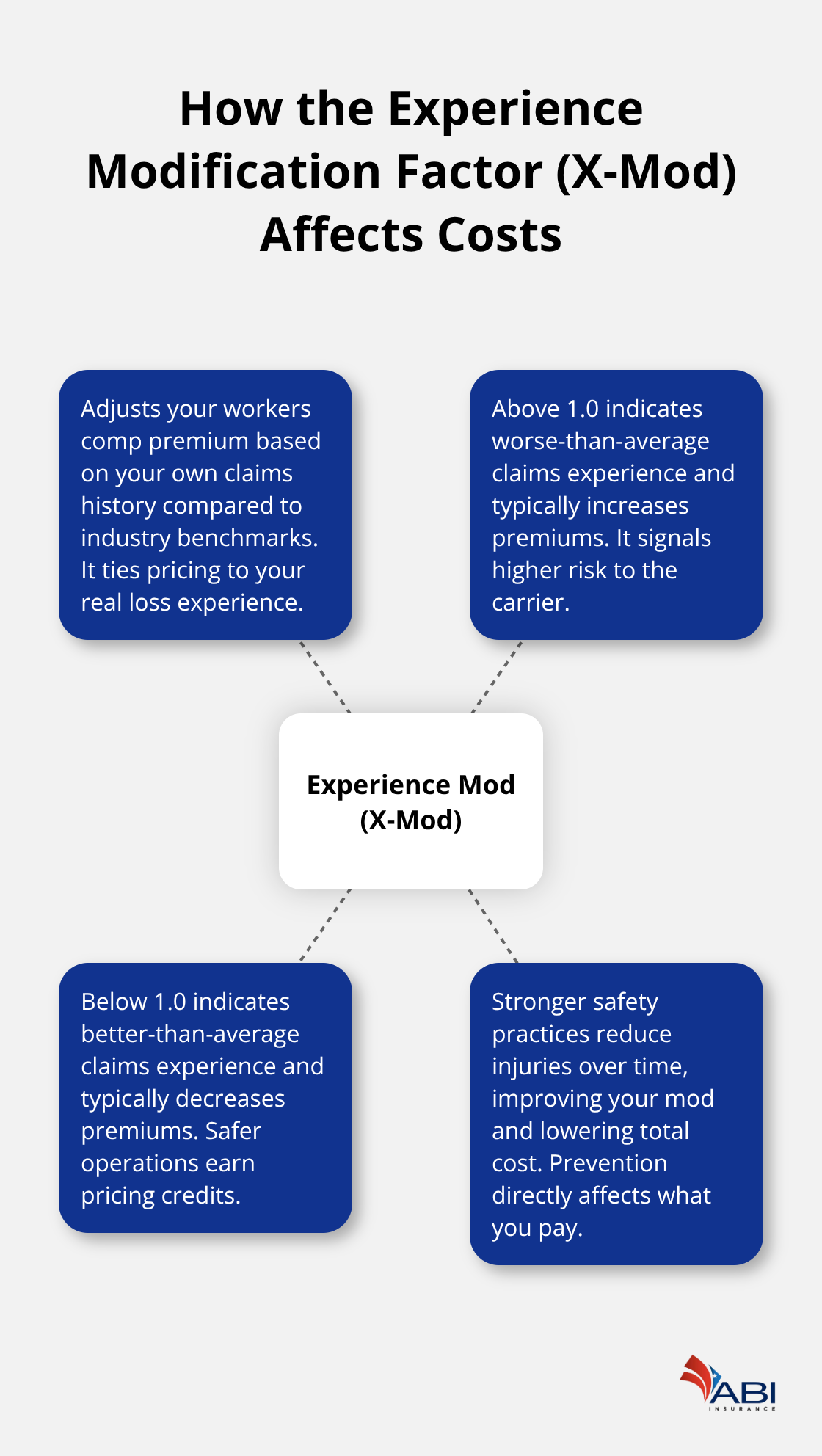
The Experience Modification Factor adjusts your workers comp premium based on your claims history relative to industry benchmarks. A rating above 1.0 means your claims history is worse than the industry average, while a rating below 1.0 means it is better than the industry average. This means your safety practices directly impact your costs.
How These Policies Work Together
These two policies address different liability exposures. A BOP protects your business assets and covers third-party claims; workers comp protects your employees and shields you from most lawsuits related to workplace injuries. When integrated, they eliminate coverage gaps that leave you vulnerable. A customer slips in your office and the BOP handles that claim. An employee injures their back at work, workers comp handles that claim.
Bundling also simplifies administration significantly. Instead of managing separate policies with different renewal dates, claims contacts, and billing cycles, you have one carrier, one renewal process, and typically one point of contact for claims. Bundling can reduce your total premium through multiline discounts (though these vary by state and risk characteristics and are not guaranteed).
The practical benefit is clear: fewer bills, faster claims handling, and easier coverage tracking. With these protections in place, you can focus on what matters — growing your business. The next step is determining which coverage limits and deductibles actually fit your specific situation.
Why Integrated Coverage Matters for Small Business Survival
The Hidden Cost of Fragmented Policies
Separate policies create financial exposure that most small business owners don’t recognize until a claim arrives. When you maintain a BOP with one carrier and workers comp with another, coverage gaps emerge, claim procedures conflict, and one insurer may deny responsibility while the other refuses to pay. A customer injured at your location files suit naming both your business and an employee. Suddenly you manage two separate claims processes with different adjusters, different timelines, and potentially conflicting defense strategies. One insurer argues the injury falls under workers compensation; the other claims it’s a general liability matter. Your legal bills mount while the insurers determine who pays. Integrated coverage eliminates this problem. One carrier, one claims team, and clear responsibility for every scenario means faster resolution and stronger protection for your business.
How Integration Cuts Your Costs
The financial case for integration proves compelling. Small business owners pay roughly $1,687 annually for a BOP alone, but adding workers comp through the same carrier typically costs less than purchasing it separately due to multiline discounts. Carriers compete harder on price and service when they know you consolidate coverage — a fact that drives better pricing and service for bundled accounts.
Streamlined Administration Saves Time and Money
Claims handling accelerates dramatically under one roof. For businesses with tight cash flow, this consolidation reduces administrative overhead significantly. You may manage one renewal date and one billing cycle instead of coordinating across multiple carriers. Your team spends less time on insurance administration and more time running the business, while your premiums stay competitive and your coverage remains seamless across every risk your operation faces.
Choosing the Right Partner Matters
The quality of your integrated coverage depends on selecting a carrier that understands your industry and responds quickly to claims. An independent insurance agency can help you evaluate which carriers offer the strongest combination of BOP and workers comp coverage for your specific business model, ensuring you avoid gaps and unnecessary overlap. The next section walks you through the process of assessing your actual risks and selecting coverage limits that protect your business without overpaying for protection you don’t need.
How to Choose the Right Coverage for Your Business
Start with a complete inventory of what your business owns and what could go wrong. Walk through your physical location and list everything: the building itself, equipment, inventory, furniture, and technology. Then identify your liability exposure by considering who enters your space regularly-customers, vendors, contractors, employees, and what injuries or property damage they could suffer. For a retail shop, customer slip-and-falls dominate your risk. For a service business operating from an office, your exposure looks different. For a manufacturing operation, equipment damage and employee injuries matter most. This inventory becomes your baseline for choosing BOP limits and workers comp coverage.
Small businesses pay an average of $1,767 per year for BOP coverage and typically operate with property limits between $250,000 and $500,000, though your actual needs depend entirely on what you own and what you could lose. An underinsured building means you absorb the loss yourself if damage occurs. Overinsuring means you pay for protection you’ll never use.
Match Deductibles to Your Cash Position
Deductibles range from $500 to $2,500 for most small business BOPs, and this choice matters more than many owners realize. A $500 deductible means higher premiums and lower out-of-pocket costs when claims happen. A $2,500 deductible flips that equation — you pay less monthly but absorb more risk per incident. Choose based on your actual cash reserves and claims history, not on what sounds reasonable.
A business with strong cash flow and few historical claims should try higher deductibles to reduce premiums. A business with tight margins or a pattern of small, frequent claims should lean toward lower deductibles despite higher premiums. For workers comp specifically, deductibles work differently in many states; some states don’t allow deductibles at all, while others permit them only for certain benefits. Your state’s requirements determine your actual options here, so verify with an independent insurance professional what applies to your location.
Align Coverage Limits with Your Actual Assets
The Experience Modification Factor directly reflects your safety practices, so a business with strong loss controls pays significantly less than one with a poor claims history. Document your payroll accurately because workers comp premiums scale directly with total employee compensation. A business with five full-time employees paying $50,000 annually faces a completely different premium than one with ten employees at the same pay rate.
Add Endorsements That Fit Your Industry
Generic coverage limits fail most small businesses. A restaurant needs liquor liability endorsements and spoilage coverage for refrigerated goods. A consulting firm needs professional liability and hired auto coverage if consultants drive clients to meetings. A contractor needs pollution cleanup coverage and hired/non-owned auto liability. These aren’t optional add-ons; they’re gaps in your base BOP that leave you exposed.
Review your contracts with major clients because many require specific liability limits or additional insured status before they’ll work with you. Your lease may demand that your landlord appear as an additional insured on your general liability coverage. Your bank may require proof of property coverage at specific limits before lending. These external requirements drive your actual coverage decisions more than generic recommendations ever should.
Work With an Insurance Professional to Close Gaps
An independent insurance professional familiar with your industry knows which endorsements matter and which ones you can skip. That expertise costs nothing because the agent’s commission comes from the carrier, not from you. An independent agency can help you evaluate which carriers offer the strongest combination of BOP and workers comp coverage for your specific business model, ensuring you avoid gaps and unnecessary overlap.
Final Thoughts
Integrating your BOP and workers comp coverage eliminates the complexity that trips up most small business owners. You get one renewal date, one claims contact, and one carrier managing your most critical risks instead of juggling separate policies with conflicting procedures and coverage gaps. The financial benefit matters too. Bundled policies typically cost less than purchasing them separately, and multiline customers stay with their carriers significantly longer, which means better service and more competitive pricing over time.
Your BOP shields your business assets and handles third-party claims, while workers comp protects your employees and shields you from workplace injury lawsuits. When you integrate these two coverages, they work together seamlessly to cover every scenario your business faces without leaving you exposed to unexpected costs or claim denials. This combination addresses different liability exposures in a way that separate policies simply cannot match.
Contact an independent insurance professional who can review your current coverage and identify gaps in your protection. If you operate in Oregon or the Western U.S., reach out to ABI Insurance to discuss how integrated BOP and workers comp coverage can protect your business while simplifying your insurance administration.








 Condo Owner Risk Management: Proactive Steps to Protect Your Unit