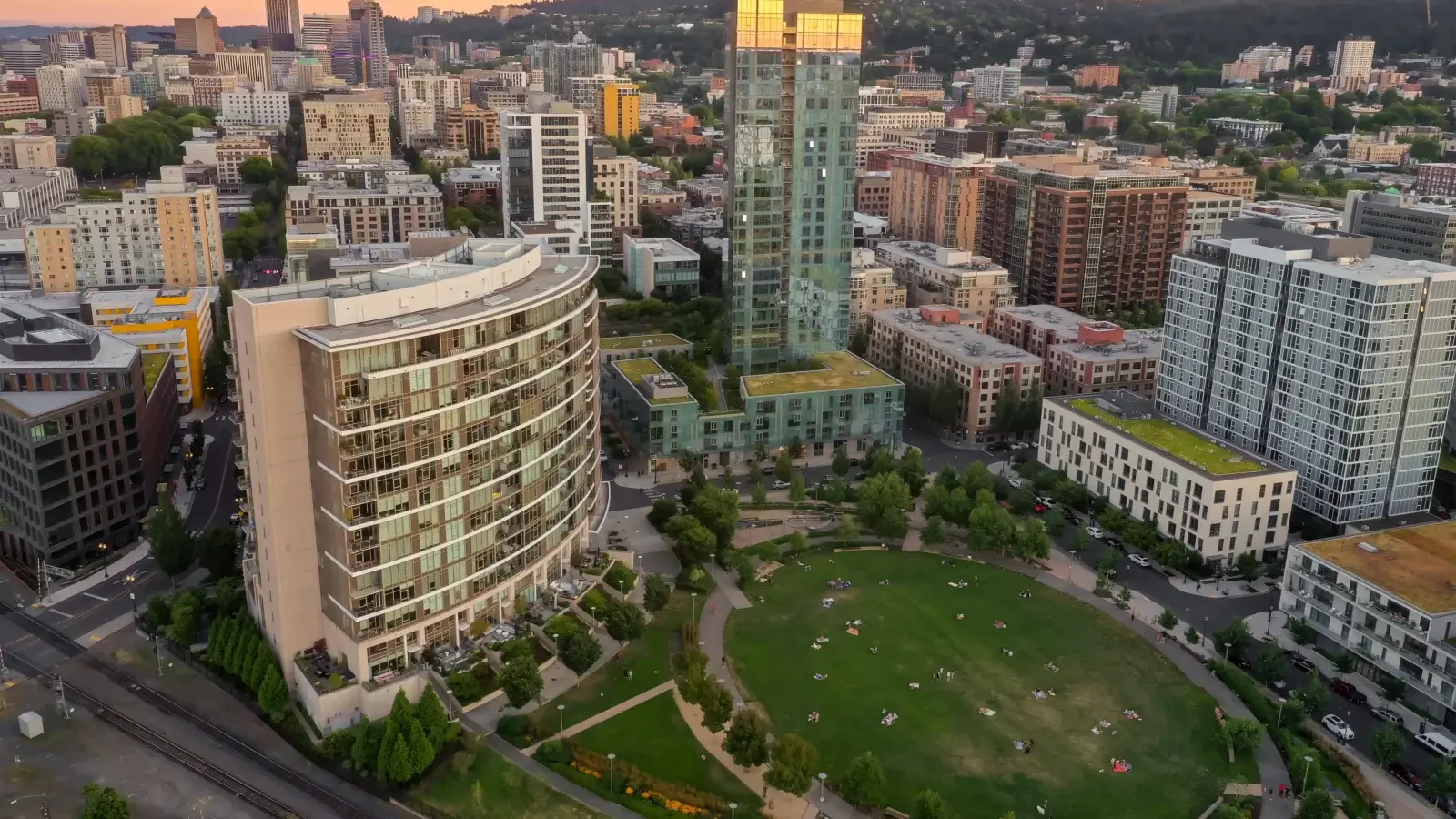
Buying a condo in Portland means navigating a complex set of insurance requirements that many owners overlook. Most condo owners don’t realize their building’s master policy leaves significant gaps in personal protection.
At ABI Insurance, we’ve helped countless Portland residents understand exactly what coverage they need before shopping for policies. This guide walks you through the documentation, coverage limits, and endorsements that protect your investment.
What Your Building Policy Actually Covers
The Master Policy’s Scope and Limits
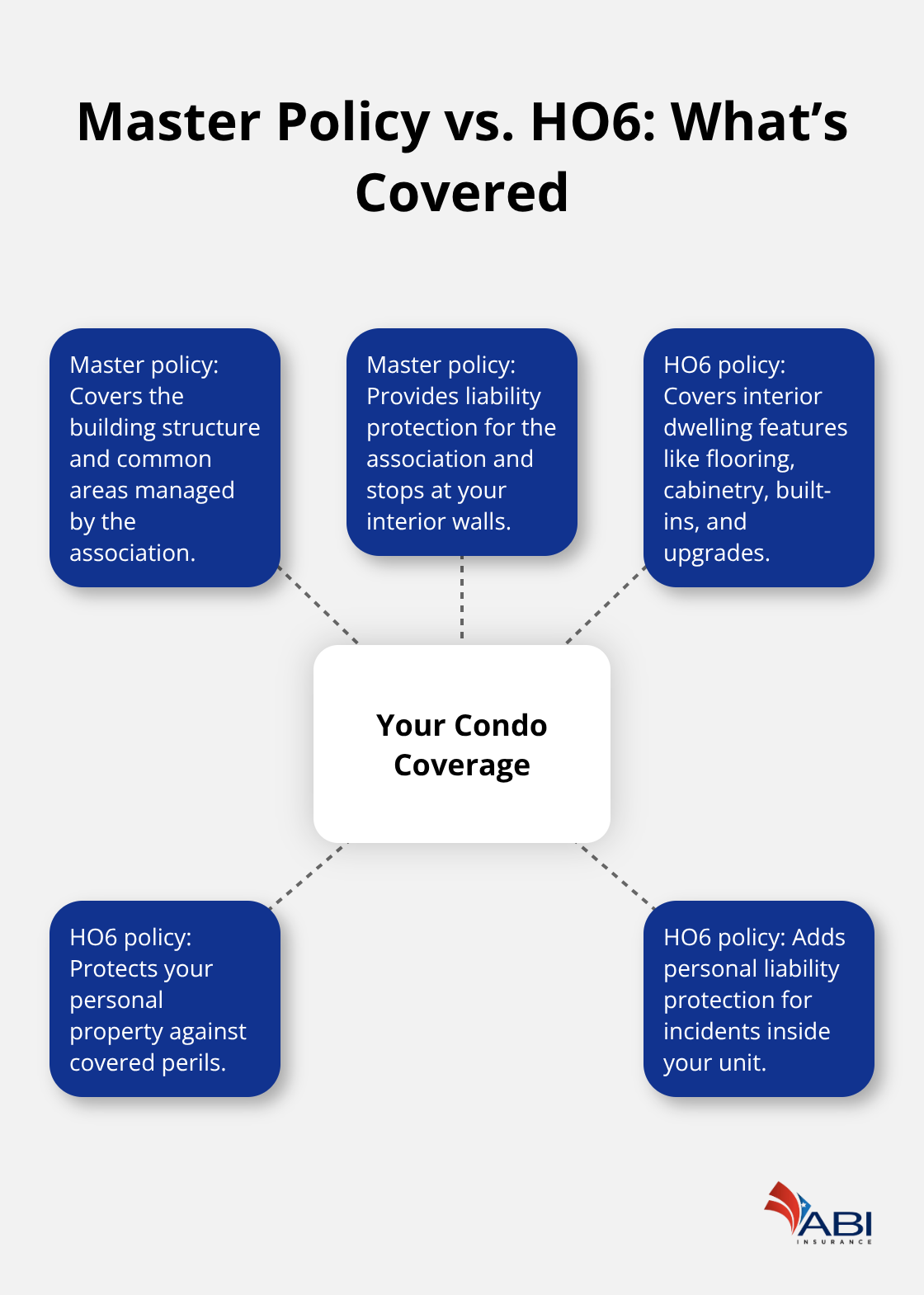
Your condo association’s master policy covers the building structure, common areas, and liability for the association itself. Under Oregon Revised Statute 100.435, associations must maintain property insurance for common elements like hallways, roofs, and exterior walls, plus comprehensive liability coverage. Some master policies stop at your interior walls. Your flooring, cabinetry, installed appliances, and any upgrades or renovations fall outside this protection entirely. An HO6 policy fills this gap by protecting your interior dwelling coverage, personal property, and personal liability. You will need to check your specific bylaws.
Why the Deductible Matters to Your Wallet
The master policy typically carries a deductible of $5,000 or higher, and in many Portland associations, that deductible gets allocated to unit owners. If your building suffers water damage from a burst pipe in the common system, you could face a bill of $5,000 or more if your unit is affected and the association’s policy doesn’t cover the full cost of repairs to your interior. Portland condo owners often discover too late that they’ve underestimated their exposure to these out-of-pocket costs.
Loss Assessment Coverage Protects Against Surprise Bills
Oregon law allows associations to establish loss assessment coverage requirements, which means special assessments for damages exceeding the master policy limits or deductible can be charged to unit owners. Without loss assessment coverage on your HO6 policy, a single catastrophic event could result in an unexpected bill of thousands of dollars. Oregon law also requires condo associations to maintain fidelity bond coverage for anyone with access to association funds, which protects against fraud and embezzlement. This protects the association, not individual unit owners.
Regional Hazards Require Extra Protection
Water damage is particularly relevant in Portland’s older buildings with aging municipal systems, and sewer backup coverage is not included in standard HO6 policies, making it a critical add-on for pre-1970 condos. Earthquake coverage is another Oregon-specific exclusion from standard policies that leaves owners vulnerable, especially given Portland’s proximity to the Cascadia Subduction Zone. These regional risks demand targeted endorsements that most standard policies simply don’t provide.
Gather the Documents That Reveal Your Coverage Gaps
Request your association’s master policy declarations page, the board’s insurance resolution outlining deductible allocation, and the reserve study to understand exactly what gaps exist in your building’s coverage. This documentation tells you precisely what your HO6 needs to cover and what endorsements make sense for your specific unit and location. With these documents in hand, you’ll move into the next phase: organizing your personal records and calculating the coverage limits that actually protect your investment.
Preparing Your Documentation and Financial Records
Gather Proof of Ownership and Mortgage Details
Pull together your deed or closing documents and your current mortgage statement before you contact an agent. Your lender requires a loss payee designation on your HO6 policy, which means the insurer needs to see your mortgage information to process your application. These documents form the foundation of your underwriting file and speed up the quoting process significantly.
Create a Detailed Personal Property Inventory
Build a comprehensive inventory of your belongings with replacement costs, not depreciated values. Standard HO6 policies place sublimits on valuable items like jewelry, guns, art, and electronics. This means you won’t recover full replacement value without scheduling these items separately, if the value is over the sublimit. Photograph each high-value item and document its purchase price and date.
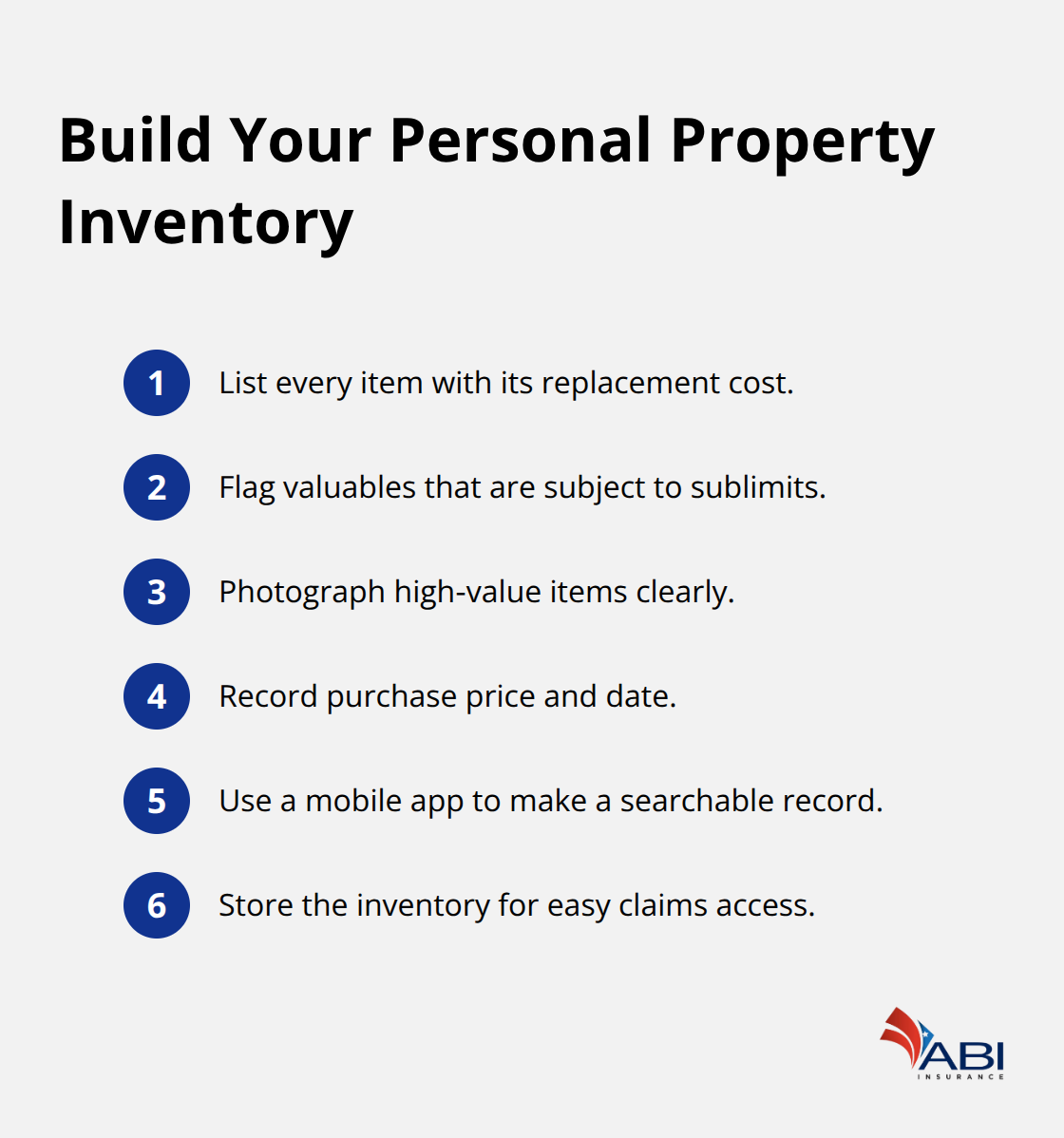
The Oregon Department of Financial Regulation recommends using mobile apps from the Apple App Store or Google Play to build your home inventory, which creates a searchable record you can access during a claim. Most condo owners skip this step and regret it when they file a claim and cannot remember what they owned or what it cost to replace.
Document Renovations and Upgrades to Your Unit
If you’ve made renovations or upgrades to your unit since purchased, gather receipts and photos showing the improvements. These additions increase your unit’s replacement cost and require higher interior dwelling coverage limits. Newer constructions with updated systems typically need interior dwelling coverage around $40,000 to $50,000, while pre-1970 buildings often require $75,000 or more to properly cover renovations and upgrades. Request higher coverage limits or scheduled endorsements to match your actual replacement costs for valuable items.
Organize Financial and Association Records
Lenders and insurers want to see your mortgage statement, proof of homeowners association membership, and confirmation of any recent claims or losses on your property. Request your association’s master policy declarations page, the board’s insurance resolution outlining deductible allocation, and the reserve study to understand exactly what gaps exist in your building’s coverage. This documentation tells you precisely what your HO6 needs to cover and what endorsements make sense for your specific unit and location. Ensure your association’s sprinkler system is maintained and inspected with proper documentation on file.
Prepare for the Underwriting Conversation
Organize these documents in a single folder before contacting agents. With your ownership documents, personal property inventory, renovation receipts, and association records in one place, you’ll move into the next phase: calculating the coverage limits and endorsements that actually protect your investment and address Portland’s specific regional hazards.
Selecting the Right Coverage Limits and Endorsements
Calculate Personal Property Coverage That Matches Your Inventory
Your personal property coverage limit is the single most important decision you’ll make on your HO6 policy, and most Portland condo owners get it wrong by starting with an arbitrary number instead of calculating what their belongings actually cost to replace. Standard HO6 policies typically offer personal property limits between $20,000 and $50,000, but that number means nothing if it doesn’t match your inventory. Take your detailed personal property list from the previous step and add up the replacement costs for furniture, electronics, clothing, artwork, and other belongings. To estimate your home’s replacement cost value, you can multiply your home’s square footage by average building costs per square foot in your area.
If your inventory totals $65,000 in replacement value and your policy only covers $40,000, you’re leaving yourself exposed to a $25,000 gap that you’ll pay out of pocket. Sublimits on jewelry, art, and electronics typically cap at 10 to 15 percent of your personal property limit, which means a $40,000 policy might only cover $4,000 to $6,000 of your jewelry collection. Schedule high-value items separately with your agent to get full replacement coverage at a modest premium increase.
Add Loss Assessment Coverage for Special Assessments
Loss assessment coverage is non-negotiable for Portland condo owners, despite what some agents tell you. This coverage protects you when your association’s master policy deductible or coverage limits fall short and the board charges unit owners a special assessment to cover the gap. A $5,000 deductible on the master policy becomes your problem if water damage from common plumbing affects your unit, or if a fire spreads through the building and repair costs exceed the policy limits.
Without loss assessment coverage, a single incident could cost you $10,000 to $25,000 in surprise assessments. The cost of adding loss assessment coverage to your HO6 is minimal — typically adding only $50 to $100 annually to your premium — making it one of the most cost-effective protections available.
Protect Against Portland’s Regional Hazards
Regional hazards demand specific endorsements that standard HO6 policies exclude entirely. Earthquake coverage is not included in standard policies, and given Portland’s proximity to the Cascadia Subduction Zone, this is a genuine exposure that affects your condo’s resale value and your financial security. Sewer backup coverage is equally critical for pre-1970 Portland buildings with aging municipal systems, where aging infrastructure creates real risk of sewage backing up into your unit during heavy rains.
Water damage from burst pipes inside your unit is typically covered under standard HO6, but standing water from external flooding or sewer backups is explicitly excluded. The cost of adding these endorsements varies, but most Portland condo owners find that earthquake coverage adds $150 or more annually depending on your coverage limit, while sewer backup coverage costs $75 to $150 per year. These are not luxury add-ons for owners, they’re essential protections for anyone living in Portland’s specific geographic and infrastructure environment. Contact a local agent who understands Portland’s building stock and water systems to get accurate quotes on these regional endorsements and align your coverage with your actual exposure.
Final Thoughts
You’ve now gathered the documentation, calculated your coverage limits, and identified the regional endorsements that protect your Portland condo investment. Your HO6 policy must cover interior dwelling improvements, personal property, liability, and loss assessment exposure that the master policy leaves unprotected. Without loss assessment coverage, a single water damage event could trigger a special assessment of $10,000 or more, and without earthquake or sewer backup endorsements, you face Portland’s specific geographic and infrastructure risks. Working with a local Portland agent who understands condo associations, older building stock, and regional hazards makes this process straightforward and ensures your coverage limits match your unit’s actual replacement cost.
At ABI Insurance, we’ve spent more than 40 years helping Portland families navigate the Portland condo insurance requirements that protect their investments. We understand the gaps between master policies and individual unit protection, and we know which endorsements matter most for pre-1970 buildings versus newer construction. We can review your association’s insurance resolution, assess your renovation investments, and build an HO6 policy that addresses your specific exposure.
Your next step is straightforward: contact a local independent agent with condo experience, bring your documentation folder, and get quotes from at least three carriers. Request itemized options so you can see exactly what each policy covers and what gaps remain. When you’re ready to move forward, ABI Insurance can help you find the right coverage for your Portland condo investment.





 Portland Physician Liability Insurance: Tailored Coverage for Clinicians