
Medical malpractice insurance in Portland protects your practice from costly claims and legal battles. Whether you’re a surgeon, diagnostician, or specialist, understanding your coverage options directly impacts your financial security.
At ABI Insurance, we’ve helped Portland healthcare providers navigate policy choices that match their specific risks and budgets. This guide breaks down what’s covered, what drives costs, and how to select the right protection for your practice.
What Your Medical Malpractice Policy Actually Covers
Three Core Areas of Protection
A comprehensive medical malpractice policy protects your practice finances across three distinct areas. Your policy pays for defense costs-attorney fees, expert witness testimony, court filing fees, and investigation expenses-regardless of whether a claim is dropped, settled, or decided by a jury. Defense costs alone can reach six figures before any settlement or judgment is paid.
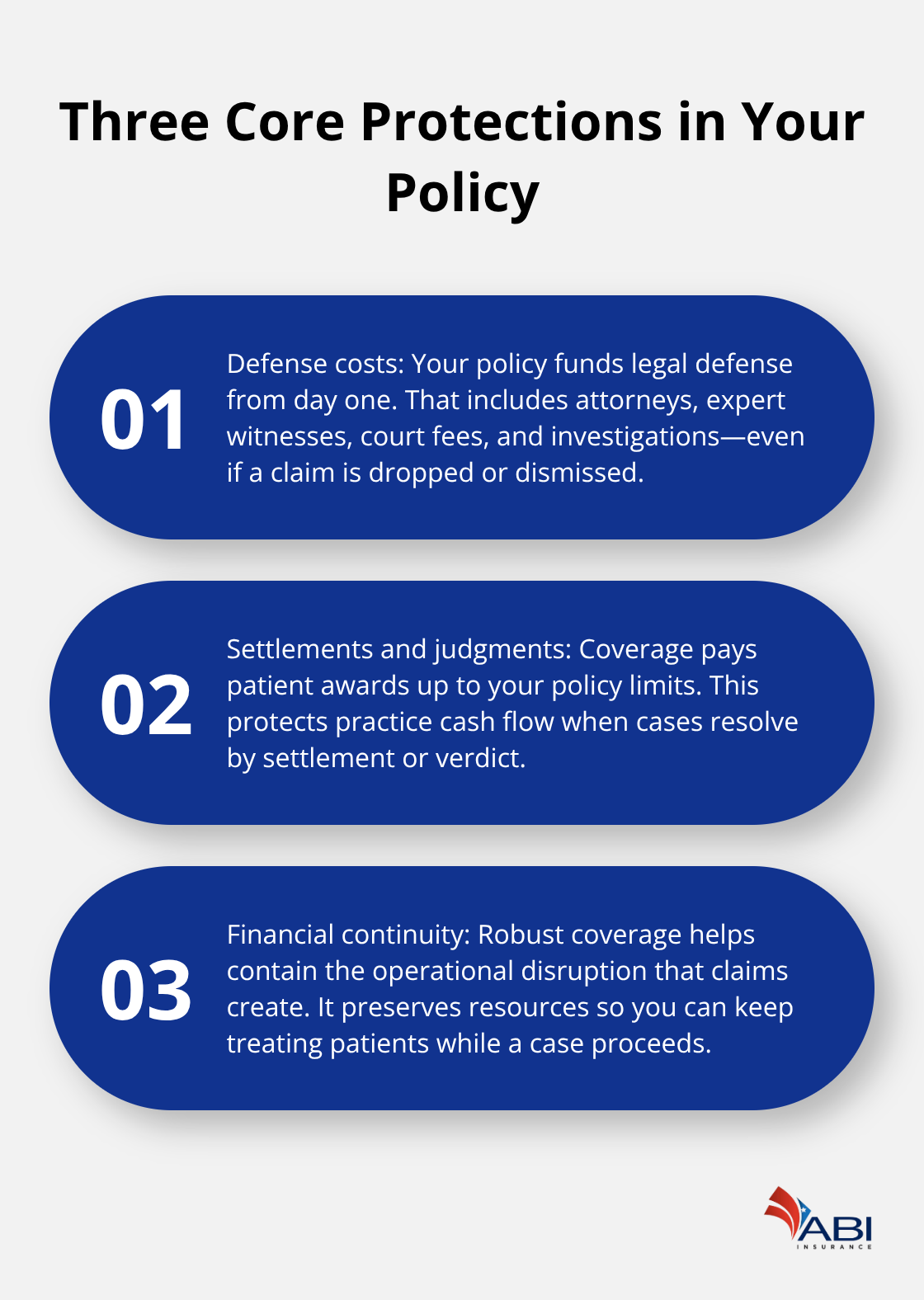
Your policy also covers settlements and judgments awarded to patients, up to your policy limits. In Oregon, there’s no cap on economic and non-economic damages, which means awards can be substantial.
Common Claims Your Coverage Addresses
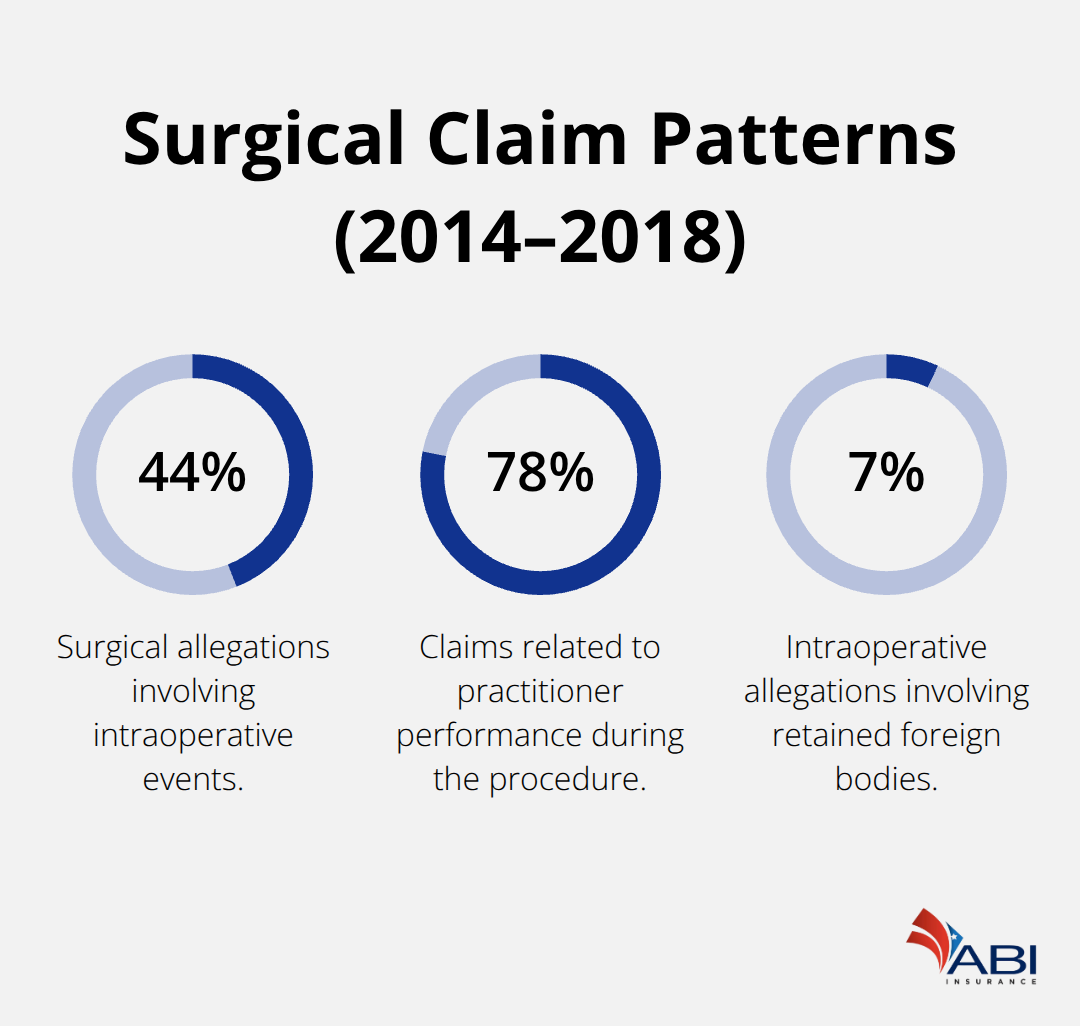
Your policy extends to claims arising from surgical errors, diagnostic mistakes, medication errors, and procedural complications. Coverys’ analysis of closed surgical claims from 2014 to 2018 found that 44 percent of surgical allegations involved intraoperative events, and 78 percent of claims related to practitioner performance during the procedure itself. Retained foreign bodies accounted for roughly 7 percent of intraoperative allegations. These documented patterns underscore why comprehensive coverage matters for your practice.
Claims-Made vs. Occurrence: Understanding the Difference
Claims-made policies cover claims reported during the active policy period, making them cheaper upfront but requiring tail coverage when you leave the practice or retire. Occurrence policies cover incidents that happen during the policy period regardless of when the claim is filed, offering broader protection but costing more annually. In Portland, a general surgeon with claims-made coverage and limits of one million per claim and three million aggregate typically pays around thirty thousand dollars annually, while occurrence coverage may cost more. Oregon’s statute of limitations gives patients two years from discovery to file a malpractice claim, or three years for wrongful death cases, meaning your tail coverage may need to extend years beyond your active practice.
Matching Your Coverage to Facility Requirements
When you evaluate what your policy should cover, confirm it meets any facility requirements for hospital privileges-many Portland-area hospitals require minimum coverage of one million per claim and three million aggregate. Your specific coverage limits should reflect your practice scope and the facilities where you hold privileges. As your practice scope changes, your protection needs change too, so you should review your coverage limits annually to maintain adequate protection.
What Drives Your Malpractice Insurance Costs
Specialty Determines Your Premium
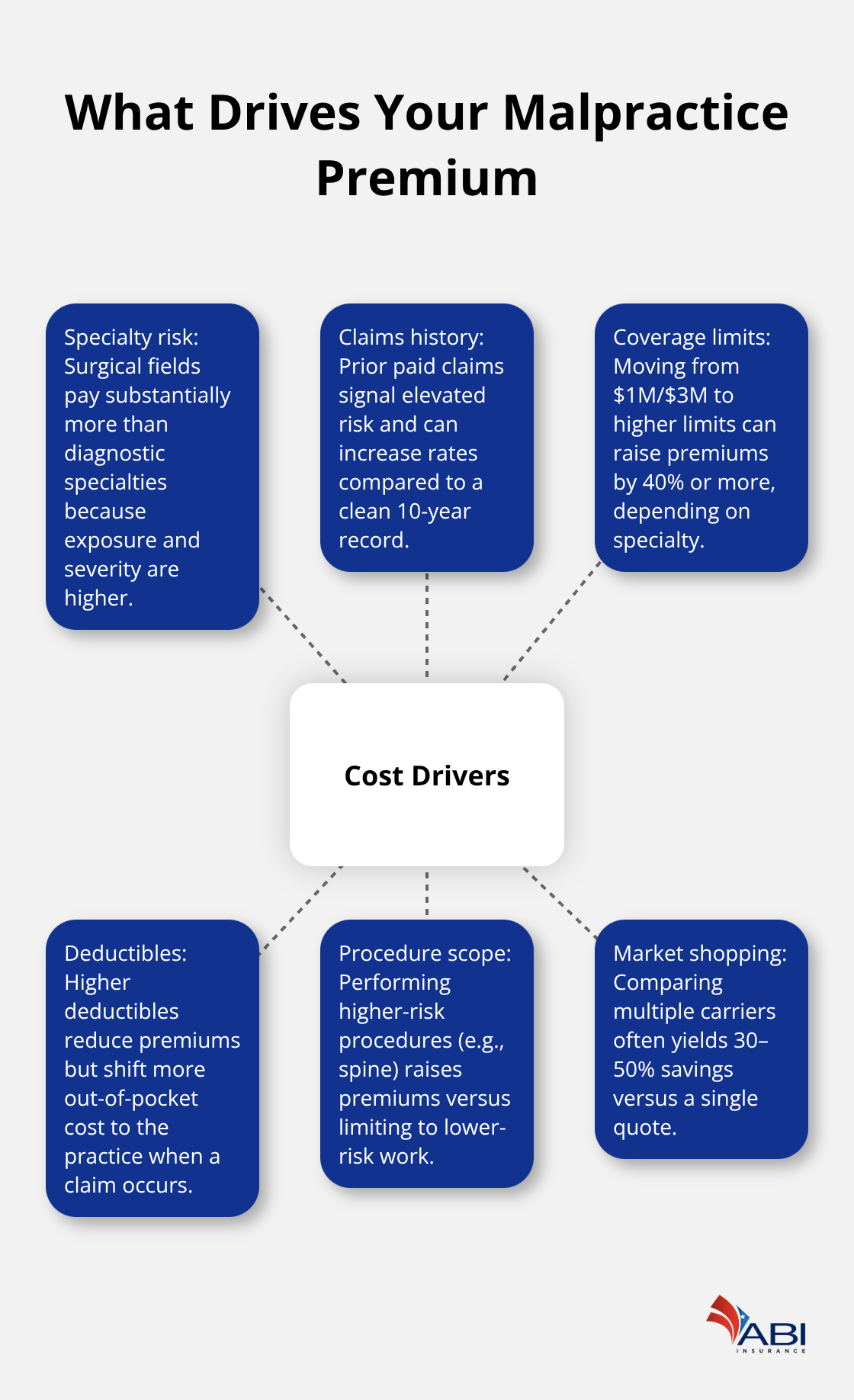
Your specialty determines your premium more than any other factor. A dermatologist performing non-surgical procedures in Portland pays roughly eight thousand dollars annually, while an obstetrician performing major surgery pays around fifty-five thousand dollars per year. General surgeons typically pay thirty thousand dollars annually for standard limits of one million per claim and three million aggregate. The Medscape 2021 Surgeon Malpractice Report found that seventy-seven percent of surgeons reported being named in a lawsuit during their careers, which explains why surgical specialties command the highest premiums.
Emergency medicine practitioners in Oregon face premiums near thirty-one thousand dollars yearly because of the high-volume, high-risk environment where diagnostic errors and procedural complications occur frequently. Your specific procedures matter significantly-a surgeon performing spinal procedures pays substantially more than one limiting practice to general surgery without spine work. When you request coverage quotes, state every procedure you perform explicitly, because underwriters price based on your exact scope.
How Claims History Affects Your Rates
Your claims history shapes your future premiums more than you might expect. Prior paid claims elevate your rates because insurers view claims as evidence of elevated risk. A physician with a clean history over ten years may qualify for preferred rates from carriers like The Doctors Company or Medical Protective, potentially saving twenty to thirty percent compared to someone with a prior claim.
Coverage Limits and Deductibles Impact Cost
Your coverage limits directly impact cost. Jumping from one million per claim to two million per claim increases your annual premium substantially, sometimes by forty percent or more depending on specialty. Higher deductibles lower your premium but shift more financial responsibility onto you when a claim occurs.
Getting the Best Deal on Your Coverage
Selecting a malpractice policy requires more than picking the lowest premium. You need protection that matches your practice scope, financial stability backing your claims, and terms that won’t leave gaps when your circumstances change. In Portland’s competitive market, shopping across multiple carriers consistently yields substantial savings. Brokers accessing quotes from all active insurers in Oregon typically find thirty to fifty percent savings compared to obtaining a single quote directly from a carrier, making the comparison process essential before you renew or purchase initial coverage. The Doctors Company and Medical Protective represent two major carriers offering portability across states and ABI is appointed to both.
Request Quotes That Match Your Exact Practice Scope
Request quotes specifying your exact procedures, patient volume, and facility requirements. Underwriters price based on precise scope definitions, and vague applications often result in higher quotes or coverage gaps. Confirm each quote includes your required coverage limits; most Portland hospitals mandate one million per claim and three million aggregate, but specialty practices and surgical centers may impose higher minimums. When comparing quotes, verify the policy type offered. Claims-made policies cost less initially but require tail coverage when you transition to another carrier or retire, while occurrence policies cost more upfront but eliminate tail requirements at practice end.
Understand Tail Coverage Costs Before Committing
Tail coverage deserves careful attention because it represents a substantial hidden cost for claims-made policies. Tail coverage typically costs around two hundred percent of your annual premium, meaning a thirty-thousand-dollar annual premium results in a sixty-thousand-dollar tail purchase when you leave your practice. The statute of limitations in Oregon allows patients two years from discovery to file claims, or three years for wrongful death cases, so tail coverage should extend at least two to three years beyond your active policy end date. Purchase tail coverage by the last day of your active claims-made policy. Most carriers offer a thirty-day window to buy tail at favorable rates.
Verify Carrier Financial Strength and Service Quality
Verify each carrier’s financial strength using AM Best ratings; only policies from carriers rated A or higher guarantee claims payment stability. Your customer service experience matters significantly because claims management requires responsive communication during stressful periods. When you evaluate carriers, assess their responsiveness to inquiries and their track record handling claims in your specialty. A carrier strong in surgical claims may differ from one focused on diagnostic specialties.
Final Thoughts
Medical malpractice insurance in Portland protects your practice against three financial exposures: defense costs that accumulate regardless of claim outcome, settlements and judgments that can reach hundreds of thousands of dollars, and the operational disruption claims create. Your specialty determines your premium more than any other factor, with surgical fields paying substantially more than diagnostic practices. Shopping across multiple carriers rather than accepting a single quote represents your most impactful decision, as brokers accessing all active insurers in Oregon consistently identify thirty to fifty percent savings.
A local insurance agent understands Portland’s specific facility requirements, regional carrier preferences, and the nuances of claims-made versus occurrence coverage. An agent familiar with your specialty identifies coverage gaps before they become expensive problems and guides you through tail coverage decisions that protect your finances when you transition practices or retire.
We at ABI Insurance have spent over forty years helping Portland healthcare providers navigate these decisions with personalized guidance rather than automated quotes. Contact ABI Insurance for a free quote and expert guidance tailored to your Portland practice.








 Portland Condo Insurance Quotes: Compare, Save, Insure