

Running a fleet in Portland means managing real risks from wet roads to heavy traffic. Vehicle accidents and liability claims can drain your budget fast, and downtime hits your bottom line hard.
We at ABI Insurance know that local business auto coverage isn’t optional for companies like yours. The right protection keeps your operations moving and your finances stable.
Why Fleet Protection Matters for Portland Businesses
The True Cost of a Single Accident
A single accident involving one of your vehicles costs far more than most Portland business owners anticipate. Medical bills for injured parties routinely exceed $100,000, and liability judgments in Oregon reach into the hundreds of thousands. If your driver causes the accident and your commercial auto policy lacks sufficient coverage or doesn’t exist, your personal assets face direct liability. Oregon law mandates commercial auto policies for vehicles used in business, yet many small fleet operators either skip coverage or carry only the state minimum liability limits of $25,000 per person and $50,000 per accident in bodily injury coverage. These minimums sound adequate until you face a multi-vehicle collision on I-5 near Portland. A single injured passenger with ongoing medical needs and lost wages exhausts the state minimum in weeks.
Operational Disruption Hits Harder Than You Think
Beyond the immediate financial impact, a serious accident can keep your vehicle out of service for weeks or months. Your deliveries halt, service calls stop, and client visits disappear. Your team sits idle while customers find competitors and contracts slip away. The operational disruption often costs more than the insurance claim itself. Downtime compounds losses across your entire operation, affecting cash flow and client relationships you’ve spent years building.
Portland’s Specific Risk Factors
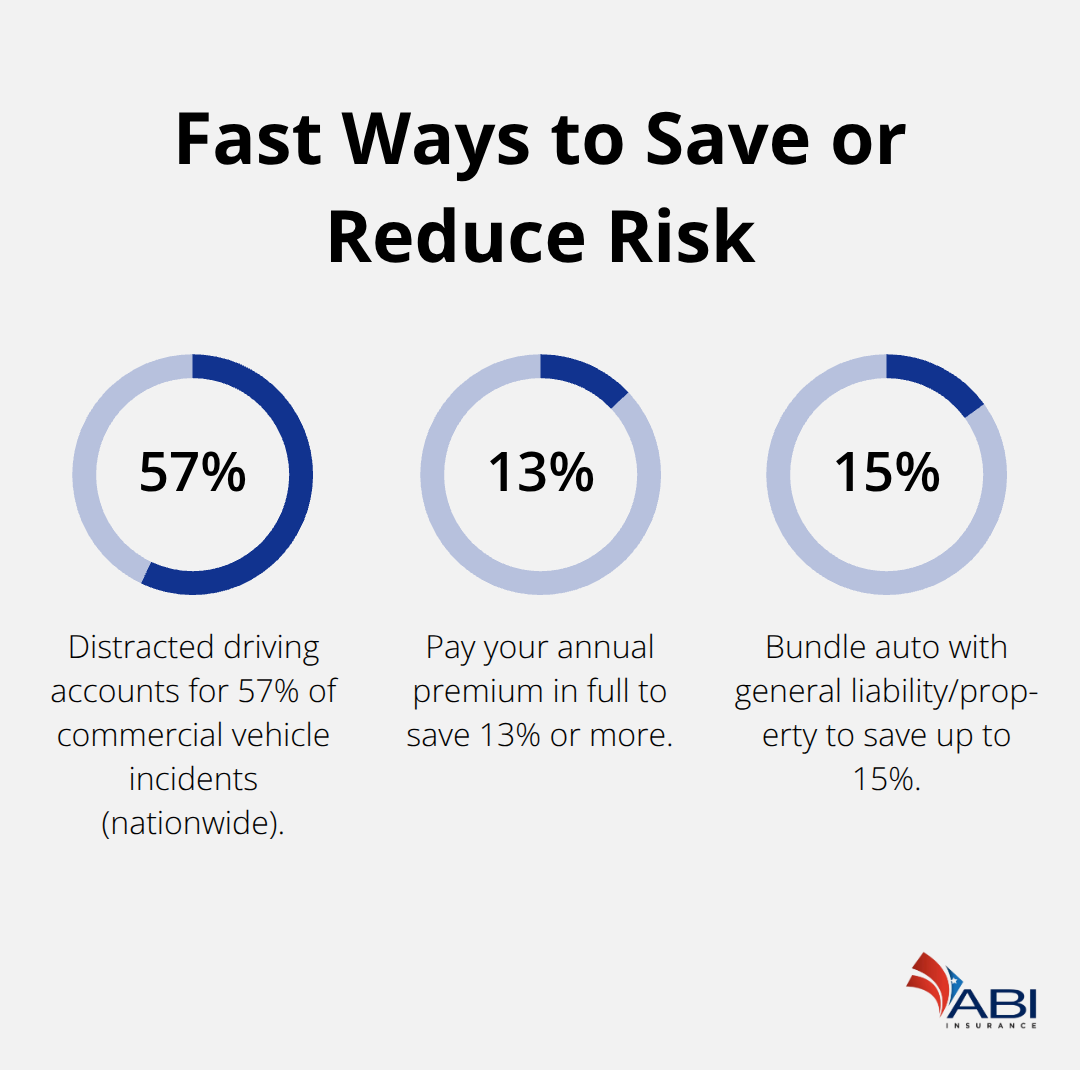
Portland’s conditions amplify fleet risks significantly. The region experiences consistent rainfall from October through May, creating wet roads that increase accident frequency compared to drier climates. Distracted driving accounts for 57 percent of commercial vehicle incidents nationwide, and Portland’s congested corridors around downtown, the Pearl District, and major business parks concentrate this risk further. Winter weather occasionally brings ice and snow, particularly on routes heading east toward the Cascades. If your fleet handles deliveries or service work across multiple Portland neighborhoods and outlying areas, your drivers navigate variable traffic densities and road conditions daily.
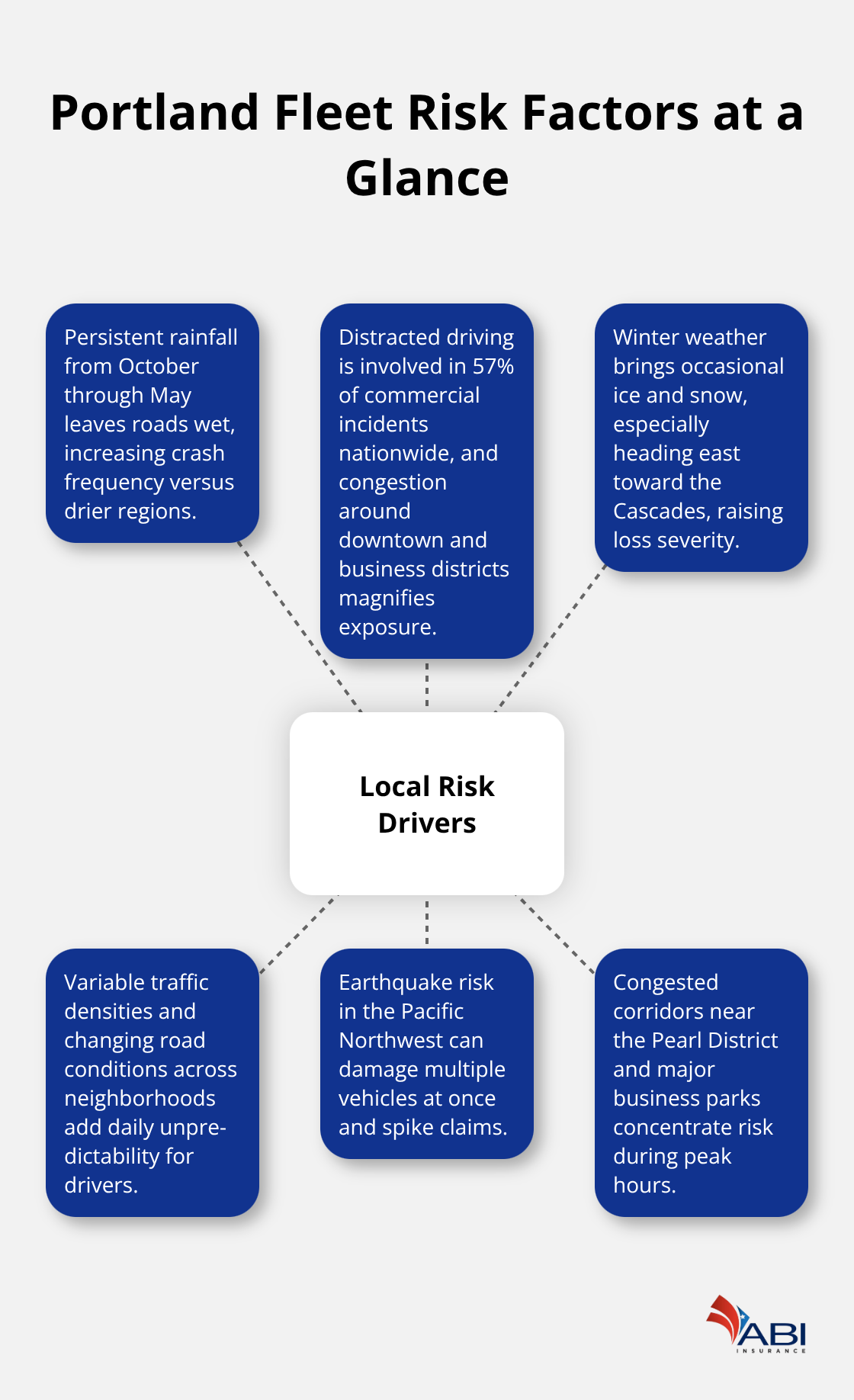
Earthquakes present an additional threat unique to the Pacific Northwest; a seismic event could damage multiple vehicles simultaneously or cause accidents that spike your claims history.
Matching Coverage to Real Risk
State minimums leave you exposed to catastrophic financial loss. Your fleet operates in a high-risk environment where accidents occur more frequently than in other regions, and when they do happen, costs exceed what basic liability limits cover. The right commercial auto policy protects your business from these local hazards and ensures your operations continue even after an accident occurs. Understanding your actual exposure — not just legal requirements — shapes the coverage decisions that protect your bottom line.
What Coverage Your Portland Fleet Actually Needs
Liability Protection: Your First Line of Defense
Commercial auto liability protects your business when your driver causes an accident that injures someone or damages another vehicle. Oregon’s state minimum requires $25,000 per person and $50,000 per accident in bodily injury liability, plus $20,000 in property damage liability. These minimums are dangerously low for Portland operations. A single serious injury claim easily exceeds $100,000, leaving you personally liable for amounts above your policy limit. We recommend carrying at least $1 million per occurrence in liability coverage for most Portland fleets. This higher limit costs only slightly more than state minimums but protects your business from catastrophic financial exposure.
Physical Damage Coverage: Protecting Your Vehicles
Physical damage coverage, both comprehensive and collision, repairs or replaces your vehicles after accidents, weather events, or theft. Comprehensive covers weather damage, earthquakes, and vandalism; collision covers accident damage. Portland’s wet conditions and occasional winter weather make comprehensive coverage essential. If you financed your vehicles, your lender requires both types. A single uninsured loss can devastate your fleet operations and cash flow, even if you own vehicles outright.
Uninsured and Underinsured Motorist Protection
Uninsured and underinsured motorist protection covers medical expenses and vehicle damage when another driver causes an accident but lacks sufficient insurance. Oregon requires this coverage as part of your commercial auto policy. Many Portland drivers carry only minimum liability, meaning their coverage ends quickly if injuries are serious. Your uninsured motorist bodily injury coverage fills that gap, protecting your drivers and passengers. Underinsured motorist coverage activates when the at-fault driver’s policy limits are too low to cover your actual damages.
Specialized Coverage for Your Operations
Specialized coverage depends on your specific operations. If your fleet includes delivery vehicles, motor truck cargo coverage protects merchandise and packages during transport. If you operate a service business where employees use personal vehicles for work, hired and non-owned auto coverage applies when they’re driving for business purposes. This coverage typically costs under $50 monthly and prevents gaps that could leave your business uninsured.

For tow trucks or heavy equipment vehicles, garagekeepers’ liability covers vehicles in your possession that belong to customers. Construction fleets and contractors often need higher liability limits. Many clients require $2 million aggregate coverage before awarding contracts. Assess what your actual clients require rather than guessing at limits.
Comparing Quotes Across Carriers
When comparing quotes across carriers, ensure you evaluate identical coverage types and deductibles; rate differences for the same protection frequently exceed $100 monthly, making a detailed comparison essential. This diligence reveals which carriers offer the best value for your specific fleet composition and operational needs.
How to Cut Fleet Costs Without Cutting Corners
Target Risk Reduction First
Reducing your insurance premiums starts with reducing your actual risk. Portland fleet operators who invest in safety programs, maintenance discipline, and monitoring technology see tangible savings that extend far beyond lower insurance rates. These aren’t theoretical cost-cutting measures, they’re operational changes that directly lower your claims frequency and severity, which carriers reward with better pricing.
Address Distracted Driving Head-On
Distracted driving creates enormous potential for deaths and injuries on U.S. roads, making driver accountability your fastest path to risk reduction. Implement a clear policy prohibiting mobile device use while driving, then enforce it consistently. Carriers increasingly offer premium discounts of 15 to 30 percent when you demonstrate reduced claims through documented safety programs. Track every incident, accident, near-miss, traffic violation, and use that data to identify which drivers need retraining and which routes present the highest risk.
Deploy Telematics and Monitoring Technology
Telematics systems with AI dash cameras capture real-time driving behavior, showing exactly when and why accidents occur. This data transforms vague safety concerns into specific, correctable problems. When you renew your policy, present your safety metrics to your carrier; documented improvements in driver behavior and incident reduction justify lower rates or better retention offers. Some carriers offer their own telematics program. Contact us for more information.
Maintain Your Fleet on Schedule
Regular vehicle maintenance prevents mechanical failures that cause accidents and expensive downtime. Schedule inspections on a fixed calendar regardless of mileage, checking brakes, tires, lights, and fluid levels monthly. A worn brake pad costs $200 to replace; a brake failure that causes a collision costs hundreds of thousands. Many carriers offer modest discounts for fleets that maintain inspection logs and share them at renewal.
Maximize Savings Through Bundling and Payment Options
Bundle your commercial auto policy with general liability and commercial property coverage to save 10 to 15 percent on total premiums compared with purchasing policies separately. A $150 monthly auto policy combined with general liability might total $280 versus $320 if bought separately, saving roughly $40 monthly. Paying your annual premium in full rather than monthly installments yields 13 percent or more in additional savings, depending on your carrier and state.
For Portland fleets with one to four vehicles, total monthly premiums typically range from $200 to $400; higher-risk trades like construction average $264 to $299 monthly. Removing high-risk drivers from your fleet or requiring additional training directly improves your insurability and future rates, since loss history strongly influences what carriers charge.
Conclusion
Your Portland fleet faces real risks that demand real protection. Wet roads, congested traffic, and operational demands mean accidents happen more frequently and cost more when they do. State minimum liability limits expose you to financial devastation that can destroy years of hard work, so local business auto coverage that matches your actual operations protects your vehicles, your drivers, and your bottom line.
Higher liability limits, physical damage coverage, and specialized protections for your specific business type cost only slightly more than minimums but provide the security that keeps your business running when accidents occur. Bundling your auto coverage with general liability and property insurance saves 10 to 15 percent on total premiums, and paying annually instead of monthly could yield up to 13 percent savings. Reducing your real risk through driver training, telematics monitoring, and maintenance discipline directly lowers your premiums while making your fleet safer.
Contact ABI Insurance to discuss your fleet’s specific needs and receive quotes from carriers that understand Portland’s business environment. Your operations depend on reliable protection, and we help you navigate Oregon’s requirements, compare options across carriers, and implement safety programs that reduce your costs long-term.


 Water Damage Home Coverage: From Leaky Roofs To Flood Thresholds









