


A warehouse accident demands different coverage than an office setting. We at ABI Insurance know that one-size-fits-all workers compensation plans leave gaps that hit your budget hard.
This guide shows you exactly which industry-specific workers compensation solutions match your actual risks.
Why Your Industry’s Risks Are Nothing Like Your Competitor’s
Workers compensation costs explode when insurers treat healthcare or warehousing the same as offices. The National Council on Compensation Insurance reports that frequency stays down or flat across most states while severity continues rising, but this masks a critical truth. Severity spikes vary dramatically by sector. Healthcare claims involve different body parts and recovery timelines than manufacturing. Temporary staffing agencies face entirely different exposures than PEOs managing permanent workforces.
Insurance carriers recognize this reality and have built specialized underwriting teams focused on specific industries. Key Risk maintains dedicated underwriters for seven specialized verticals including temporary staffing, healthcare, and cannabis, with average tenure exceeding 15 years. An underwriter who spends 15 years in healthcare knows exactly which hazards drive claims in that sector and which safety programs actually reduce costs.
Hospital inpatient care and warehouse injuries demand different strategies
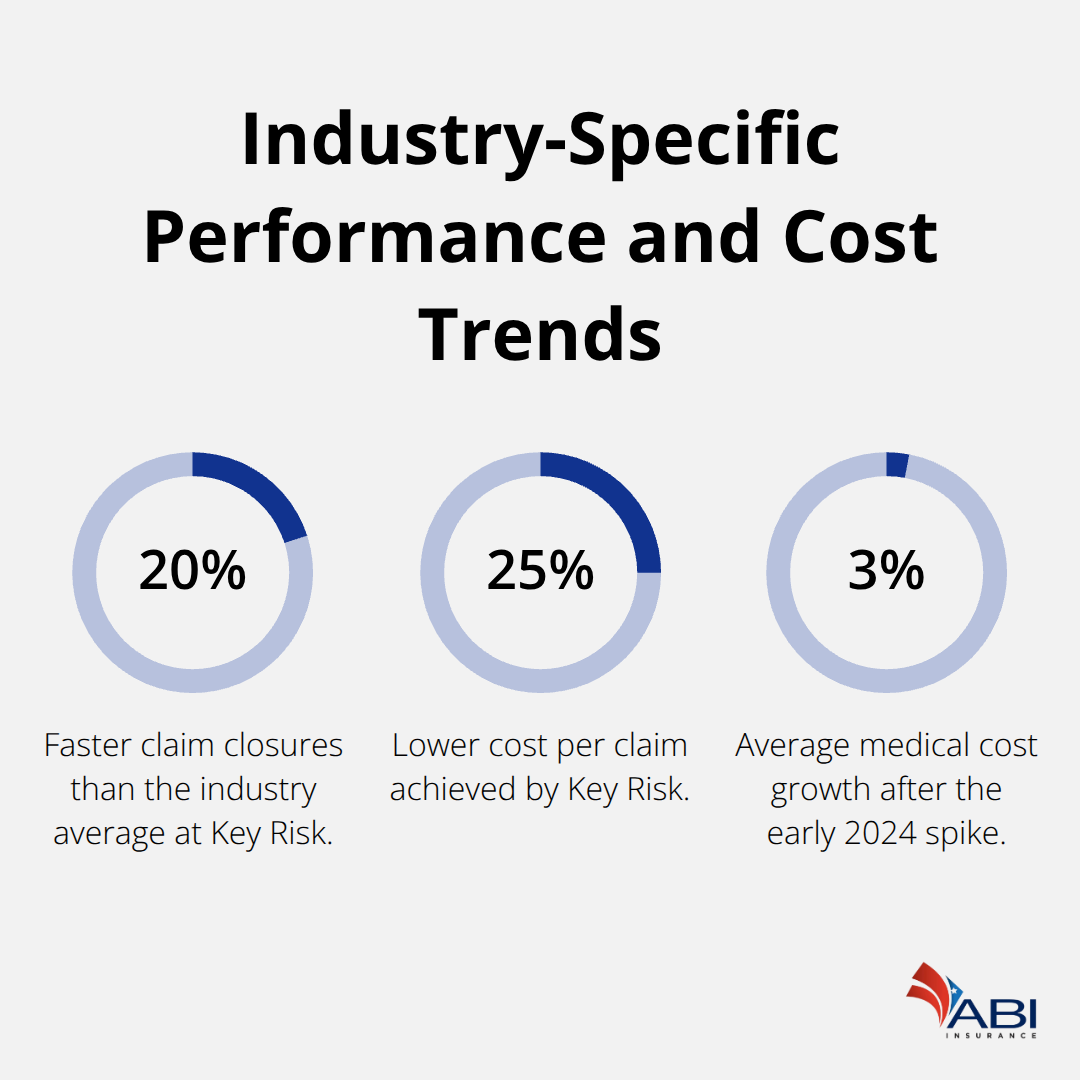
Medical costs remain the largest driver of workers compensation claims. After a spike in early 2024, medical costs returned to average growth around 3 percent, but the composition varies sharply by industry. Hospital inpatient and outpatient care plus durable medical equipment dominate claim costs overall.
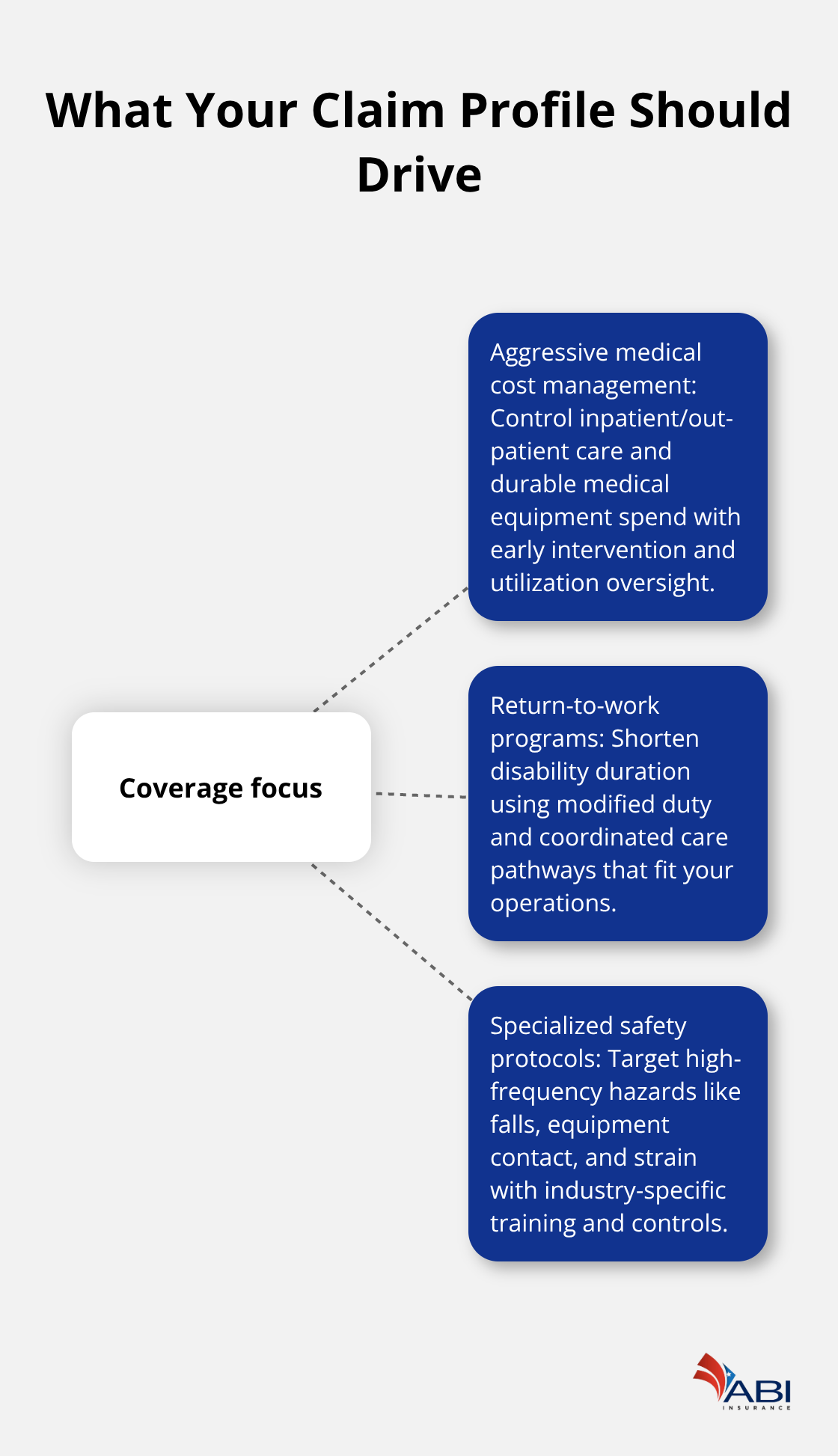
For healthcare employers, your claims involve complex medical management and longer recovery periods. For warehouse operators, the same medical cost drivers apply differently. Your injuries cluster around acute trauma rather than cumulative conditions. Your industry’s claim profile determines whether you need aggressive medical cost management, robust return-to-work programs, or specialized safety protocols.
Emerging hazards hit some industries before others
Cannabis industry operations face workers compensation challenges that didn’t exist a decade ago. Temporary staffing agencies manage exposures across dozens of client worksites simultaneously. Healthcare facilities now address workplace violence as a primary hazard.
Carriers that succeed with these industries invest in understanding what changes within them. They apply current standards to current hazards rather than relying on yesterday’s frameworks. Your industry evolves right now, whether that involves automation in manufacturing, staffing models in healthcare, or new chemical processes in production. Standard workers compensation plans written for general industry won’t catch these shifts until claims start appearing, which means you pay for the problem rather than preventing it.
This gap between standard coverage and your actual exposures creates the foundation for industry-specific solutions that address what your business truly faces.
What Each Industry Actually Needs From Workers Compensation
Healthcare and Professional Services Operate Under Different Exposure Models
Healthcare and professional services require entirely different underwriting because your claims involve workplace violence, cumulative stress injuries, and complex medical management. Assisted living, home health care, hospitals, and hospice operations all carry exposure to patient aggression and staff injuries from patient handling. These hazards don’t appear in warehousing or manufacturing. Your medical costs spike differently too; healthcare workers filing claims often need ongoing treatment coordination that warehouse injuries don’t demand.
Human services facilities managing daycare, counseling, and substance abuse treatment face liability and injury patterns distinct from healthcare hospitals. The National Council on Compensation Insurance reports that hospital inpatient and outpatient care plus durable medical equipment remain the primary cost drivers, but your healthcare operation’s claim profile will weight these differently than a manufacturing facility’s.
Manufacturing and Warehouse Operations Demand Medical Cost Control
Manufacturing and warehouse operations sit between these extremes but face their own pressures. Repetitive motion claims dominate, equipment hazards create catastrophic potential, and medical cost containment through durable medical equipment management becomes critical. Your warehouse operation’s claim profile will weight medical costs differently than a hospital’s, requiring specialized attention to how you manage equipment expenses and recovery timelines.
Staffing Models Create Distinct Risk Structures
Temporary staffing agencies and Professional Employer Organizations managing permanent workforces operate under completely different exposure models. Staffing agencies spread risk across dozens of client worksites while PEOs consolidate permanent workforce risks. Carriers recognize these distinctions and build underwriting teams around them. Key Risk closes claims 20 percent faster than industry average and achieves 25 percent lower cost per claim precisely because their underwriters and adjusters understand what drives costs in specific sectors rather than applying generic frameworks.
Your industry’s actual hazards, claim patterns, and recovery timelines determine whether you need aggressive medical cost management, specialized return-to-work coordination, or enhanced safety program requirements. Standard plans written for general industry won’t capture these distinctions until claims start appearing on your loss history. This timing gap means you pay for problems rather than preventing them through tailored coverage designed around your actual operations. Understanding these industry-specific needs sets the foundation for identifying which coverage gaps exist in your current plan.
Where Standard Plans Fall Short for Your Industry
Standard workers compensation plans treat all businesses as if they operate identically. They apply generic underwriting criteria, use broad medical cost assumptions, and ignore the specific hazards that actually drive claims in your sector. This approach leaves dangerous gaps that don’t reveal themselves until claims appear on your loss history. This means you’ve already paid premiums that didn’t reflect your actual risk and now you’re managing costs that proper coverage could have prevented.
The National Council on Compensation Insurance reports that severity continues rising while frequency stays flat or declines, but this masks critical variations by industry. Your sector’s severity curve might be climbing faster than the aggregate data suggests, yet your coverage was priced against the average. Carriers like Key Risk structure underwriting around industry-specific claim patterns because they’ve discovered that generic coverage systematically underprices some sectors while overcharging others.
Specialized Roles Face Mismatched Coverage Frameworks
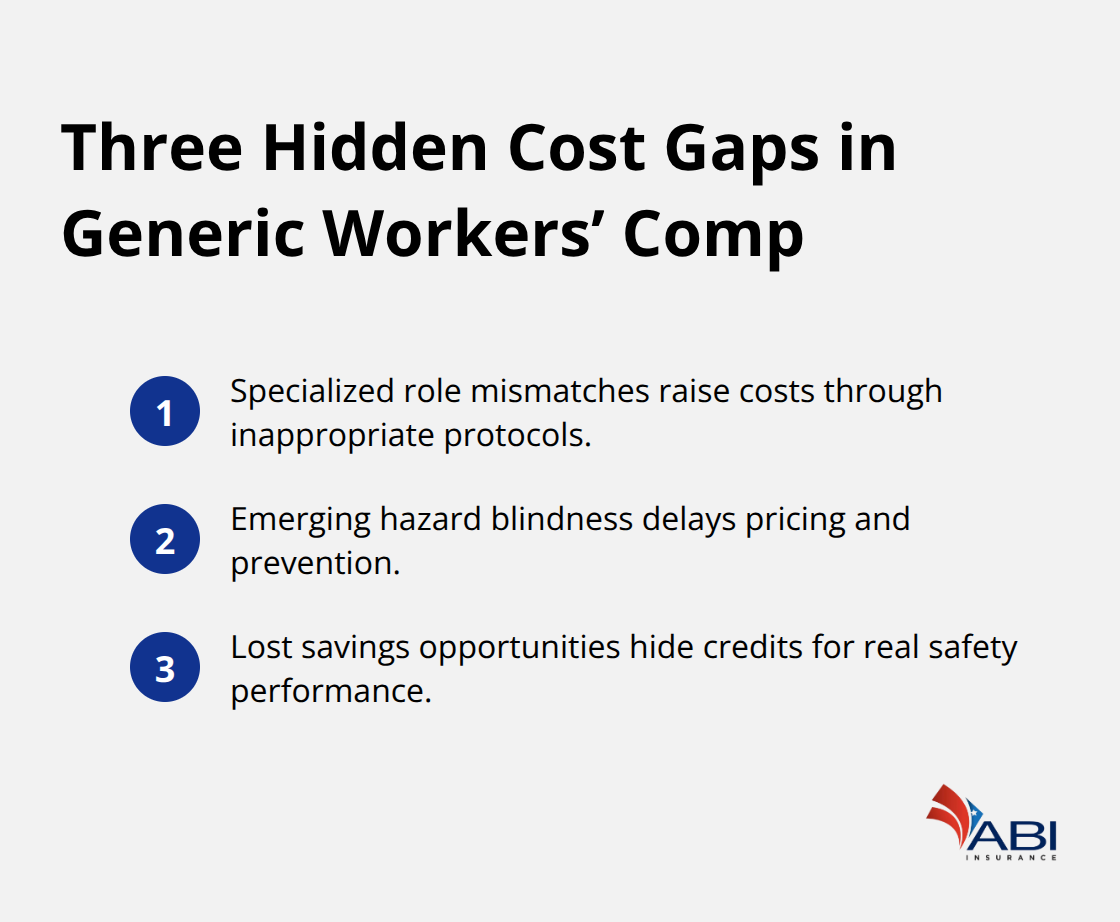
Specialized roles within your industry operate under exposures that standard policies treat as standard risk. A home health aide lifting patients faces different injury patterns than a warehouse worker operating equipment, yet many plans apply identical medical protocols and return-to-work expectations to both. Healthcare employers managing assisted living and hospice operations encounter workplace violence as a primary hazard and standard coverage doesn’t differentiate claim management approaches.
A temporary staffing agency placing workers across multiple client sites needs underwriting that accounts for exposure variation across worksites, not a flat rate applied to all placements. These distinctions matter because they determine whether your claims cost more or less than the industry average your premium reflects.
Emerging Hazards Arrive Before Standard Coverage Adapts
Emerging industry risks hit some sectors before they appear in aggregate insurance data. Cannabis operations face workers compensation exposures that standard carriers either decline entirely or price without understanding operational hazards. Automation in manufacturing creates new injury patterns that traditional safety protocols don’t address. Staffing models in healthcare continue evolving, but coverage written two years ago doesn’t reflect current operational structures.
Standard plans force you to absorb the cost of these emerging exposures through higher claims or denied coverage rather than pricing them transparently upfront. Your industry evolves right now, whether that involves staffing changes in healthcare, or operational shifts in production. Coverage that doesn’t account for these changes leaves you paying for problems rather than preventing them.
Cost-Saving Opportunities Disappear Under Generic Structures
Cost-saving opportunities vanish when coverage doesn’t match your actual operations. Healthcare facilities implementing workplace violence prevention measures should receive credit through reduced medical cost management requirements, but generic plans don’t measure or reward these investments.
Warehouse operations achieving lower durable medical equipment costs through specific supplier relationships gain no premium advantage under standard structures. Your investments in safety, your operational improvements, and your claims management success all disappear into a pricing model built for average risk. The real cost of these gaps compounds across three distinct areas that most businesses overlook until they face claims; specialized role mismatches, emerging hazard blindness, and lost savings opportunities.
Final Thoughts
Your industry’s actual risks demand coverage built around those specific exposures, not generic frameworks that treat healthcare or warehousing like offices. Industry-specific workers compensation protects your workforce while controlling costs that standard plans let spiral, and the gaps we’ve outlined — mismatched coverage for specialized roles, blindness to emerging hazards, and lost savings opportunities — compound across years of claims and premiums. We at ABI Insurance match coverage to your industry’s unique risks through partnerships with carriers that specialize in your sector.
Review your current plan against the industry-specific gaps outlined here and ask your current carrier whether your underwriter has deep experience in your sector or applies generic criteria. Check whether your coverage accounts for emerging hazards in your industry or relies on yesterday’s frameworks, and verify that your premium reflects your actual safety investments and operational improvements rather than averaging you against broader risk pools. Carriers closing claims 20 percent faster than industry average and achieving 25 percent lower costs per claim apply industry expertise that standard plans cannot match.
Contact ABI Insurance to review whether your current coverage captures your industry’s actual risks or leaves gaps that cost you money every renewal cycle.


 Hidden Insurance Shortfalls that Impact Condominium Owners









