

Portland sits on active fault lines that put your home at serious risk. Standard homeowners insurance won’t cover earthquake damage, leaving you financially exposed when the ground shakes.
At ABI Insurance, we help Portland homeowners understand why earthquake insurance matters and how to get properly protected. The right policy can mean the difference between rebuilding and financial hardship.
Why Earthquake Insurance Matters for Portland Homeowners
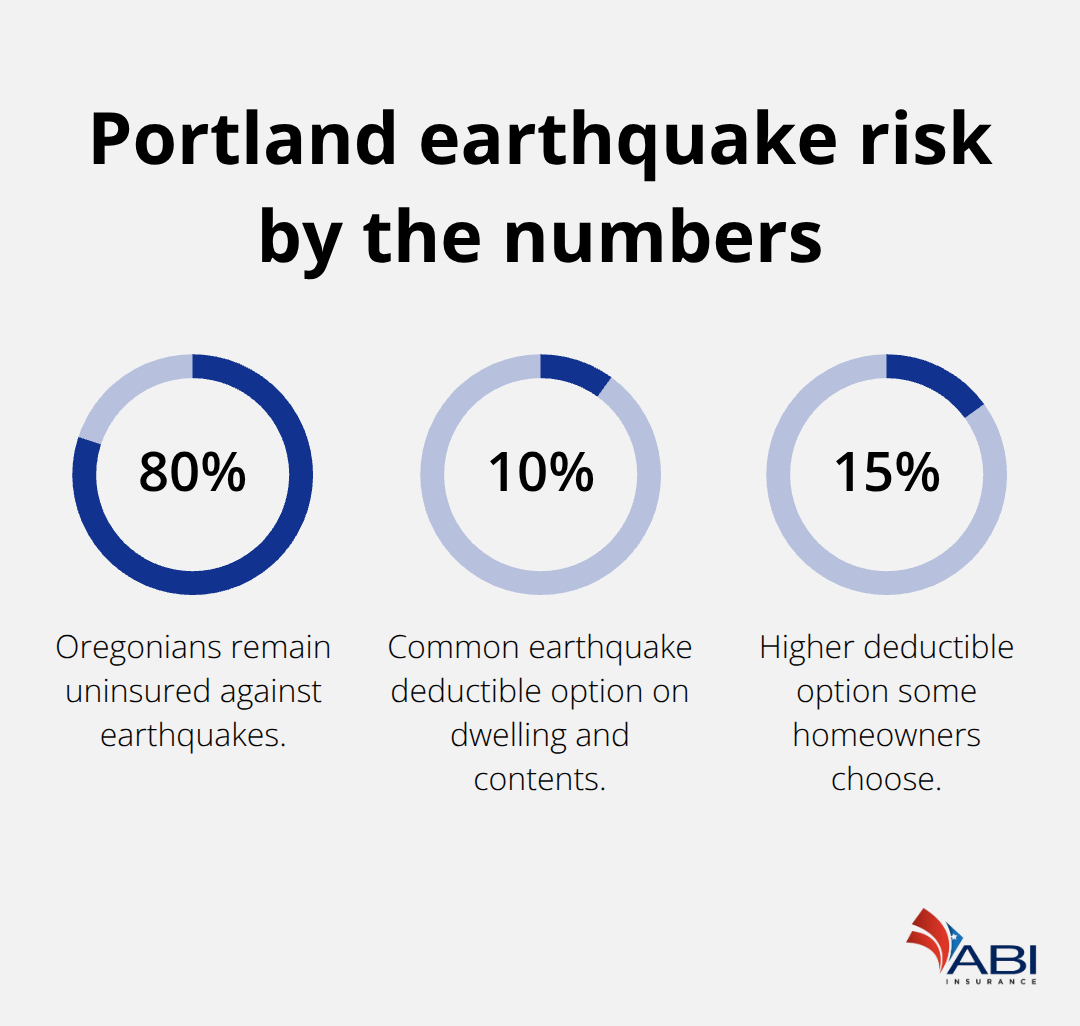
Portland sits directly above one of North America’s most dangerous fault systems. The Cascadia Subduction Zone stretches 700 miles along the Pacific Northwest coast and can produce magnitude 9.0 or greater earthquakes. Oregon has recorded more than 6,000 earthquakes since 1841, with the Portland metro area experiencing the greatest seismic activity in the state over the last two decades according to the U.S. Geological Survey and the Oregon Department of Geology and Mineral Industries. When a major earthquake hits, the USGS estimates potential losses could reach billions of dollars across the region. Your home represents your largest financial asset, yet standard homeowners insurance provides zero protection against this risk. The policy in your file right now excludes earthquake damage completely. This exclusion exists because earthquake losses are catastrophic and unpredictable, making them impossible to bundle into regular premiums. About 80% of Oregonians remain uninsured against earthquakes, according to the Oregon Division of Financial Regulation, which means most Portland homeowners would face complete financial responsibility for repairs after a major quake.
What Happens When You Face Earthquake Damage Uninsured
A significant earthquake in Portland would cause widespread structural damage to older homes, foundation failures, utility ruptures, and displacement. Rebuilding costs in Portland currently average around $1,200 to $1,500 per square foot for quality construction, meaning a modest 2,000-square-foot home could require significant reconstruction costs. Without earthquake insurance, you would pay this entire amount out of pocket, take out loans, or abandon the property. Mortgage lenders and homeowners associations may not force you to buy earthquake coverage, but they can demand proof of financial ability to rebuild if uninsured. The 2009 Portland market survey conducted by the Oregon DFR found that earthquake coverage for a wood-frame home insured for $300,000 with $150,000 in contents can cost as low as $200 to $300 per year. That annual investment protects against potential losses in the millions.
Why Portland Homes Face Extra Vulnerability
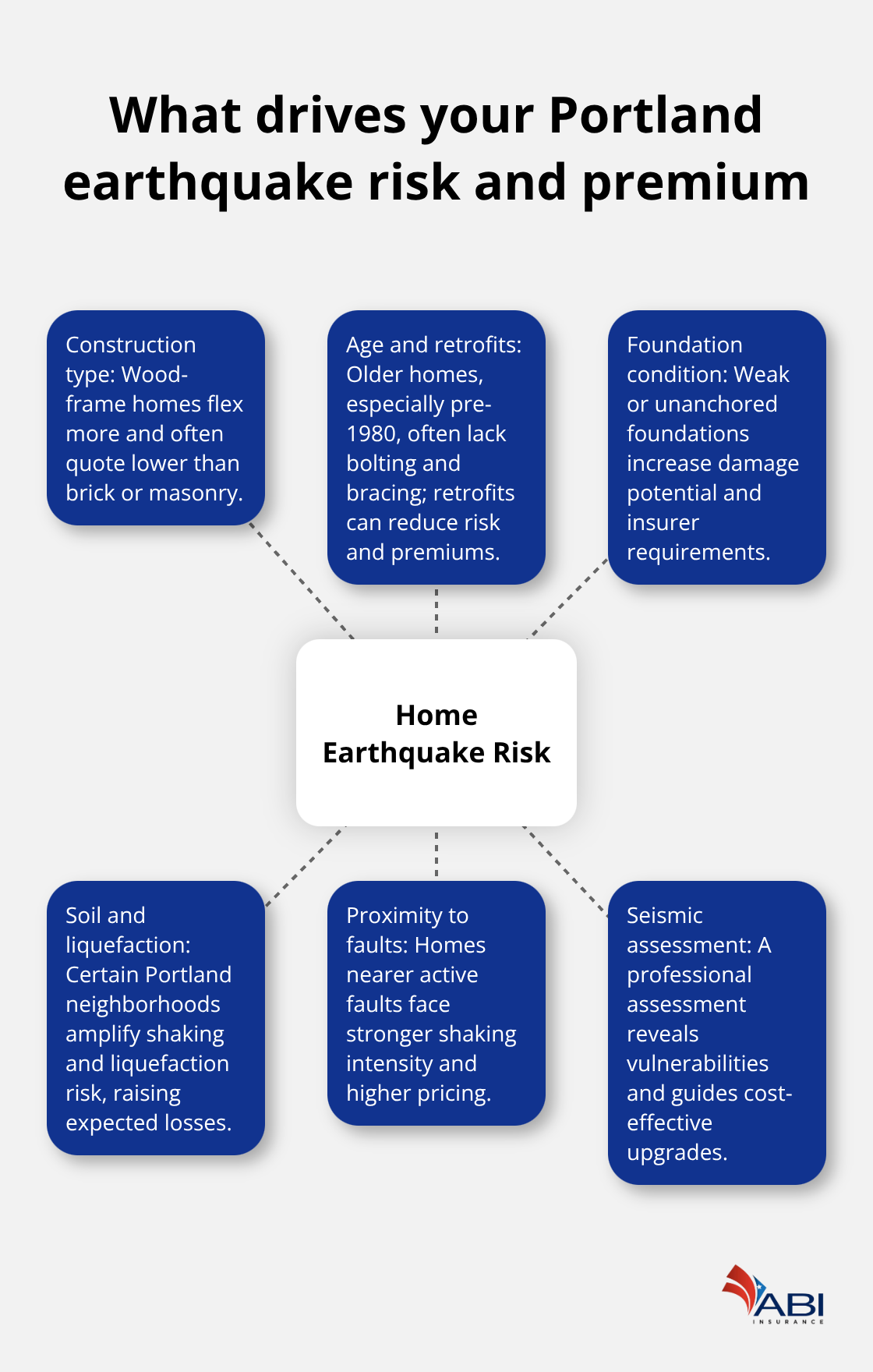
Many Portland homes, especially those built before 1980, lack proper foundation bolting and modern seismic bracing. Older brick and masonry structures prove particularly susceptible to ground shaking. Soil conditions in certain Portland neighborhoods (including areas with liquefaction risk) amplify earthquake damage. Your home’s construction type, age, foundation condition, and proximity to fault lines directly determine both your actual risk and your insurance costs. Wood-frame homes typically qualify for lower premiums than brick or masonry structures because they flex rather than crack during shaking. A home assessment for seismic vulnerabilities now, before you purchase insurance, helps you understand your true exposure and allows you to explore retrofits that reduce both risk and premiums.
Understanding Your Coverage Options
Earthquake insurance covers direct physical loss to your property from shaking or trembling caused by tectonic or volcanic activity. The policy protects your dwelling, personal belongings, and additional living expenses if the home becomes uninhabitable. Deductibles typically run 10% or 15% of the insured amount, meaning you pay that percentage before the policy pays anything. Some carriers offer lower deductible options. For a $300,000 dwelling with a 10% deductible, you would pay $30,000 out of pocket before coverage kicks in. Contents coverage protects personal items inside your home and usually carries a separate 10–15% deductible. Additional Living Expenses coverage reimburses temporary housing and meals if you must vacate the home, typically with no deductible and no dollar limit for up to about one year. Understanding how each deductible applies to different coverage components affects your financial exposure after a claim.
The next step involves assessing your specific home’s vulnerability and comparing policies that match Portland’s unique seismic risk profile.
What Earthquake Insurance Actually Covers
Earthquake insurance protects your dwelling structure, personal belongings inside your home, and temporary living expenses if the house becomes uninhabitable after a quake. Dwelling coverage is for structural repairs to walls, foundation, roof, and built-in systems damaged by ground shaking. Contents coverage is for the replacement cost of furniture, electronics, clothing, and other personal property up to your selected limit, typically ranging from $50,000 to $300,000 depending on your needs.
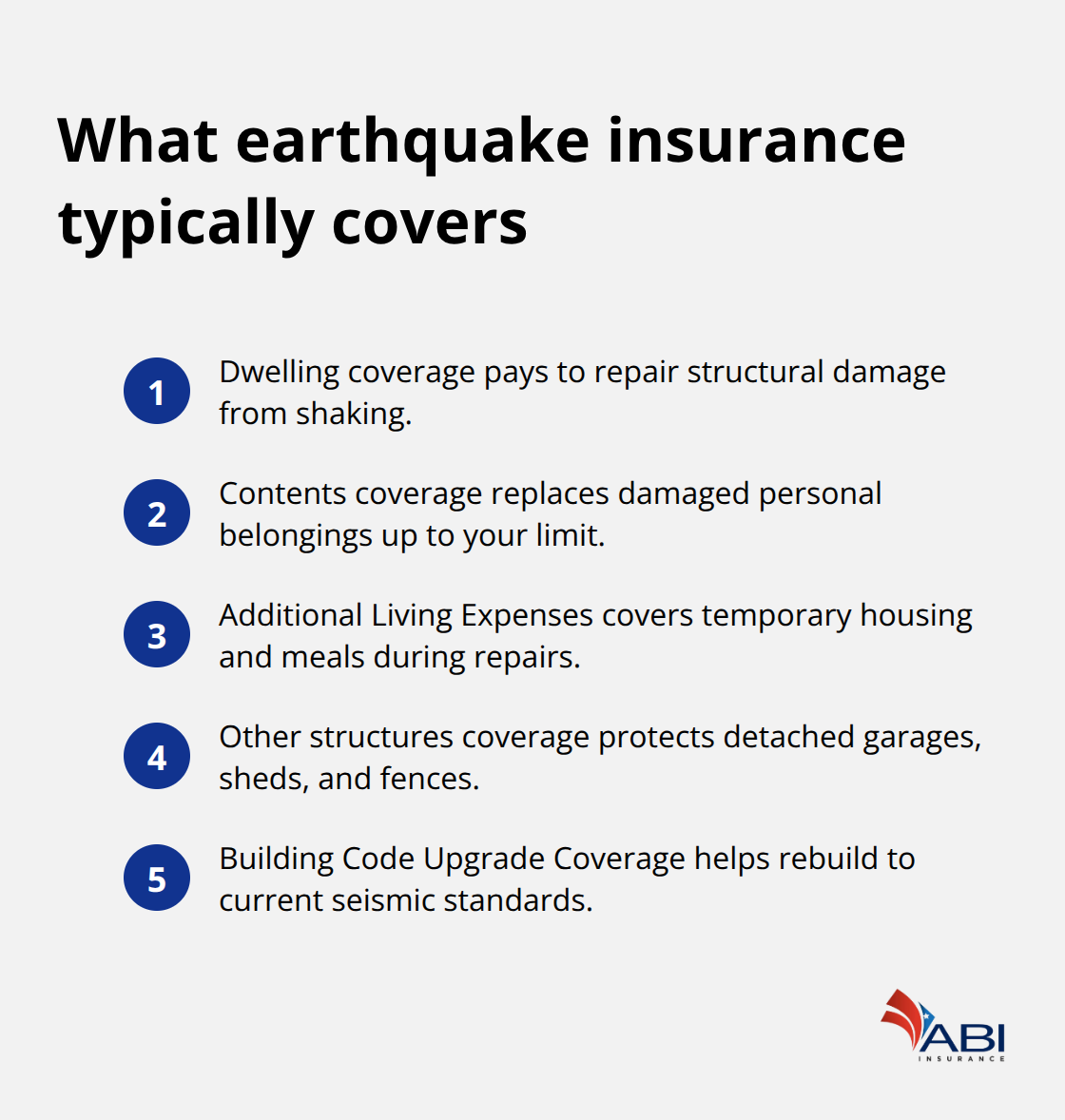
Additional Living Expenses coverage, also know as Loss of Use, reimburses hotel stays, meals, and other necessities if you cannot occupy your home during repairs, with no deductible and no dollar limit for up to roughly one year according to the Oregon Division of Financial Regulation. Other structures coverage protects detached garages, sheds, and fences. Building Code Upgrade Coverage helps you rebuild to current seismic codes.
What earthquake insurance does not cover matters equally: tsunamis, landslides, erosion, volcanic eruption, and liquefaction-related settlement fall outside the policy. You need separate flood insurance through FEMA’s National Flood Insurance Program to cover tsunami damage if you live near the coast.
Deductibles That Actually Affect Your Wallet
Earthquake deductibles work differently than standard homeowners insurance. Instead of a fixed dollar amount like $500 or $1,000, earthquake deductibles are a percentage of your insured dwelling value, typically 10% or 15%. A $300,000 home with a 10% deductible means you pay $30,000 out of pocket before the insurer covers anything. Contents coverage carries a separate deductible calculated as a percentage of contents value, so a $150,000 contents limit with 10% deductible requires $15,000 from you first.
The 2009 Portland market survey found that wood-frame homes insured for $300,000 with $150,000 contents cost $200 to $300 annually, making the annual premium roughly 0.1% of your dwelling value. Choosing a 15% deductible instead of 10% can lower your premium by 20% to 30%, but increases your out-of-pocket exposure significantly. Many Portland homeowners select 10% deductibles to balance affordability with manageable risk, though your specific choice depends on your financial capacity to pay after a loss. Request quotes at multiple deductible levels from your agent to see the premium differences and make an informed choice.
Filing a Claim and Getting Paid
After an earthquake, contact your insurer within 30 days to report damage and start the claims process. Document everything: photograph structural cracks, broken items, and water intrusion from ruptured pipes. Create an itemized list of damaged personal property with original purchase prices if possible. The insurer will assign an adjuster who inspects your home, verifies the damage was caused by earthquake (not related excluded perils like landslide), and estimates repair or replacement costs.
If your home is uninhabitable, Additional Living Expenses coverage kicks in automatically with no deductible, reimbursing your hotel and meal receipts. Obtain multiple contractor estimates for major repairs and provide them to your adjuster to support your claim amount.
The entire claims process from initial report to payment usually takes 30 to 60 days for straightforward claims, though complex structural damage can extend this timeline. After a major regional earthquake, insurers sometimes place temporary moratoriums on new earthquake coverage sales, making it critical to purchase your policy now rather than waiting. Understanding what your policy covers and how claims work positions you to make smart decisions about deductibles and coverage limits that fit your home and financial situation.
Choosing the Right Policy for Your Portland Home
Assess Your Home’s Seismic Vulnerabilities First
Start with a professional seismic assessment of your home before you shop for insurance. Many Portland homeowners skip this step and end up paying higher premiums or discovering their home doesn’t qualify for coverage at standard rates. A seismic assessment identifies foundation bolting needs, soft stories, poor wall bracing, and soil liquefaction risk specific to your address. The Oregon Department of Geology and Mineral Industries offers liquefaction and landslide hazard maps online that show your property’s specific risk level.
Foundation bolting typically costs $3,000 or more and can reduce your annual earthquake insurance premium by 10% to 20%, paying for itself within five to fifteen years. Once you know your home’s condition and risk profile, you can shop for insurance from a position of strength rather than accepting whatever quote comes first.
Document Your Home’s Characteristics
Accurate information about your property directly affects your premium. Document your home’s square footage, construction year, building materials, roof age, and any recent upgrades or retrofits. A wood-frame home built in 1975 with a recently replaced roof will quote lower than an unreinforced brick structure from 1960, even if both are insured for the same dwelling amount.
Request a Quote
Request earthquake insurance quotes that include the deductible structure, contents limits, Additional Living Expenses terms, and any retrofit requirements the insurer imposes. A 2009 Portland market survey by the Oregon Division of Financial Regulation found annual premiums for wood-frame homes ranged from $200 to $300 per year for $300,000 dwelling and $150,000 contents coverage, but individual quotes vary significantly based on soil type, proximity to fault lines, and home condition.
Ask your agent whether the carrier offers premium discounts for retrofits you’ve already completed or plan to complete, since foundation bolting, water heater strapping, and proper foundation anchoring can qualify you for meaningful reductions. Some insurers require retrofits before they’ll issue coverage on older homes, while others simply adjust premiums accordingly.
Work with a Local Portland Agent
Work with a local Portland agent who understands the region’s specific seismic risks, soil conditions, and which insurers actively write earthquake coverage in your neighborhood. National carriers sometimes restrict earthquake availability in high-risk Portland zones or charge rates that reflect regional adverse selection. Local agents have relationships with carriers familiar with Portland’s market and can identify which companies offer the best rates and terms for your specific situation.
Model Your Out-of-Pocket Costs
Ask your agent to explain how deductibles apply to each coverage type separately and model out your actual out-of-pocket costs under different scenarios. A 15% deductible saves premium money but means $45,000 out-of-pocket on a $300,000 home, while a 10% deductible costs more annually but limits your exposure to $30,000. Your choice depends entirely on your financial capacity to pay immediately after a loss, not on which option sounds reasonable in theory.
Final Thoughts
Earthquake insurance for Portland homeowners protects your largest financial asset against a genuine threat from the Cascadia Subduction Zone. Standard homeowners policies exclude earthquake damage entirely, leaving you responsible for hundreds of thousands of dollars in repairs after a major quake. Annual premiums of $200 to $300 for a wood-frame home represent a small price compared to potential losses in the millions.
Contact a local Portland insurance agent who understands earthquake risk in your specific neighborhood and can explain how deductibles and coverage limits apply to your situation. Request quotes from multiple carriers at different deductible levels so you can see actual premium differences and make an informed choice about your out-of-pocket exposure. Pull the Oregon Department of Geology and Mineral Industries hazard maps for your address to understand your liquefaction and landslide risk before you shop.
If your home lacks foundation bolting or shows other seismic vulnerabilities, obtain a professional assessment and budget for retrofits that will lower both your actual risk and your insurance premiums. We at ABI Insurance help Portland homeowners navigate earthquake insurance coverage with local expertise and personalized guidance. Purchasing earthquake insurance now, before a major event occurs, gives you peace of mind and financial protection when the ground shakes.