Oregon sits on one of the most seismically active regions in the United States. The Cascadia Subduction Zone and numerous smaller faults mean earthquakes aren’t a matter of if, but when.
Standard homeowners insurance won’t cover earthquake damage, leaving your home and finances vulnerable. At ABI Insurance, we believe Oregon earthquake insurance coverage is essential protection that too many homeowners overlook.
Why Your Standard Policy Won’t Protect Your Home
Oregon’s Earthquake Threat Is Real and Measurable
Oregon has recorded more than 6,000 earthquakes since 1841, with the greatest seismic activity concentrated in the Portland metro area and the Klamath Falls region over the last two decades. The Cascadia Subduction Zone poses an especially serious threat. The U.S. Geological Survey estimates a potential magnitude 8 to 9 event could cause billions in property damage across the Pacific Northwest. Portland sits directly in a seismically active region, and older homes throughout the area lack proper foundation anchorage, making them especially vulnerable to severe damage during strong ground shaking.
Standard Homeowners Insurance Excludes Earthquake Damage
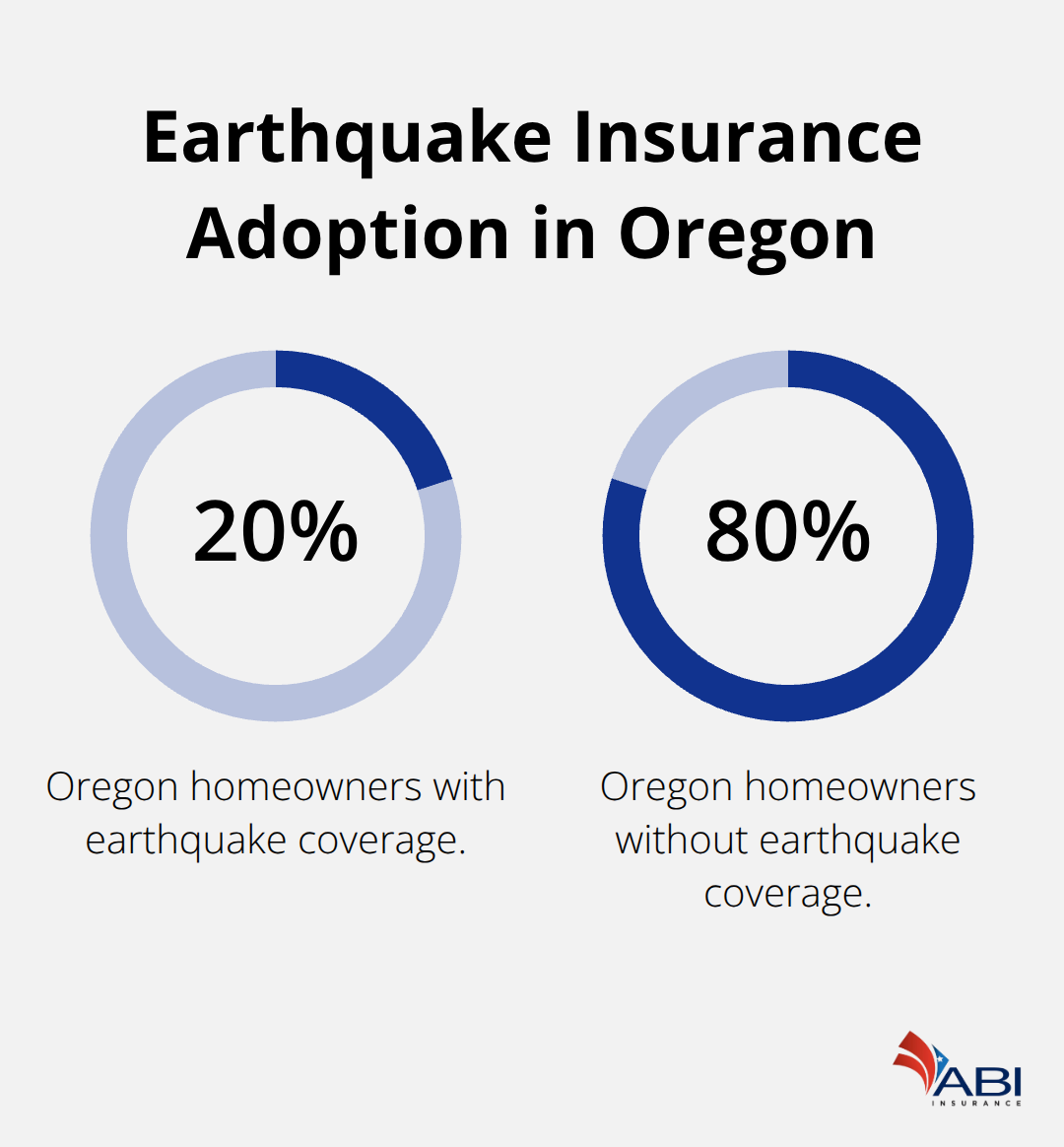
Here’s the hard truth: standard homeowners insurance does not cover earthquake damage. Not a single dollar. Your fire coverage won’t help. Your liability protection won’t help. Your contents coverage won’t help. About 20 percent of Oregonians have earthquake coverage, which means 80 percent of homeowners are betting their financial security on an earthquake never happening.
The True Cost of Going Uninsured
If your home suffers structural damage, foundation cracks, or becomes uninhabitable after a quake, you’ll face repair or rebuilding costs entirely out of pocket. A 2009 Portland market survey showed that wood-frame homes with a $300,000 dwelling limit and $150,000 contents limit could obtain earthquake insurance for roughly $200 to $300 per year, a modest premium compared to the catastrophic financial exposure of going uninsured. Older brick or masonry homes cost more to insure because they sustain greater damage in earthquakes, but coverage still remains far cheaper than replacing a damaged home.
Additional Living Expenses Coverage Requires Earthquake Insurance
If an earthquake forces you to relocate while repairs happen, you’ll need Additional Living Expenses coverage also known as Loss of Use, to pay for temporary housing and related costs. Understanding what your current homeowners policy actually covers and what it doesn’t is the first step toward protecting your home and finances. The next step involves learning what earthquake coverage options exist and how different policy types protect your property, your belongings, and your ability to stay housed during recovery.
Types of Earthquake Coverage and What They Protect
Dwelling Coverage Protects Your Home’s Structure
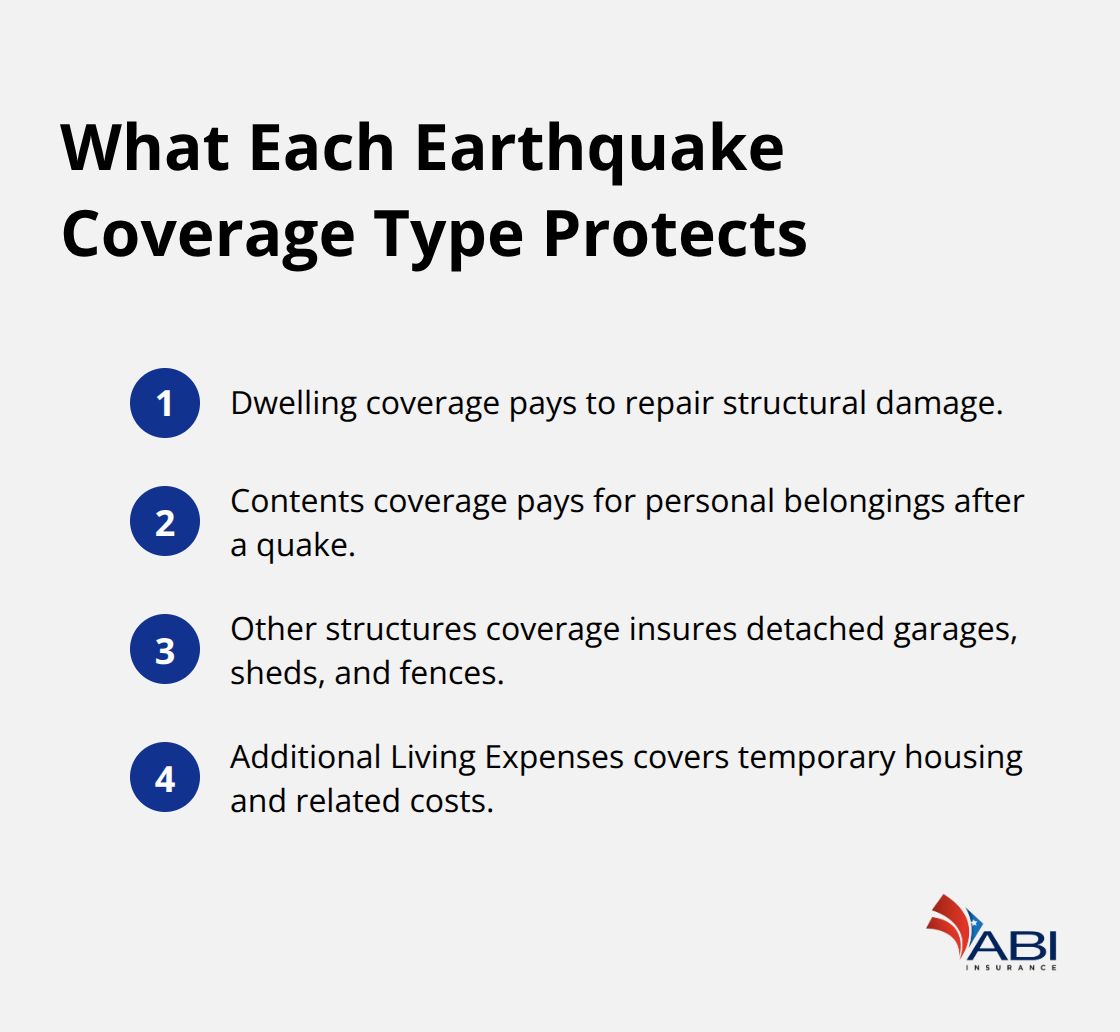
Earthquake insurance pays for structural damage to your home after an earthquake, including foundation cracks, collapsed walls, and damaged roofs. If you have a $300,000 dwelling limit and a 10% deductible, you’ll pay $30,000 out of pocket before coverage kicks in. This high deductible is the trade-off that keeps premiums affordable.
Contents and Other Structures Coverage Protects Your Belongings
Contents coverage protects your personal belongings inside the home, with a separate deductible that typically runs 10% to 15% of your contents limit. If you insure $150,000 in belongings with a 15% deductible, you’ll absorb $22,500 in losses before coverage applies. Other structures coverage handles detached garages, sheds, and fences, items many homeowners overlook until after damage occurs.
Additional Living Expenses Coverage Keeps You Housed During Recovery
Additional living expenses coverage reimburses temporary housing, meals, and related costs if your home becomes uninhabitable after a quake. Unlike the dwelling and contents deductibles, this coverage typically carries no deductible and no dollar limit, extending protection for up to about one year. This protection proves invaluable when you need to relocate while repairs happen.
Building Code Upgrade Coverage Covers Modern Construction Standards
Building code upgrade coverage covers the cost difference when you rebuild to current codes, a significant protection since modern codes require stronger anchoring and bracing that can add 5% to 15% to total reconstruction costs. Most Oregon policies offer this coverage, which protects you from absorbing these additional expenses out of pocket.
Comparing Deductibles and Terms Across Policies
When selecting a policy, confirm whether your deductibles apply separately to dwelling and contents, as this affects how much you’ll actually pay after a claim. Obtaining quotes from multiple insurers and comparing deductible structures, Additional Living Expenses terms, and retrofit requirements helps you balance affordable premiums with adequate protection for your specific situation. Understanding these coverage pieces sets the stage for the next critical step: actually strengthening your home to reduce the damage earthquakes cause in the first place.
How to Retrofit Your Home for Earthquake Resilience
Foundation Bolting Prevents Structural Collapse
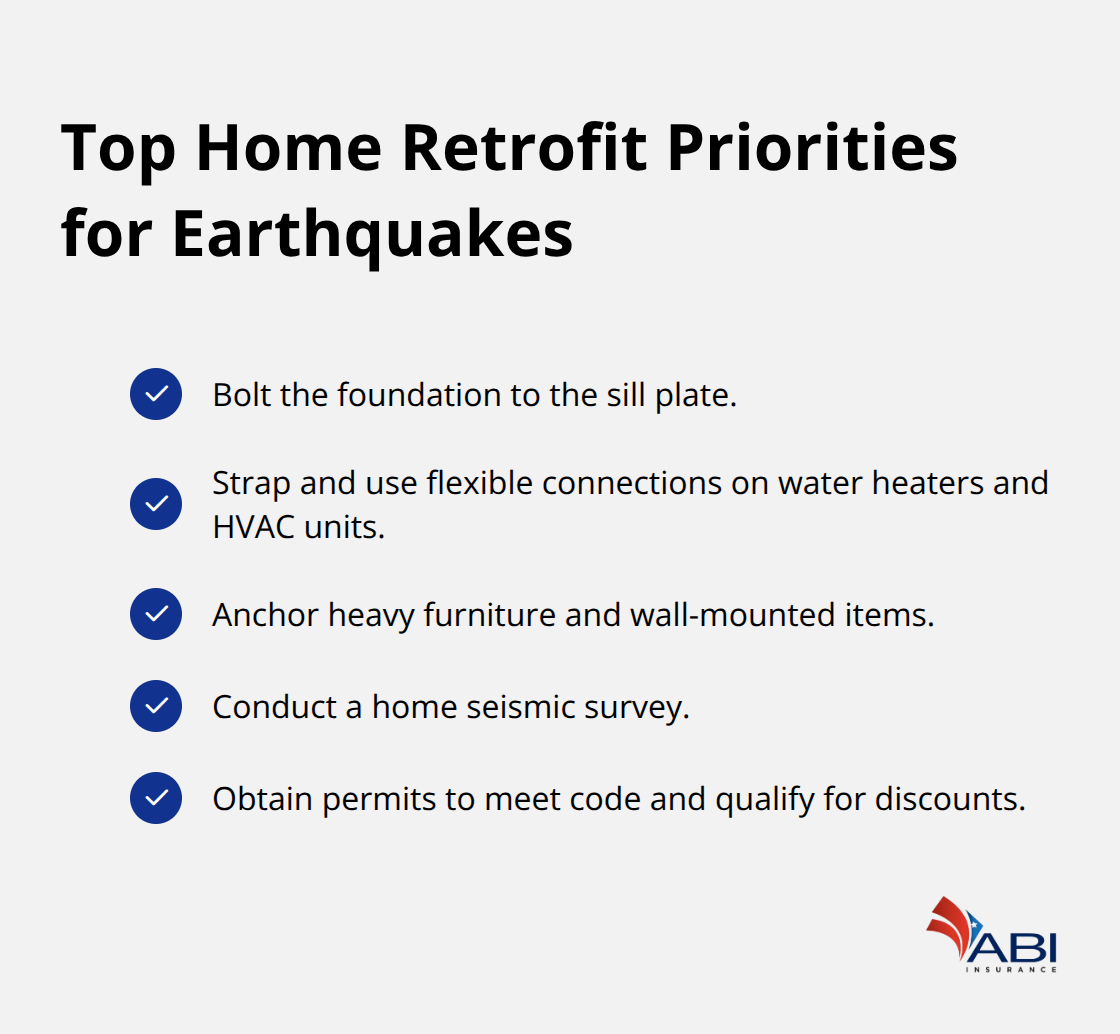
Earthquake insurance covers the financial fallout after damage occurs, but retrofitting your home prevents damage from happening in the first place. Foundation bolting stands as the single most effective retrofit for older homes. Homes constructed before 1980 typically lack proper anchoring to their foundations, allowing the structure to shift or collapse during strong ground shaking. Foundation bolting involves securing the sill plate (the wood frame sitting on the foundation) with half-inch bolts spaced every six feet, preventing lateral movement. Portland’s Residential Seismic Strengthening guide recommends hiring a licensed contractor familiar with local building codes, as improper installation wastes money without reducing risk. This work costs between $1,000 and $3,000 depending on your home’s age and construction type, far less than your earthquake insurance deductible.
Securing Utilities Prevents System Failures
Water heaters and HVAC systems rupture frequently during earthquakes, and a ruptured unit can flood your home and disable utilities for weeks. Install flexible connections and secure these units to wall studs with metal straps to prevent movement and rupture. Most earthquake injuries come from falling or flying objects rather than structural collapse, making utility bracing as important as foundation work. Wood-frame homes generally require less extensive work than older brick or masonry structures, which is why wood-frame homes cost $200 to $300 per year to insure while brick homes cost significantly more.
Anchoring Furniture and Wall-Mounted Items Reduces Injury Risk
Secure heavy furniture, televisions, and wall-mounted items to studs or solid walls using L-brackets and earthquake straps. These simple installations prevent objects from falling during ground shaking and protect your family from serious injury. Portland’s seismic guide emphasizes that furniture anchoring ranks equally with foundation work in reducing earthquake harm.
Conducting a Home Survey Identifies Your Specific Hazards
Conduct a home seismic survey before starting any retrofit work to identify hazards specific to your property. Older homes with crawl spaces, soft first stories, or poor wall bracing need different approaches than newer construction. This assessment guides your retrofit priorities and ensures you address the vulnerabilities that pose the greatest risk to your home and family.
Obtaining Permits Ensures Code Compliance and Premium Discounts
Obtain a building permit before beginning work to ensure your retrofit meets current codes and qualifies for any insurance premium discounts your carrier offers. Portland’s Development Services Center processes permits online 24/7, with in-person services available on Tuesdays and Thursdays by appointment.
Final Thoughts
Oregon earthquake insurance coverage paired with home retrofits creates a complete protection strategy that standard insurance alone cannot provide. Insurance covers the financial aftermath of earthquake damage, while retrofits prevent that damage from occurring in the first place. A home bolted to its foundation, with secured utilities and anchored furniture, sustains far less damage during ground shaking than an unprotected structure.
The numbers tell a clear story: about 80 percent of Oregon homeowners lack earthquake coverage despite living in one of the nation’s most seismically active regions, yet those who carry coverage pay modest premiums compared to the catastrophic costs of rebuilding without insurance. Foundation bolting costs between $1,000 and $3,000 and qualifies for potential premium discounts. These investments are far cheaper than absorbing a $30,000 deductible or losing your home entirely.
Contact an independent insurance agent who understands Oregon’s earthquake risk and can help you select appropriate coverage limits and deductibles. At ABI Insurance, our team can walk you through your options, explain how different policy structures affect your actual out-of-pocket costs, and connect you with contractors for retrofits that qualify for insurance discounts. Visit our earthquake and flood insurance page to start protecting your home and finances today.


 Medical Office Business Owners Policy or BOP: A Practical Guide