
Portland condo insurance costs vary wildly depending on where your unit sits and what protection you choose. We at ABI Insurance know that most owners get sticker shock when they see their first quote-but it doesn’t have to be that way.
This guide walks you through the exact factors that shape your premium, how to request quotes that actually reflect your real costs, and where you can find savings.
What Really Drives Your Portland Condo Insurance Price
Location and Natural Disaster Risk Shape Your Quote
Your location within Portland matters far more than most owners realize. A condo in downtown Portland or close to the Willamette River faces different risk profiles than one in outer neighborhoods, and insurers price accordingly. Flood risk stands out as the obvious concern-Portland’s proximity to the river and aging stormwater systems mean water damage claims spike after heavy rain. Earthquake exposure carries equal weight. Oregon sits in the Cascadia Subduction Zone, and while a major quake remains uncertain, insurers factor that tail risk into every quote.
Older buildings in central Portland, especially pre-1970 conversions, carry higher premiums because their construction materials and outdated systems make them more vulnerable to fire spread and water infiltration. According to data from the Portland Region, pre-1970 condos average HOA costs of $0.67 per square foot due to aging systems and reserve needs-a signal that insurers see elevated maintenance and repair risk. Building condition directly affects your quote. If your association’s reserve study is outdated or reserves are critically low, insurers flag the property as higher-risk because special assessments and deferred maintenance often follow. Request your building’s most recent reserve study and share it with your agent; it will shape their underwriting and sometimes improve your rates if reserves are healthy.
Construction Type and Building Materials
Construction type matters significantly. Wood-frame buildings cost more to insure than concrete or steel structures because fire spreads faster and repair costs climb. Historic buildings in Portland face additional scrutiny because renovation constraints and specialized materials push claim costs higher. Your agent will assess these factors during underwriting, so transparency about your building’s construction helps you receive an accurate quote.
Coverage Limits and Deductibles: Your Control Points
Your coverage limits and deductible are the levers you actually control. The average Oregon condo policy can include about $60,000 in personal property coverage and $300,000 in liability, with a $1,000 deductible-but that’s a template, not a requirement. If you’ve renovated your interior or own high-value items, underinsuring personal property becomes a costly mistake. If you have minimal belongings, you can lower that limit and reduce your premium accordingly.
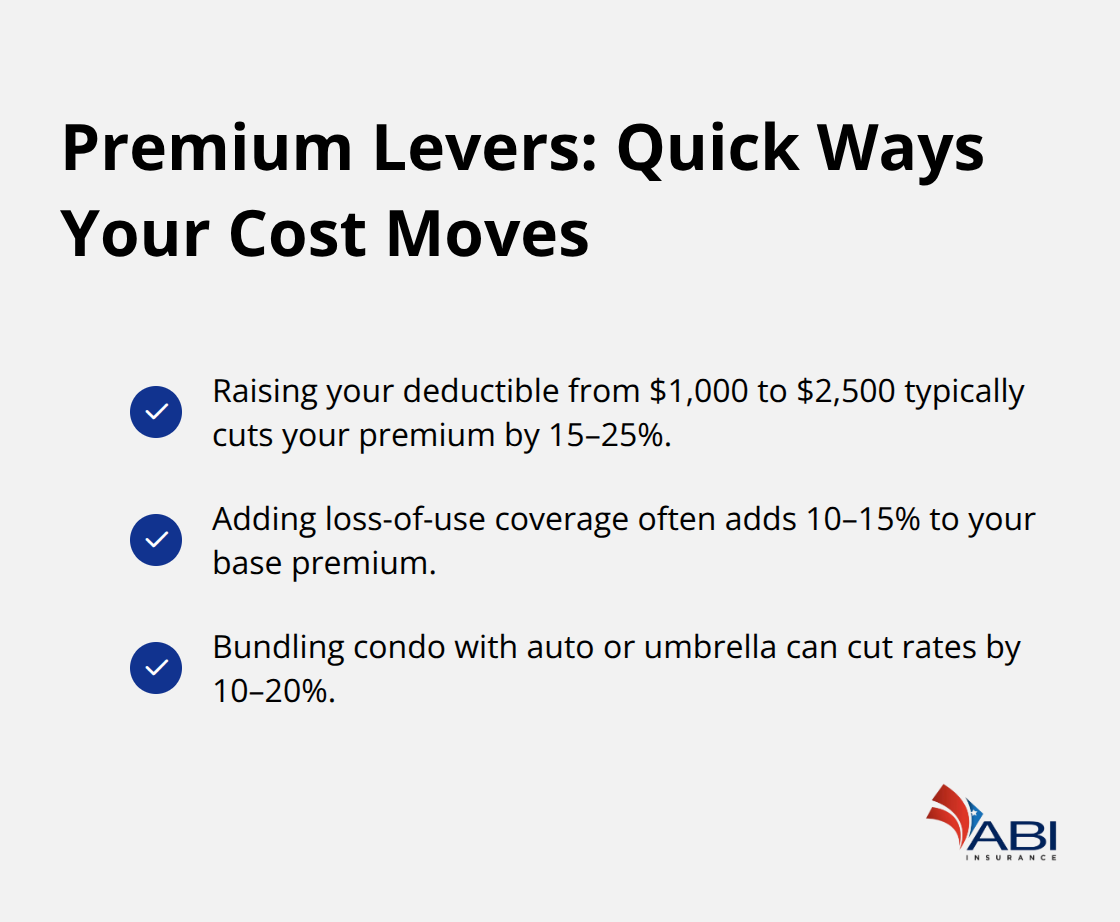
Your deductible is the real negotiation point. Jumping from $1,000 to $2,500 typically cuts your premium by 15 to 25 percent, a meaningful saving if your emergency fund can absorb that larger out-of-pocket hit. Insurance rates are based on what an insurer thinks it will cost to make you whole in the event of a loss, and the average condo insurance premium in Oregon runs about $633 per year, but Portland premiums trend higher due to location and building age.
Optional Coverages Worth Your Attention
Loss-of-use coverage pays for temporary housing if your unit becomes uninhabitable and adds only 10 to 15 percent to your base premium-often worth it if you lack family nearby. Loss assessment coverage is equally overlooked; it covers your share of the HOA bill if the master policy’s limits are exhausted and the association assesses owners for the shortfall. If your building has thin reserves or aging systems, this protection is not optional.
Water damage coverage is limited under standard policies. Sewer backup and overflow typically require separate endorsements, and in Portland’s climate, that’s a practical necessity, not a luxury. Understanding what your master policy covers versus what your individual HO6 must cover prevents gaps that leave you exposed when claims arise.
How to Gather Information and Request Accurate Quotes
Collect Your Building’s Physical Details First
Start with your condo’s specifics: the year built, square footage of your unit, construction materials, and number of stories in the building. Older Portland buildings like pre-1970 conversions require explicit mention because their construction type directly impacts your premium. Pull your building’s reserve study-ideally dated within the last three to five years-and share the reserve funding percentage with your agent.
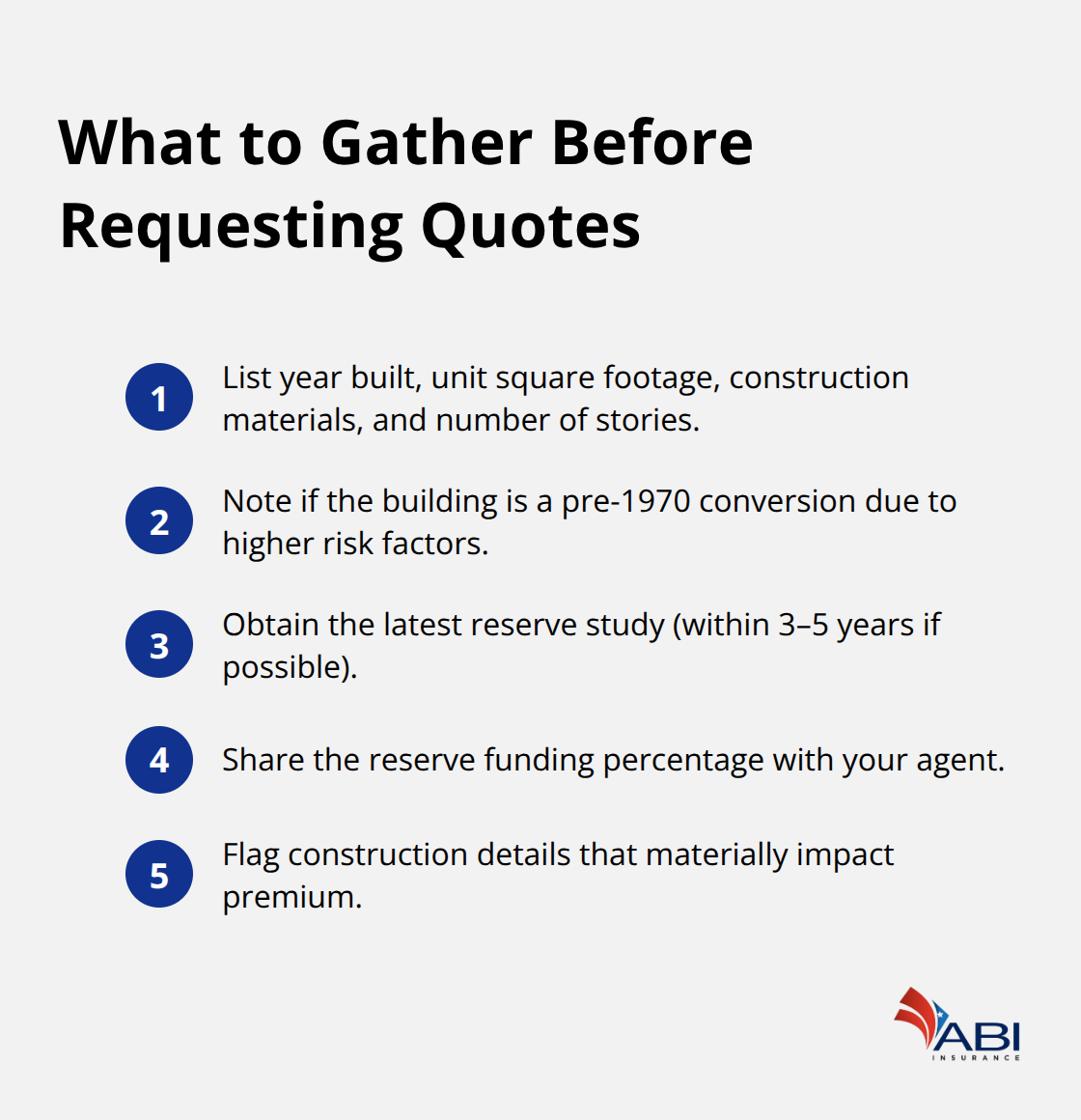
Insurers use reserve health as a red flag for claim risk.
Understand Your Master Policy Coverage
Obtain your master policy declaration from your HOA to understand exactly what the association’s insurance covers and what deductible applies to the master plan. This distinction matters enormously: if the master policy has a $25,000 deductible, policy coverage needs to protect you from that gap. Document any recent renovations, upgrades, or high-value items inside your unit-artwork, jewelry, electronics, or built-in improvements-because standard personal property limits often fall short. Note your building’s flood zone designation and whether it sits near the Willamette River or in areas prone to stormwater backup. This information prevents your agent from underestimating water damage risk, which is Portland’s most common claim driver.
Ask the Right Questions When Contacting Agents
Contact agents and ask directly whether they have underwritten Portland condo buildings before and how they assess the specific risks in your neighborhood or building age category. Request a written quote that itemizes base premium, optional coverages, discounts applied, and any exclusions or limitations tied to your building type. Many agents skip this breakdown, which leaves you guessing at what you’re actually paying for. Ask whether your premium includes sewer backup and flood endorsements or if those are add-ons priced separately, since many owners assume they’re covered and discover otherwise after a claim.
Compare Quotes Across Multiple Carriers
Inquire about discounts for bundling condo coverage with auto or umbrella policies, as these can cut your rate by 10 to 20 percent. Request clarification on the master policy’s deductible and coverage limits so you understand your personal exposure, and confirm whether loss assessment coverage is included or optional. When comparing quotes from multiple insurers, don’t fixate on the lowest number; instead, compare identical coverage limits, deductibles, and endorsements across quotes. A $400 annual difference between two policies often reflects coverage gaps, not better pricing. Request quotes from at least three carriers and ask each agent to explain why their quote differs from competitors’ quotes in writing. This forces transparency and prevents you from accidentally selecting inadequate coverage to chase savings.
With your information organized and quotes in hand, you’re ready to evaluate the specific coverage options that fit your situation and budget.
What Your Master Policy Covers and What You Must Cover Yourself
How Master Policies and HO6 Policies Work Together
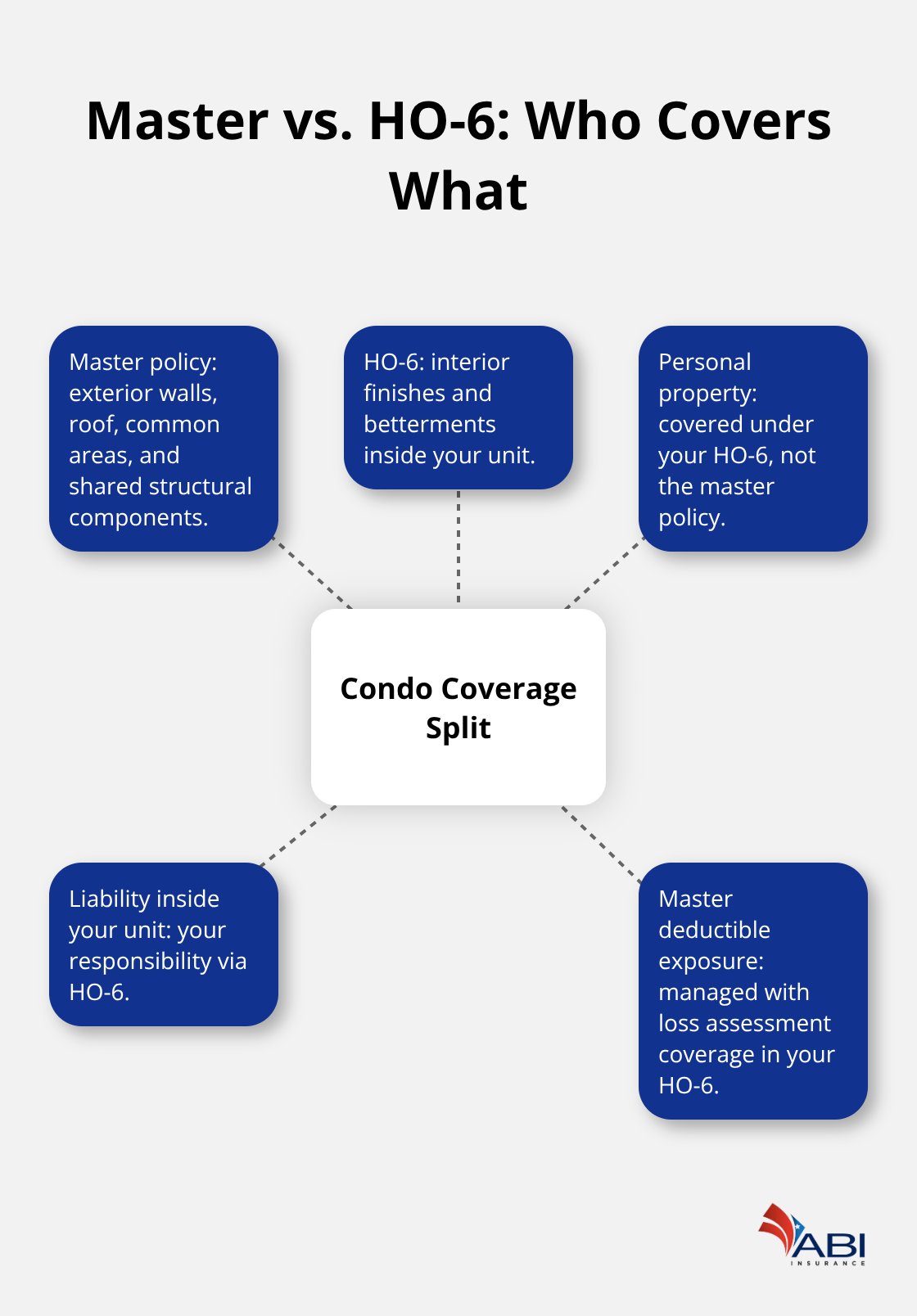
Your master policy and your individual HO6 policy work in tandem, but the distinction between them creates real financial exposure if you misunderstand where coverage ends. The master policy, paid for through your HOA dues, covers the building’s exterior walls, roof, common areas, and the structural components that serve all residents. It may not cover your interior finishes, and will not cover your personal belongings, or liability for injuries that happen inside your unit. Your HO6 fills those gaps.
Understanding Your Master Policy Deductible
When you request your master policy declaration, pay close attention to the deductible amount, which often ranges from $5,000 to $25,000 or higher. If your building’s master policy carries a $25,000 deductible and the roof fails, your HOA will assess owners for that deductible before insurance pays the rest. Loss assessment coverage in your HO6 protects you from that exact scenario, capping your personal exposure to a defined limit. Without it, you absorb your proportional share of the master deductible directly out of pocket. This is not theoretical: if your building’s reserves are thin or the structure is pre-1970 with aging systems, special assessments happen. Loss assessment coverage typically costs an additional $50 to $100 per year and should be mandatory on your policy, not optional.
Personal Property and Interior Coverage Limits
Your personal property coverage limit of $60,000 sounds adequate until you inventory your actual belongings. Electronics, furniture, clothing, and kitchen items add up fast, and if you’ve renovated your interior with built-in cabinetry, upgraded flooring, or professional-grade appliances, those improvements may need explicit coverage under your HO6 dwelling limit as well. Standard policies cap coverage for certain high-value items like jewelry or art at $1,500 to $2,500 unless you schedule them separately.
Water Damage, Sewer Backup, and Flood Coverage
Water damage coverage deserves its own attention because Portland’s aging stormwater systems and heavy rainfall create exposure that standard HO6 policies severely limit. Sewer backup coverage is almost never included in a base policy; you must request it as an endorsement, and it typically costs $75 to $150 annually depending on your building’s age and flood zone. Flood insurance requires a separate policy through the National Flood Insurance Program, not your standard carrier, and costs $400 to $800 per year in Portland depending on your flood zone designation. If your unit sits on the first floor in a mapped flood zone or within a quarter mile of the Willamette River, flood insurance might be considered.
Earthquake Coverage and Bundling Discounts
Earthquake coverage is the protection most Portland condo owners skip, and it remains the riskiest omission. Oregon sits in the Cascadia Subduction Zone, and while the probability of a major quake in any given year is low, the financial consequences of going uninsured are catastrophic. Earthquake coverage for condos typically costs $150 to $300 annually and covers structural damage and personal property loss from seismic activity. Your standard HO6 excludes earthquake entirely, so you must add it explicitly. Ask your agent whether your building qualifies for any carrier-specific discounts tied to safety features or building condition before finalizing your quote.
Final Thoughts
Estimating your Portland condo insurance cost accurately requires you to gather specific information about your building, understand what your master policy covers, and compare quotes that reflect identical protection levels. The factors that shape your premium-location, building age, construction type, and your chosen coverage limits-become clear once you ask the right questions. Your deductible choice and optional endorsements like loss assessment and sewer backup coverage directly impact both your annual premium and your financial exposure when claims arise.
Working with a local agent who understands Portland’s specific risks and building characteristics makes the difference between an accurate quote and a surprise bill. An agent familiar with pre-1970 conversions, the Willamette River’s flood patterns, and the Cascadia Subduction Zone threat will ask the right questions about your building’s reserve study, master policy deductible, and neighborhood flood zone designation. They’ll also identify discounts you might otherwise miss-bundling savings, carrier-specific credits for buildings with updated fire suppression systems, or rate reductions tied to strong HOA management.
Gather your building’s reserve study, master policy declaration, and unit details, then contact at least three carriers for written quotes that itemize coverage, deductibles, and endorsements. ABI Insurance brings more than 40 years of Portland metro experience to condo coverage and can walk you through the specific protections your building and unit require. Request clarification on sewer backup, flood, and earthquake coverage before you finalize your policy.






 Understanding Oregon Earthquake Insurance Coverage and Your Home’s Resilience