
Running a medical practice means managing countless risks-from patient injuries to equipment failures to unexpected closures. A medical office BOP bundles the essential protections your practice needs into one streamlined package.
At ABI Insurance, we’ve seen how the right coverage can be the difference between a practice that recovers quickly from setbacks and one that struggles. This guide walks you through what a Business Owners Policy (BOP) covers, which claims happen most often, and how to find the right policy for your specific situation.
What a Medical Office BOP Actually Covers
A Business Owner’s Policy for medical practices bundles general liability, commercial property, and business interruption coverage into a single package. General liability protects you when a patient slips on a wet floor or a staff member damages a visitor’s personal property. Commercial property covers your medical equipment, office furniture, computers, and the building itself if you own it. Business interruption coverage compensates for lost income and ongoing expenses like payroll and rent if a fire, flood, or other covered event forces you to close temporarily. This bundled approach typically costs less than purchasing general liability and property insurance separately.
Why Bundling Makes Financial Sense
Buying separate policies creates overlaps, gaps, and higher total premiums. When you bundle, insurers reward you with discounts because they manage one relationship instead of multiple claims across different carriers. A practice with fewer than 100 employees, less than $1 million in annual revenue, and a physical office location qualifies as an ideal candidate for a BOP. You can customize coverage by adding endorsements such as cyber liability, data breach protection, or enhanced business interruption limits to match your specific risks. The application process moves quickly-many carriers offer online quotes and activate coverage within 24 hours of approval. If your clinic sustains damage from fire and requires renovation, a BOP covers reconstruction costs even if the fire originated in a neighboring building (provided you have business interruption coverage included). This continuity matters because it keeps your payroll flowing and your doors ready to reopen without draining your reserves.
Where a BOP Falls Short
A standard BOP does not automatically include workers’ compensation, professional liability (medical malpractice), commercial auto, or cyber insurance-you must add these separately or as endorsements. Workers’ compensation is often legally required by your state if you have employees, so this gap demands immediate attention. Medical malpractice coverage is equally essential; a patient lawsuit for misdiagnosis or treatment error is not covered under the general liability portion of a BOP, and this protection requires a standalone professional liability policy tailored to your medical specialty.
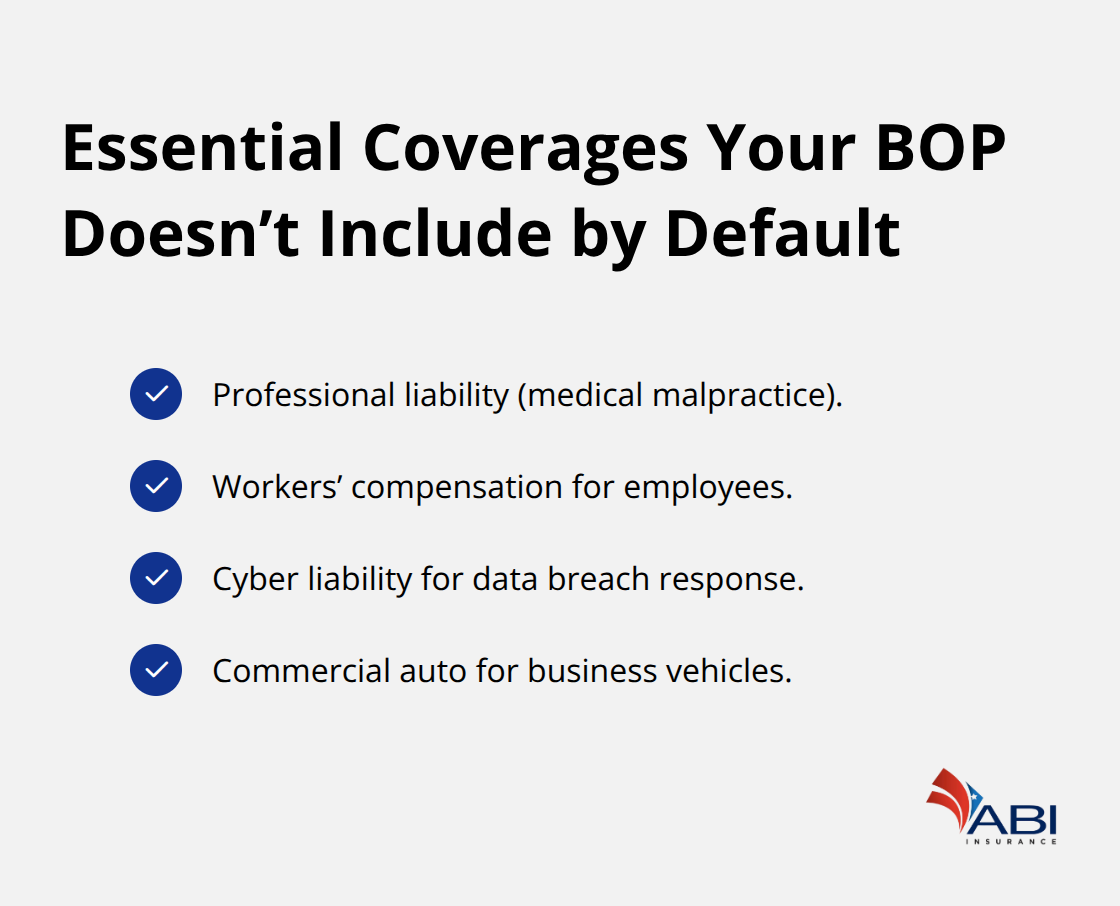
If your practice operates vehicles for patient transport or house calls, you need commercial auto coverage outside the BOP framework. Cyber liability has become non-negotiable since patient data breaches trigger notification costs, regulatory fines, and lawsuits that a basic BOP does not address.
What You Must Add to Your BOP
Professional liability stands apart from general liability because it covers claims arising from your medical judgment or treatment decisions. A patient who alleges you missed a diagnosis or prescribed the wrong medication will file a professional liability claim, not a general liability claim. Workers’ compensation protects your staff if they suffer job-related injuries or illnesses (and state law typically mandates it). Cyber insurance covers costs to respond to data breaches, including notification expenses, credit monitoring, regulatory penalties, and legal defense. Many practices overlook these gaps because they assume a BOP is comprehensive when it actually covers only property and third-party liability. The distinction matters because these omitted coverages address the claims that happen most frequently in healthcare settings. Understanding what sits outside your BOP prevents costly surprises when a claim lands on your desk.
What Each Part of Your Medical Office BOP Actually Protects
General Liability Covers Patient and Visitor Injuries
General liability within a BOP covers third-party bodily injury and property damage claims that arise from your practice operations. When a patient slips on a wet floor in your waiting room and breaks an arm, general liability pays for their medical expenses and any judgment against you. When a staff member accidentally damages a visitor’s phone or glasses, that claim falls under general liability as well. Advertising injury coverage, included in most medical BOPs, protects you if someone sues for defamation or copyright infringement in your marketing materials. Most medical practices pay between $70 and $200 monthly for a bundled BOP, though the exact cost depends on facility size, equipment value, and location. This price point assumes you bundle property and liability together; buying these separately costs significantly more.
However, general liability alone does not cover claims stemming from your clinical decisions, diagnoses, or treatment protocols. A patient who alleges you missed a diagnosis will pursue a professional liability claim, not a general liability claim, and a standard BOP leaves you exposed to this risk.
Professional Liability Requires Separate Coverage
Professional liability coverage must sit outside your BOP as a standalone policy because it addresses claims rooted in medical judgment. A misdiagnosis, delayed treatment, or medication error generates professional liability exposure that general liability explicitly excludes. Your BOP’s general liability section will not protect you when a patient sues over a treatment decision or clinical outcome. This separation exists because medical judgment claims require specialized underwriting and defense strategies that differ fundamentally from premises liability or property damage claims. Adding this coverage to your risk management strategy fills the gap that your BOP cannot address.
Property Coverage Protects Your Equipment and Facility
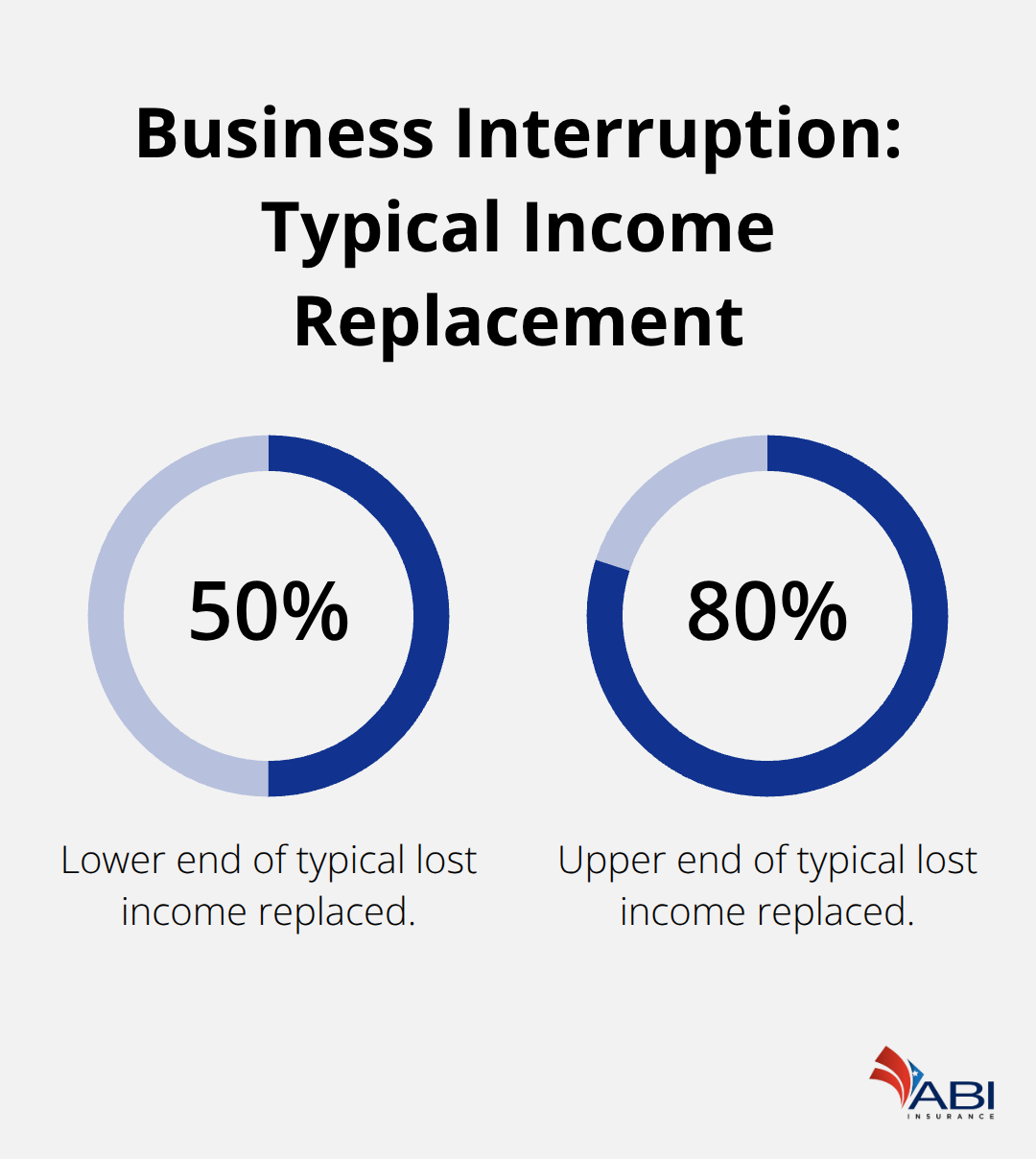
Property coverage within your BOP protects medical equipment, computers, office furniture, diagnostic devices, and your building if you own it. If a fire damages your practice and forces temporary closure, business interruption coverage compensates for lost patient revenue and covers ongoing expenses like staff payroll, rent, and utilities during reconstruction. The average medical practice spends $8,000 to $15,000 annually on equipment replacement and facility maintenance, so property damage that sidelines operations for even two weeks can deplete cash reserves quickly. Business interruption coverage typically replaces 50 to 80 percent of lost income for up to 12 months, depending on your policy limits.
Cyber Liability Addresses Data Breach Costs
Cyber liability deserves specific attention because it remains absent from standard BOPs despite being essential for healthcare. A data breach affecting patient records triggers notification costs averaging $3,600 to $8,000 per incident, regulatory fines, credit monitoring services, and legal defense expenses that a basic BOP will not cover. Adding cyber liability to your BOP costs roughly $30 to $50 monthly and protects against these mounting costs. Your practice holds sensitive patient information that criminals actively target, making this coverage a practical necessity rather than an optional add-on.
The gaps in standard BOP coverage become apparent when you examine what claims actually land on medical practices. Understanding which protections sit inside your BOP and which require separate policies determines whether your practice survives a major incident or faces financial devastation. The next section walks through the specific claims that happen most often in medical settings and shows exactly how each coverage type responds.
Claims That Actually Happen in Medical Practices
Patient Injuries and Premises Liability
Patient slip-and-fall incidents represent the highest-frequency general liability claim in healthcare settings, and your BOP’s general liability section handles these directly. A patient fractures their wrist on a wet waiting room floor, and your general liability coverage pays their medical bills, rehabilitation costs, and any judgment up to your policy limit. Most medical practices experience at least one premises liability claim every five to seven years, making this protection far from theoretical. The Hartford data shows that the average slip-and-fall claim in a medical office runs $15,000 to $40,000 once legal defense and settlement costs are factored in, which is why your general liability limit matters more than most practices realize. Try setting your general liability limit at minimum $1 million per occurrence and $2 million aggregate if your practice sees more than 50 patients daily or operates in a high-traffic facility.
Advertising injury claims occur less frequently but can be expensive when they happen. A patient sues over defamation in your marketing materials or a competitor alleges copyright infringement in your website design. These claims fall under the general liability section of your BOP, but only if your policy explicitly includes advertising injury coverage, which most do.
Equipment Failures and Business Interruption
Equipment failures and technology breakdowns create a different exposure that property coverage addresses. When your diagnostic imaging equipment fails and forces you to cancel patient appointments for two weeks while repairs happen, business interruption coverage compensates for lost revenue and keeps your staff payroll flowing. Without this protection, a single equipment failure can cost your practice $8,000 to $20,000 in lost income plus the repair expense itself.
Medical practices should document their fixed monthly expenses and calculate business interruption limits based on actual numbers rather than guessing.
Data Breaches and Cyber Threats
Data breaches represent the fastest-growing threat to medical practices, and standard BOP coverage leaves you completely exposed. A ransomware attack or phishing breach affecting patient records triggers notification costs, plus regulatory fines that can reach $100 to $500 per affected patient depending on state law. Your practice must notify patients within 30 to 60 days in most states, and that notification process alone-letters, credit monitoring services, call center support-exhausts budgets quickly without cyber liability coverage. Adding cyber insurance to your BOP costs $30 to $50 monthly and covers breach response, regulatory penalties, and legal defense, making it the most cost-effective risk management decision a small practice can make.
Professional Liability Claims Outside Your BOP
Professional liability claims sit outside your BOP entirely, which is why so many practices discover this gap too late. A patient alleges misdiagnosis or medication error and files a malpractice lawsuit, and your general liability policy explicitly excludes this claim. Malpractice coverage requires a standalone professional liability policy underwritten by carriers who specialize in medical risk, and this protection costs $1,500 to $5,000 annually depending on your specialty and claims history. Practices without malpractice coverage face defense costs and judgments that can reach $100,000 to $500,000 for serious claims, making this the single most dangerous gap in healthcare risk management.
Final Thoughts
A medical office BOP protects your practice from the most common and costly risks you face, but only if you understand what sits inside the bundle and what requires separate coverage. General liability, property insurance, and business interruption form the foundation of your BOP, covering patient injuries, equipment damage, and lost income during forced closures. Professional liability, workers’ compensation, and cyber insurance must be added separately because a standard BOP explicitly excludes these protections, and these gaps represent the claims that actually happen in healthcare settings.
Your next step is to audit your current coverage against the specific exposures outlined in this guide. Pull your existing policies and verify that you have professional liability coverage with adequate limits for your specialty, workers’ compensation if you have employees, and cyber liability to address data breach costs. Calculate your actual monthly operating expenses and set business interruption limits based on real numbers rather than estimates, and confirm you have commercial auto coverage outside your BOP if you operate vehicles for patient transport.
Finding the right medical office BOP requires working with an agent who understands healthcare operations and can customize coverage to match your specific risks. At ABI Insurance, we work with medical practices across the Portland metro area and the Western U.S. to build comprehensive protection that covers both the obvious exposures and the gaps that catch practices off guard. Visit ABI Insurance to discuss your practice’s unique risks and get a quote that reflects your actual exposure rather than a generic template.








 Medical Malpractice Coverage Oregon: Trends, Costs, and Protections