
Oregon healthcare providers face mounting pressure from medical malpractice claims. Premiums are climbing, coverage options are shifting, and the stakes for inadequate protection have never been higher.
At ABI Insurance, we’ve seen firsthand how critical the right medical malpractice coverage in Oregon is for protecting your practice and assets. This guide walks you through current claim trends, coverage strategies, and cost factors shaping the market today.
What’s Driving Medical Malpractice Claims in Oregon
In 2023, Oregon physicians faced 94 medical malpractice payouts totaling $70,397,500, according to National Practitioner Data Bank data. This averages to $748,909 per payout-a figure that reflects both the severity of claims and the financial exposure healthcare providers face. These numbers aren’t abstract; they represent real cases where patient outcomes didn’t match expectations, and providers bore the cost.
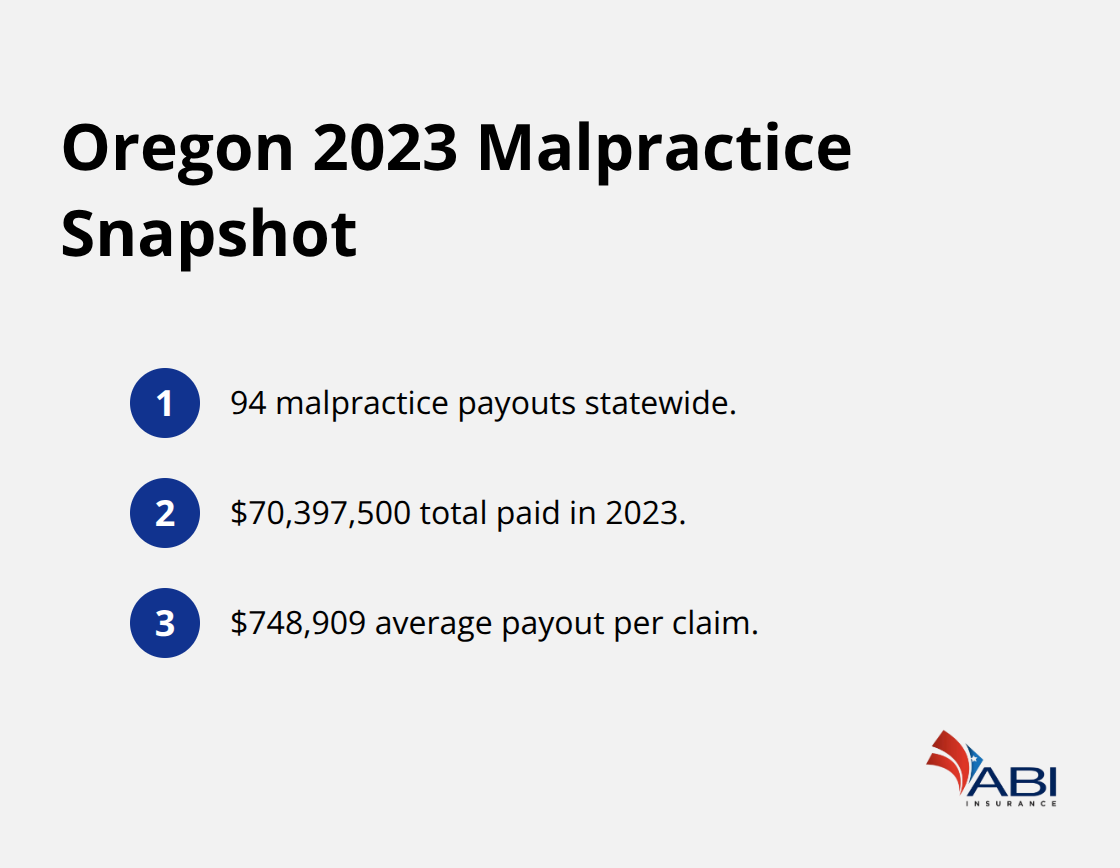
The size of individual payouts matters far more than claim frequency, and Oregon’s average demonstrates that when things go wrong, they go wrong expensively.
Oregon’s Payout Landscape Compared to National Trends
Oregon’s 2023 average payout of $748,909 sits in the middle range nationally, but the state’s lack of damage caps makes each claim potentially more costly than in states with restrictions. Oregon’s constitution prohibits caps on non-economic damages in personal injury cases, meaning juries can award compensation for pain, suffering, and emotional distress without legal limits. Non-economic damages in wrongful death cases are capped at $500,000, but economic damages-medical costs, lost wages, and ongoing care-have no ceiling. This absence of caps directly influences how much individual payouts can reach and, consequently, how much insurers must reserve for claims. A surgical error or misdiagnosis in a high-earning professional can quickly exceed $1 million when you add lost income, future medical care, and non-economic damages together.
How Claims Push Premium Costs Higher
When malpractice payouts spike in a state, insurers respond by raising premiums across the board. Oregon experienced a 16.7% increase in medical liability premiums in 2020 alone, according to an American Medical Association analysis of Medical Liability Monitor data. That year was particularly sharp-31.1% of all premium increases reported nationally were year-over-year jumps, the highest rate since 2005. Oregon wasn’t alone in facing steep increases, but the trend directly connects to claim frequency and severity.
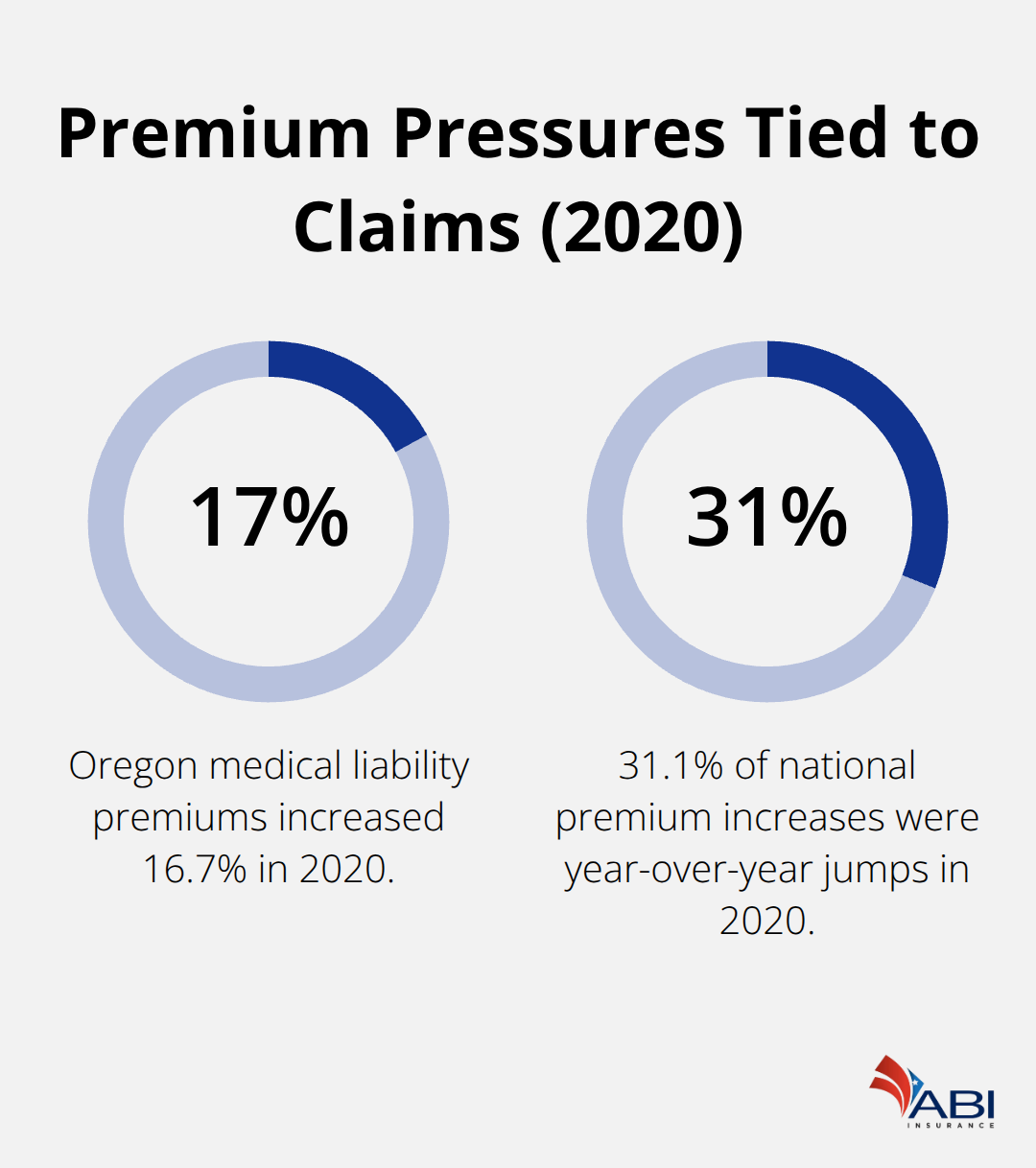
Insurers use loss history to help determine premium. The frequency and severity of claims are used in calculating premium, and when payouts climb, premiums follow. Specialties with higher claim histories face steeper increases than lower-risk fields. An obstetrician in Oregon will pay substantially more than a dermatologist, not because of arbitrary pricing but because obstetric claims historically result in larger payouts.
Why Your Specialty and History Shape Your Rates
Your specialty, your prior claims history, and the state’s overall loss experience all feed into what you’ll pay for coverage. Different insurers weigh these factors differently, and working with a broker to obtain quotes from multiple carriers can yield savings of 20% or more compared to single-carrier approaches. This variation across insurers means that your rate with one carrier may differ significantly from another’s quote for identical coverage. The market rewards providers who shop strategically and compare options side by side. Understanding how insurers calculate your premium based on your field’s track record, your own claims record, and broader state trends helps you anticipate costs and identify where you can negotiate better terms.
Choosing the Right Coverage and Protecting Your Practice
Claims-Made vs. Occurrence Policies: The Cost Trade-Off
Oregon physicians must select between two fundamentally different policy structures, each with distinct financial implications. Claims-made policies carry lower upfront premiums but require tail coverage when you leave the policy, while occurrence policies cost 40–60% more annually but eliminate tail obligations entirely. The choice directly affects your total cost of ownership over your career. If you plan to practice in Oregon long-term, a claims-made policy with a tail purchase plan often makes financial sense. If you expect to change jobs or retire within five years, the math shifts dramatically. An obstetrician paying $55,000 annually for a claims-made policy faces a tail cost of roughly $110,000 when retiring, a significant expense that occurrence policy holders avoid. Your career timeline and risk tolerance should drive this decision, not assumptions about which option sounds safer.
Coverage Limits and Facility Requirements
Coverage limits in Oregon commonly sit at $1 million per claim and $3 million aggregate annually, but your hospital or facility may demand higher limits. Before you lock in a quote, verify what your credentialing requirements specify. Some systems require $2 million per claim or $5 million aggregate, particularly for high-risk specialties like obstetrics or cardiovascular surgery. Anesthesiologists typically pay around $18,000 annually with a $36,000 tail, while OB/GYNs performing major surgery average $55,000 with a $110,000 tail according to 2025 premium data. These numbers vary across carriers by 30–50% or more, which is why obtaining quotes from all major Oregon insurers through a broker yields substantial savings.
Risk Management Practices That Lower Premiums
Risk management directly reduces your claims exposure and can lower premiums. Facilities with robust credentialing processes, malpractice prevention training, and clear communication protocols experience fewer claims. Structured handoff protocols between care team members, detailed documentation, and verified patient consent before procedures are practical steps that insurers reward with discounts. Some carriers offer 5–10% premium reductions for practices that complete patient-safety certifications or adopt electronic health record systems with built-in safety checks. The Oregon Medical Board and your specialty society provide resources on risk mitigation practices tailored to your field.
Shopping Multiple Carriers Yields Significant Savings
Shopping across multiple carriers matters more than any single coverage choice. Working with a broker who quotes all major Oregon insurers can save you 20% or more compared to accepting a single carrier’s initial offer. Different insurers weigh specialty risk, claims history, and practice structure differently, which means your rate with one carrier may differ significantly from another’s quote for identical coverage. The market rewards providers who compare options side by side and negotiate strategically. Understanding how insurers calculate your premium based on your field’s track record, your own claims record, and broader state trends, helps you anticipate costs and identify where you can negotiate better terms. As you evaluate your coverage options, the next critical step involves understanding how Oregon’s regulatory environment and market dynamics shape what insurers offer and at what price.
What’s Pushing Premium Costs Up in Oregon Right Now
Reinsurance Costs Drive the Market
Reinsurance costs form the primary driver behind Oregon’s rising medical malpractice premiums, and this trend shows no sign of reversing. When primary insurers face larger claims and increased frequency, they purchase reinsurance to protect themselves against catastrophic losses. Rising reinsurance costs flow directly to physicians through higher premiums. More frequent and severe weather events increase insurer risk across all lines of business, forcing reinsurers to demand higher rates. This cost pressure reaches your policy renewal. Premium increases in the medical liability market reflect this dynamic, and the underlying drivers remain active today.
Specialty Risk Creates Dramatic Premium Variation
Specialty matters enormously in this environment. Obstetrics and gynecology major surgery averages $55,000 annually with a $110,000 tail, while family practice sits around $7,000 with a $14,000 tail. An anesthesiologist pays approximately $18,000 with a $36,000 tail, and emergency medicine physicians average $31,000. These figures represent 2025 data and show that high-risk specialties absorb disproportionate cost increases when the market tightens. Your specialty’s historical claims experience directly determines your premium tier.
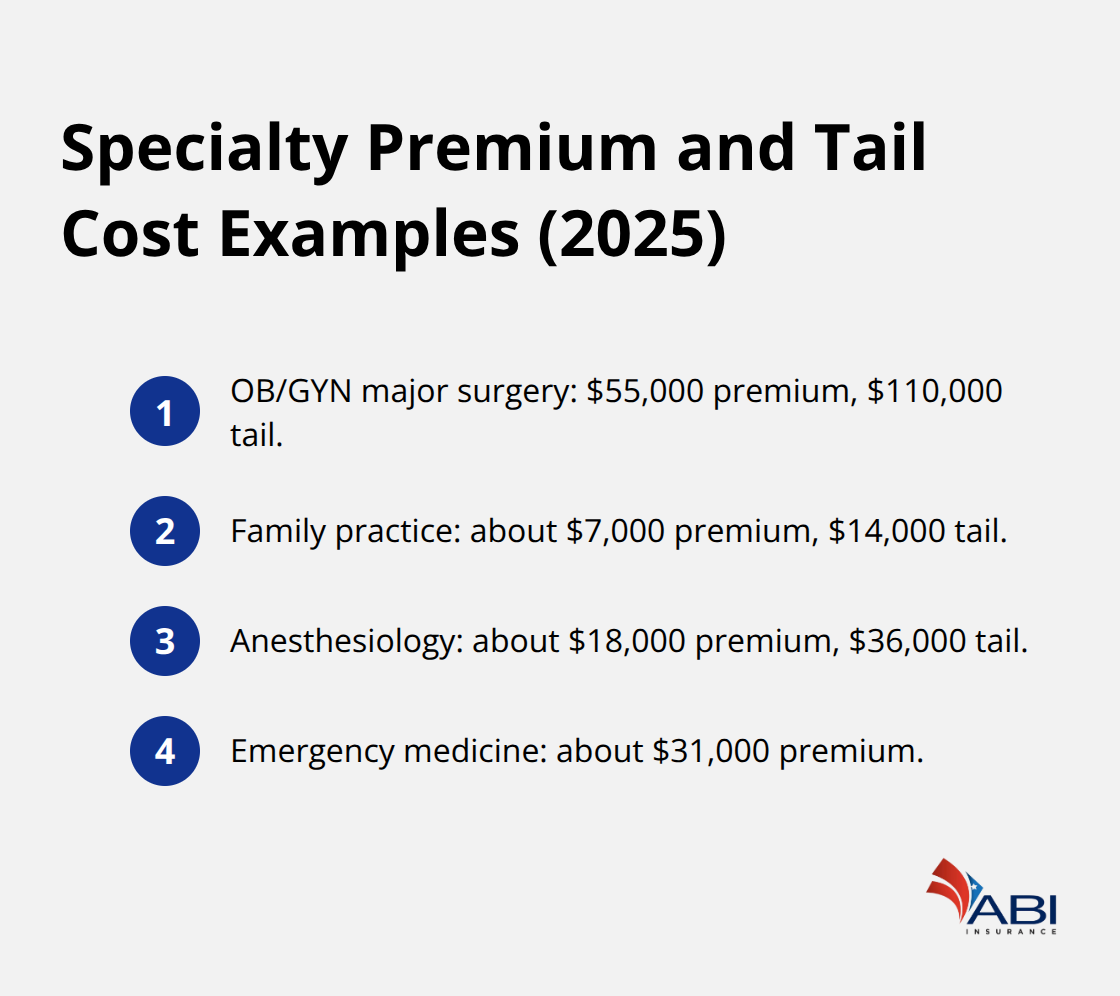
Moving between specialty risk categories means accepting substantially different costs.
Market Contraction Limits Your Options
Market competition in the Portland metro area has contracted measurably as some insurers pull back from Oregon due to unfavorable loss ratios. Fewer competitors means less negotiating power for physicians shopping coverage. The top carriers currently active in Oregon include The Doctors Company, MedPro Group, and CNA all backed by AM Best A-level or higher ratings. A carrier’s appetite may vary depending on the specialty, practice size, and state where practicing. This variation means your options may be narrower than you expect.
Brokers Access Better Quotes Than Direct Shopping
Working with a broker to obtain quotes from all major carriers remains essential because individual carriers may evaluate loss history differently. A broker can access quotes that physicians cannot obtain directly, and the savings typically reach 20% or more compared to single-carrier approaches. Oregon’s regulatory environment has remained stable relative to other states, which works in your favor. The state has no mandatory malpractice insurance requirement for physicians, meaning hospitals and health systems drive coverage requirements through credentialing standards rather than law.
Facility Requirements Shape Your Coverage Decisions
This flexibility means you can negotiate coverage terms directly with facilities instead of meeting statutory minimums. Standard limits of $1 million per claim and $3 million aggregate satisfy most Oregon facilities, though high-risk specialties should verify whether specific systems demand higher limits before accepting employment. Different insurers weigh specialty risk, claims history, and practice structure differently, which means your rate with one carrier may differ significantly from another’s quote for identical coverage.
Final Thoughts
Medical malpractice coverage in Oregon requires you to assess your specialty’s risk profile, your facility’s requirements, and the current market landscape with clear eyes. Oregon physicians faced $70.4 million in payouts across 94 claims in 2023, with an average settlement of $748,909 per case, figures that underscore why adequate protection matters far more than chasing the lowest premium. Your coverage limits, policy structure, and tail obligations directly determine whether a single claim depletes your personal assets or remains contained within your insurance protection.
You should verify your facility’s exact coverage requirements before accepting any position, obtain quotes from multiple carriers rather than accepting a single offer, and understand whether a claims-made or occurrence policy aligns with your career timeline. Shopping across Oregon’s active insurers typically yields 20% or more in savings and ensures you don’t overpay for identical coverage. The upfront cost difference between policy types matters less than the total expense when you factor in tail coverage obligations at retirement or job transitions.
Oregon’s regulatory environment remains stable compared to other states, which works in your favor. No state mandate requires malpractice insurance, so you negotiate coverage terms directly with facilities rather than meeting statutory minimums. Contact ABI Insurance to discuss your medical malpractice coverage Oregon needs and explore options tailored to your specialty and practice structure.


 Medical Malpractice Insurance Portland: Costs, Coverages, and Choices