
Condo ownership in Oregon comes with unique insurance challenges that many owners overlook. The right coverage protects both your personal investment and shields you from liability claims that could drain your finances.
At ABI Insurance, we’ve helped countless Oregon condo owners navigate their insurance options and avoid costly gaps in protection. This guide walks you through the coverage types, policy options, and selection process to find the right fit for your building.
What Condo Insurance Actually Covers
Oregon condo insurance splits protection into two distinct parts, and understanding this division determines whether you face covered losses or unexpected out-of-pocket costs. The condo association’s master policy covers the building structure, common areas, and shared systems including plumbing, electrical, and roofing. Your individual HO6 policy protects your unit’s interior, personal belongings, and your liability exposure where the master policy stops. Under ORS 100.435, Oregon law requires the association to carry property insurance covering fire, extended coverage, vandalism, and malicious mischief on common elements, as well as comprehensive liability insurance for the board, unit owners, and the public. This legal requirement exists because common-area damage affects every owner. However, the master policy typically does not cover improvements you’ve made inside your unit, such as upgraded flooring, custom cabinets, or built-in fixtures. Interior structure coverage within your HO6 policy becomes essential for these upgrades.
Your Personal Policy Protects Four Critical Areas
Your HO6 policy covers four areas that the master policy may not. First, interior dwelling coverage protects walls, flooring, fixtures, and structural elements inside your unit that you own or are responsible for under your declaration. Second, personal property coverage reimburses you for belongings damaged or stolen, including items away from your unit like theft from your car, with limits you select.
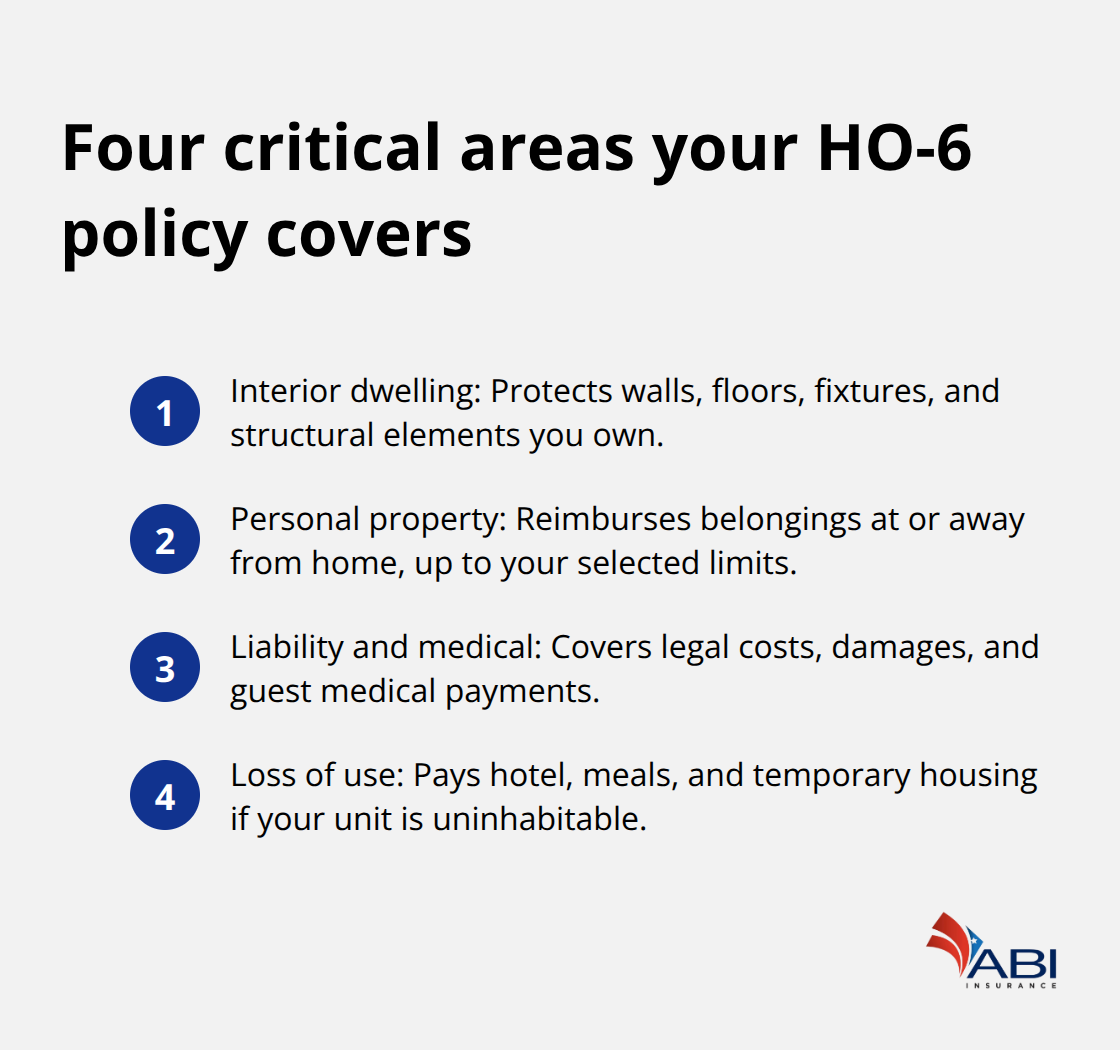
Third, liability protection covers legal costs and damages if someone is injured in your unit or you damage someone else’s property, and it includes medical payments coverage for minor guest injuries regardless of fault. Fourth, loss of use coverage, which typically equals about 40 percent of your combined dwelling and personal property limits, reimburses hotel stays, meals, and temporary housing costs if your unit becomes uninhabitable from a covered event.
Loss Assessment Coverage Protects Against Surprise Assessments
Loss assessment coverage, an optional but strongly recommended endorsement, protects you from surprise bills if the association’s master policy deductible or damage exceeds coverage limits and the board assesses unit owners to cover the gap. Oregon condo owners are not legally required to carry HO6 insurance, but mortgage lenders and your association’s bylaws may require it. The critical mistake many owners make is failing to review the association’s master policy before buying their own coverage, which creates either dangerous gaps or duplicate protection you pay for twice.
Standard Policies Exclude Major Risks
Standard HO6 policies exclude floods and earthquakes, two risks that matter significantly in Oregon’s earthquake zone and aging drainage infrastructure. Flood coverage must be obtained separately through the National Flood Insurance Program, while earthquake coverage requires a distinct endorsement or separate policy. Sewer backup coverage, another common exclusion, is particularly relevant in Portland’s older building stock with aging municipal systems. Water damage within your unit from burst pipes or accidental overflows is typically covered, but standing water from external flooding is not. Normal wear and tear, pest damage, intentional damage, and business equipment stored in your unit fall outside standard coverage. Jewelry and art collections face sublimits unless you add scheduled personal property endorsements, which provide broader protection for valuables by listing them individually with agreed values.
Coordination Between Policies Prevents Coverage Failures
The association’s master policy does not cover your personal liability or contents, and your personal policy does not cover shared building features that the master policy insures. Coordination between policies is non-negotiable. Request your HOA’s master policy declarations page before obtaining quotes so insurers can provide accurate coverage recommendations, and you can verify what gaps actually exist. Understanding which policy covers what prevents you from facing unexpected denials when you file a claim. With this foundation in place, you’re ready to explore the different policy types available to Oregon condo owners and how each structure affects your protection and costs.
Policy Structures That Determine Your Protection
Oregon condo associations operate under three distinct insurance frameworks, and each one changes how your individual HO6 policy must complement the master coverage. Understanding which structure applies to your building is the first step toward selecting appropriate limits and avoiding gaps in protection.
Three Master Policy Structures Shape Your Coverage Needs
The most common structure is the Walls-Out or Bare Walls approach, where the association covers only the building’s exterior structure, roof, and common areas. Unit owners carry responsibility for everything inside their units: interior walls, flooring, fixtures, and all personal property. This structure requires your HO6 policy to carry robust interior dwelling coverage because the association’s master policy stops at your unit’s perimeter.
The second structure is Original Specifications coverage, where the association insures the building to its original condition, but not owner-installed upgrades or modifications. If you’ve renovated your kitchen with custom cabinetry or replaced standard flooring with premium materials, you need interior structure coverage to protect those improvements. The master policy only covers what was there when the building was constructed.
The third structure is All-Inclusive coverage, where the association’s master policy covers everything, including betterments and improvements. This makes individual HO6 policies largely redundant except for personal liability and contents protection. Contact your HOA management to identify which structure governs your building.
Deductible Structures Create Hidden Financial Exposure
Oregon law under ORS 100.435 permits associations significant flexibility in how they structure deductibles and allocate costs. Many associations adopt deductibles of $5,000 or higher to reduce premiums, and when they do, the board must notify unit owners within 10 days of the decision and specify whether the deductible applies to individual units or is shared across all owners.
If your association has a $5,000 deductible on the master policy and a pipe bursts in a common wall, you may face a $5,000 out-of-pocket cost. Some associations implement deductible allocation, where unit owners must carry individual coverage at least equal to the deductible amount. This shifts financial responsibility away from the association’s reserves and onto individual owners.
How to Align Your Coverage with Your Building’s Structure
Request your HOA’s current insurance resolution and deductible allocation policy in writing, as this determines the minimum coverage levels your HO6 policy must provide to avoid assessments. Your agent can recommend appropriate limits that align with your building’s specific deductible structure once you provide these documents. This groundwork prevents you from purchasing insufficient coverage that leaves you exposed to surprise assessments when damage occurs. With your building’s insurance framework mapped out, you’re ready to explore how different policy types and coverage options translate these structural requirements into actual protection.
How to Select Coverage that Matches Your Building’s Real Risk
Gather the Documents That Reveal Your True Exposure
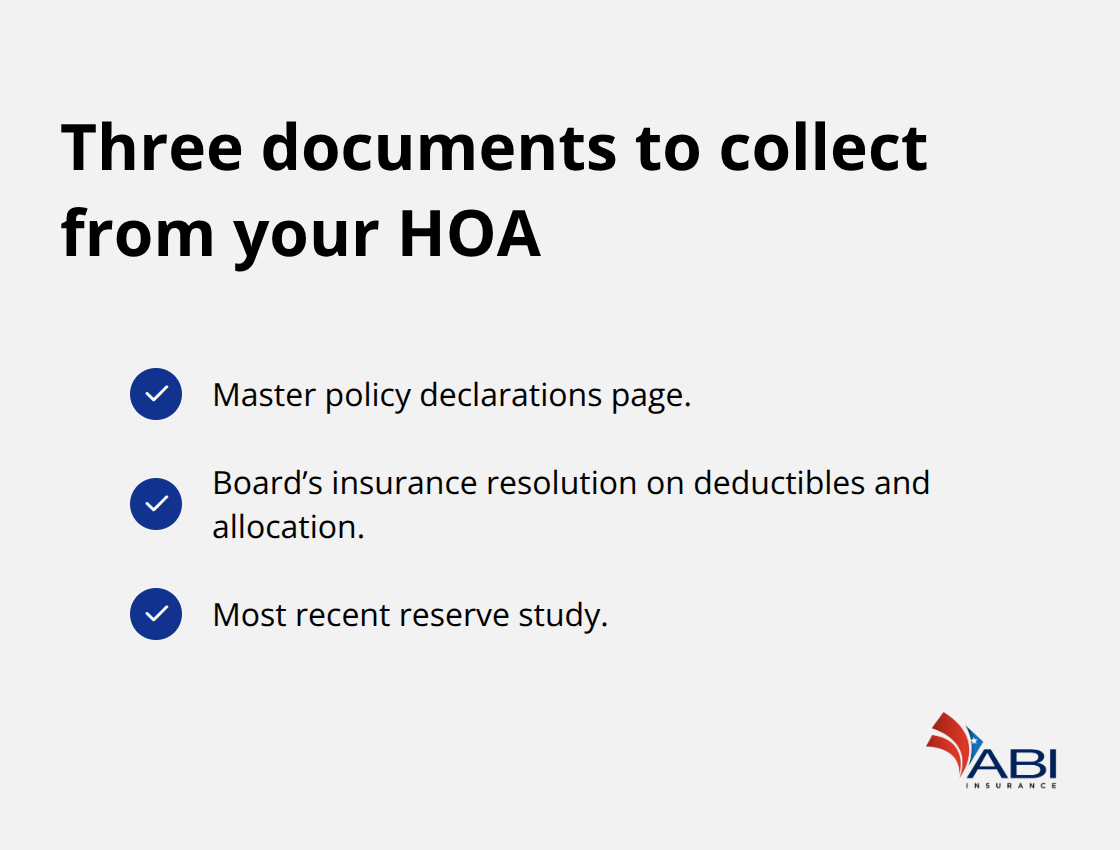
Start by obtaining three specific documents from your HOA management: the current master policy declarations page, the board’s insurance resolution specifying deductible amounts and allocation methods, and the most recent reserve study. These documents reveal what the association actually covers, what deductible you face, and which building systems are aging and likely to fail.
Newer construction with updated systems can operate safely with $40,000 to $50,000 in interior dwelling coverage, while pre-1970 buildings should carry $75,000 to $100,000.
Your agent cannot recommend accurate limits without these documents because they directly determine your financial exposure. Once you have them, ask your agent to compare your building’s deductible structure against your emergency savings. If your association has a $5,000 deductible and you have $3,000 in savings, raising your personal deductible to $2,500 to save premium money is financially dangerous.
Use Rate Comparison Tools to Avoid Overpaying
The Oregon Department of Financial Regulation’s home insurance shopping tool lets you compare rates from multiple carriers simultaneously, which prevents you from overpaying by 15 to 25 percent. Gather quotes from at least three providers, but hold coverage limits constant across all quotes so price differences reflect actual premium variation rather than different coverage amounts. Request itemized options from each quote so you see exactly what gaps exist in standard policies before you purchase coverage. This transparency prevents discovering at claim time that your chosen policy excludes something you assumed was covered.
Deductible Selection Shapes Your Annual Cost and Financial Risk
Raising your deductible from $1,000 to $2,500 typically reduces premiums by 10 to 20 percent, potentially saving $60 to $130 yearly. A middle-ground deductible of $1,500 saves approximately $30 to $60 annually while keeping your financial exposure manageable. This strategy works only if your emergency fund covers the higher deductible without strain.
Discounts and Bundling Strategies Lower Your Premium
Bundling your condo policy with auto insurance through the same carrier can yield 15 to 25 percent savings on combined premiums, according to Nationwide data, though you must compare bundled totals against separate quotes because occasionally purchasing from different carriers costs less. Claim-free discounts typically range from 5 to 15 percent if you haven’t filed a claim in three to five years, so ask each carrier about their lookback period. Safety features like deadbolts, security systems, fire alarms, and water leak detection devices reduce premiums by 2 to 5 percent per feature when documented.
Portland’s Specific Risks Demand Targeted Endorsements
Portland’s specific vulnerabilities — earthquake risk, aging drainage systems, and older building stock — make earthquake coverage and sewer backup endorsements particularly relevant rather than optional add-ons. These endorsements address real hazards that standard policies exclude, and they cost far less to add upfront than to face uninsured losses later. Your agent can quantify the premium impact of each endorsement, so you make informed decisions about which protections fit your budget and your building’s actual exposure.
Final Thoughts
Oregon condo insurance options require coordination between your association’s master policy and your individual HO6 coverage. The master policy protects the building structure and common areas under ORS 100.435, while your personal policy covers interior improvements, belongings, and liability exposure. Loss assessment coverage bridges the gap when deductibles or damage exceed what the association’s policy covers for common areas, and standard policies exclude floods and earthquakes-two significant risks in Oregon that demand separate endorsements or policies.
Selecting the right coverage means obtaining your HOA’s master policy declarations, insurance resolution, and reserve study before requesting quotes. These documents reveal your true financial exposure and allow agents to recommend appropriate limits that match your building’s actual deductible structure and aging systems. Deductible choices, bundling strategies, and safety feature discounts can reduce your annual premium by 20 to 35 percent when combined strategically.
ABI Insurance has spent over 40 years helping Portland-area condo owners navigate these decisions with local expertise and personal guidance. Contact us today to discuss your building’s specific needs and receive quotes that reflect your actual exposure. The time you invest now in selecting appropriate coverage prevents financial surprises when damage occurs and protects your investment in condo ownership.





 Healthcare Professional Liability Portland: What Providers Should Know