
Finding the right Beaverton home insurance quotes takes more than just picking the lowest price. You need to understand what coverage actually protects you, what factors drive your rates up or down, and how to spot real savings when comparing policies.
We at ABI Insurance built this guide to walk you through each step. Whether you’re a first-time buyer or shopping for better coverage, you’ll learn exactly what to look for.
Understanding Home Insurance Coverage Types
Dwelling Coverage: The Foundation of Your Protection
Dwelling coverage protects the structure itself, built-in appliances, and permanent fixtures, not the land your house sits on. Most Beaverton homeowners base this coverage on their purchase price, which creates a dangerous gap. For a $500,000 rebuild cost, you need to insure at least $400,000 to stay fully protected under the 80% rule. If you fall short, insurers will reduce your payout proportionally.
Material choices affect your rates substantially. Homes with brick, stucco, or fiber-cement siding and metal or composite roofs qualify for lower premiums than older wood-frame or wood shake construction, reflecting real differences in fire risk and durability.
Personal Property and Liability: Protecting What’s Inside and Your Financial Future
Personal property coverage protects the contents inside your home — furniture, electronics, clothing — whether items suffer damage from fire, theft, or storm. This coverage pays actual cash value or replacement cost depending on your endorsement choice. Liability coverage is the part that actually saves you from financial ruin. If someone gets injured on your property and sues you, liability coverage pays their medical bills, lost income, and legal defense costs up to your policy limit.
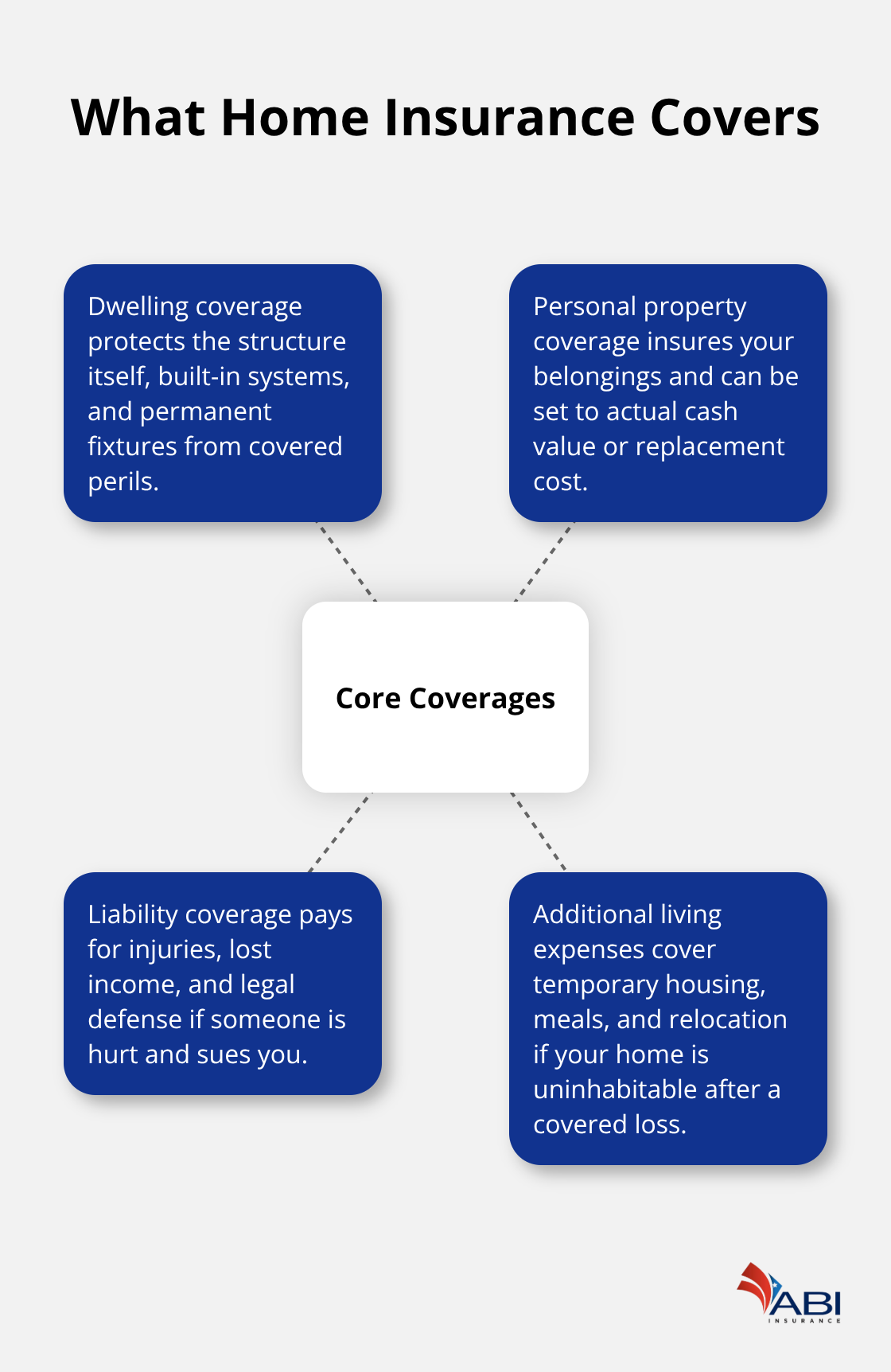
Additional living expenses coverage reimburses temporary housing, meals, and relocation costs if your home becomes uninhabitable after a covered loss. Most standard Beaverton policies include these basics, though rates vary significantly by carrier.
Calculating Your Actual Coverage Needs
The real actionable step is calculating what you actually need rather than guessing. Take your home’s square footage and multiply it by current Oregon rebuild costs per square foot. Add the cost to replace everything inside, then add a 20% cushion. That number should guide your dwelling limit, not your mortgage balance or what you paid for the house.
This calculation reveals whether standard coverage limits match your actual exposure. Many Beaverton homeowners discover they’ve underinsured their properties by hundreds of thousands of dollars. Once you understand what each coverage type protects, the next step involves recognizing what actually drives your rates up or down-and how location, home characteristics, and your personal history shape the quotes you receive.
What Drives Your Beaverton Home Insurance Rates
Oregon homeowners face premiums shaped by forces far beyond what you might expect. Beaverton sits in a region where wildfires, heavy rains, and seasonal storms create measurable risk that carriers price into every quote. The median rebuilding cost for Oregon homes reaches about $470,581 according to First Street analysis, yet location within the Portland metro area matters enormously. The average cost of homeowners insurance in Oregon is $2,065 per year, or about $172 per month. This variation reflects real differences in exposure. Homes in flood-prone areas or high-wildfire zones pay substantially more, sometimes 40 to 60 percent above the local baseline.
How Location and Environment Shape Your Quote
Your property’s distance from fire departments, water sources, and defensible space around structures all factor into the calculation. Carriers also weigh Oregon’s recent wildfire history and inflation heavily; premiums have climbed significantly in recent years as climate patterns shift. One critical detail most Beaverton homeowners overlook: your home’s physical construction determines roughly 20 to 30 percent of your rate. Brick, stucco, or fiber-cement siding with metal or composite roofs lowers premiums substantially compared to older wood-frame houses or wood shake roofs. Upgrading plumbing and electrical systems reduces fire and water damage risk, potentially lowering your rate by 10 to 15 percent because insurers see fewer claims from these properties.
Claims History and Credit: The Personal Factors
Your claims history and credit score round out the equation. A single water damage claim can raise rates by 20 to 40 percent for five years, while remaining claim-free qualifies you for loyalty discounts that compound over time. Credit history influences rates directly because research shows correlations between credit behavior and insurance claims, though a soft credit inquiry for quotes never damages your credit score.

The 80 Percent Rule and Deductible Decisions
The 80 percent replacement cost rule governs whether you receive full payment after a loss. For a home with a $500,000 rebuild cost, insuring it for $400,000 or more keeps you fully protected. Fall short and insurers reduce your payout proportionally, making the difference between recovery and financial hardship. Deductible choices create immediate trade-offs: raising your deductible from $1,000 to $2,500 typically cuts premiums by 10 to 15 percent in Beaverton, but you pay more out of pocket when a claim happens.
Bundling and Multi-Policy Discounts
Bundling home and auto with one carrier generates real savings-discounts typically range from 10 to 25 percent; depending on the carrier. Multi-policy discounts combined with autopay and paperless billing options can reduce your total cost by up to 30 percent or more. Beaverton homeowners should obtain quotes from at least three carriers because rates vary dramatically for identical coverage.
Local agents who understand Beaverton’s specific risks help you capture every applicable discount and avoid coverage gaps that could cost thousands. Once you understand what moves your rates, the next step involves comparing actual quotes side by side to spot which carriers offer the best value for your specific situation.
Comparing Quotes Without Getting Lost in the Details
Request Identical Coverage Across All Quotes
Three or more quotes from different carriers is non-negotiable if you want real savings. Beaverton homeowners who stop after one quote typically overpay by 20 to 40 percent because rates vary dramatically across carriers for identical coverage. When you request quotes, specify the same dwelling limit, personal property coverage, liability limit, and deductible from each provider so the numbers actually compare.
Look Beyond the Premium Price
The critical mistake Beaverton homeowners make is comparing only the premium without examining what actually drives the difference. One carrier might quote lower because they’ve adjusted their fire risk model after recent wildfires, while another hasn’t updated their algorithms. A third carrier may offer superior coverage on water damage and mold for the same price point. Request quotes that specify exactly what’s covered under water damage, what mold remediation limits apply, and whether earthquake or flood coverage is available as an add-on. These details separate a genuinely competitive quote from one that appears cheap but leaves you exposed.
Evaluate Deductible Trade-Offs Carefully
Deductible choices reshape the entire comparison. Raising your deductible from $1,000 to $2,500 typically cuts premiums by 10 to 15 percent in Beaverton, but that $1,500 difference comes directly from your pocket if a claim happens. Calculate whether you could actually pay a $2,500 deductible without financial strain before accepting the lower premium. A deductible that sounds attractive on paper becomes a liability if you can’t afford it when you need coverage most.
Capture Bundle Discounts and Hidden Savings
Bundling home and auto insurance with the same carrier can save on insurance, plus additional savings from autopay and paperless billing that can reduce your total cost by 30 percent or more. When comparing quotes, ask each agent what discounts you qualify for based on your specific situation-security devices, claim-free history, occupation, or loyalty programs. Local agents who understand Beaverton’s specific risks identify discounts you wouldn’t discover through online quote tools alone, making the difference between a standard quote and one tailored to your actual exposure.
Final Thoughts
The right Beaverton home insurance quotes balance protection with affordability, but finding them requires moving beyond price comparisons alone. Start by calculating your actual coverage needs rather than relying on your home’s purchase price to set your dwelling limit. Your coverage should reflect what it would truly cost to rebuild your house today, plus the replacement value of everything inside, then verify you meet the minimum 80 percent rule to avoid reduced payouts after a loss.
Assess whether standard coverage gaps exist for your specific situation, since Beaverton homeowners in flood-prone areas or high-wildfire zones need separate flood and earthquake policies that standard homeowners coverage excludes. Water damage and mold coverage deserves careful attention because remediation caps and source-dependent rules create real gaps between what you assume is covered and what actually is covered. If you own valuable items like jewelry or electronics, scheduled personal property coverage protects them beyond standard limits.
Work with agents who understand local risks rather than relying solely on online tools when you’re ready to obtain Beaverton home insurance quotes. Local agents identify discounts you wouldn’t discover independently and tailor coverage to your property’s specific exposure. Contact ABI Insurance for a free quote and personalized guidance that matches your coverage requirements with affordable premiums.








 Aging Buildings, Emerging Risks: Why Inspections Can’t Wait