
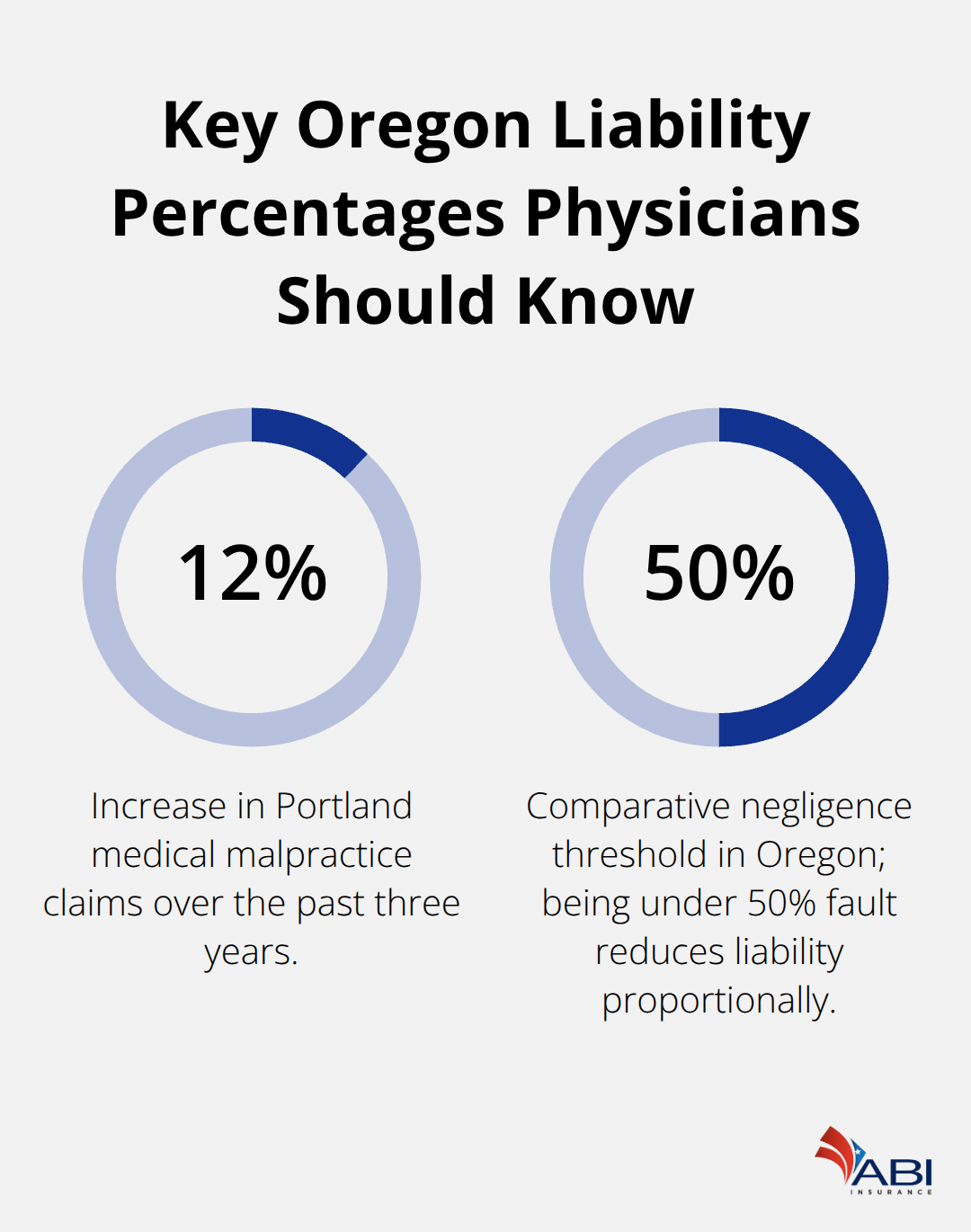
Medical malpractice claims against Portland physicians have increased 12% over the past three years, making Portland physician liability insurance more important than ever. Oregon’s specific regulatory environment and the rising costs of litigation means physicians need a policy tailored to their practice and specialty.
We at ABI Insurance design specialized policies that address the unique risks clinicians face in Portland’s healthcare market. This guide walks you through what you need to know to protect your practice.
Liability Risks Portland Physicians Face
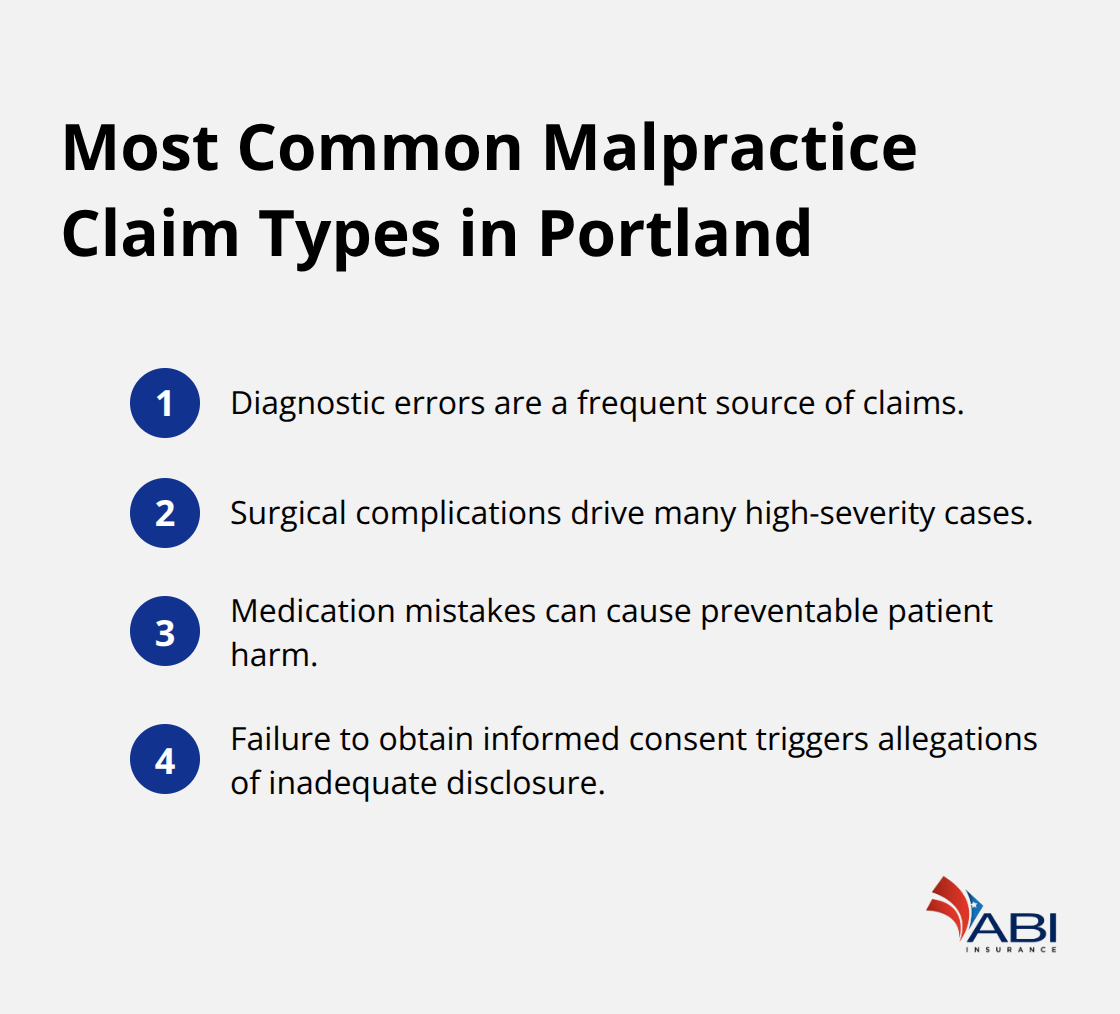
In 2024, Oregon physicians faced 109 medical malpractice payouts totaling 59.2 million dollars, with an average payout of $543,571 per claim according to the National Practitioner Data Bank. This isn’t theoretical risk, it’s happening in your state right now. The most common claims involve diagnostic errors, surgical complications, medication mistakes, and failure to obtain informed consent. Diagnostic delays account for a significant portion of payouts because they often result in delayed treatment and compounded patient harm. Surgical complications rank second, particularly in higher-risk specialties like obstetrics and orthopedics.
Oregon’s Uncapped Economic Damages Create Serious Exposure
What makes Portland’s environment particularly challenging is Oregon’s lack of tort reform caps on economic damages. While Oregon does cap non-economic damages at $500,000, there’s no limit on economic damages, meaning a single claim can devastate your personal finances if you’re uninsured or underinsured. The state uses a modified comparative negligence rule, which means if you’re found less than 50 percent at fault, your liability is reduced proportionally, but that protection only helps if you’re defended properly.
Oregon’s Statute of Limitations Extends Your Exposure Window
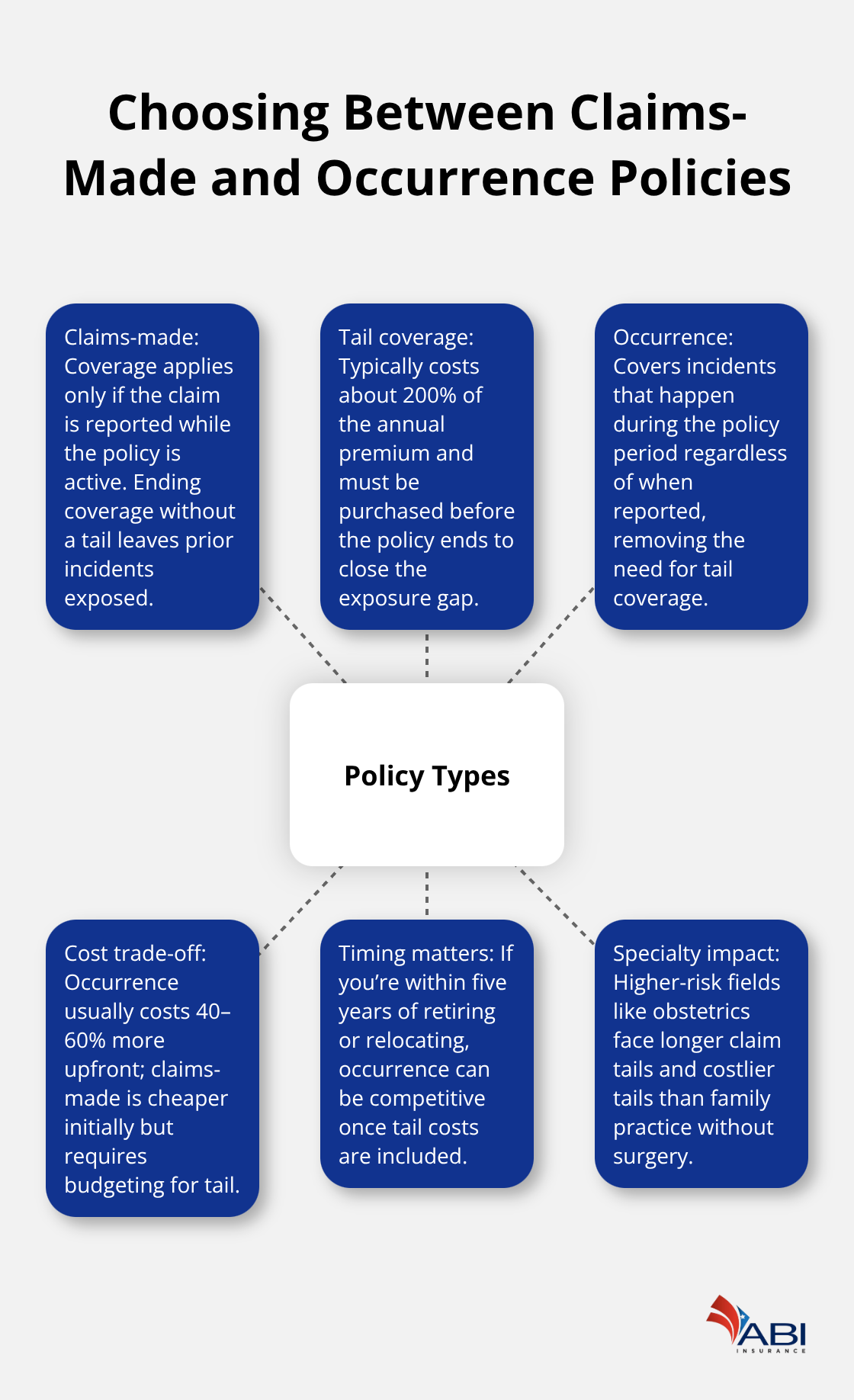
Oregon’s statute of limitations for malpractice claims is two years from discovery, three years for wrongful death, and minors can sue up to one year after turning 18 or five years after injury with certain exceptions. This extended window means claims can surface years after treatment occurred, which is exactly why tail coverage matters when you leave a practice or retire. Claims-made policies only cover incidents reported during the active policy period, leaving you exposed once coverage ends unless you purchase tail coverage. Tail premiums typically cost about 200 percent of your annual premium and can extend from one year to unlimited duration depending on your practice plans and state claim periods.
Premium Costs Vary Dramatically by Specialty and Market Conditions
Premium costs in Oregon vary dramatically by specialty. According to state-filed rate data, a family practice physician without surgery averages $7,684 annually for $1,000,000 per claim and $3,000,000 aggregate limits. Premium costs for obstetrics and gynecology with major surgery averages $39,881 and can reach as high as $56,100. Across Oregon’s market reduced competition among carriers means fewer options for securing favorable rates. Market pressures affect your bottom line directly, making it essential to understand how your specialty and practice structure influence your actual costs.
Which Policy Type Protects You After You Stop Practicing
Claims-Made Policies Demand Tail Coverage Planning
Claims-made policies cost less upfront but require a critical decision when you leave Portland or retire: you must secure tail coverage before your policy ends or face years of unprotected exposure. Oregon’s two-year statute of limitations means claims can surface long after you stop treating patients, which is why tail coverage isn’t optional — it’s mandatory if you choose claims-made. Tail premiums typically run 200 percent of your annual premium, so a family practice physician paying $7,684 annually would face roughly $15,368 for tail coverage.
Many carriers offer a 30-day window to purchase tail after your policy lapses, but waiting costs money. Comparing standalone tail quotes now yields better rates than accepting your carrier’s renewal offer later. The financial burden grows significantly for higher-risk specialties: an OB/GYN specialist facing $39,881 annually in claims-made premiums would spend roughly $79,762 on tail coverage, a substantial expense that occurrence policies eliminate entirely.
Occurrence Policies Eliminate Tail Coverage Concerns
Occurrence-based policies cover incidents that happen during the policy period regardless of when claims are reported, eliminating the tail coverage problem altogether. Insurers absorb the long-tail risk, which means they charge 40 to 60 percent more upfront. For Portland physicians planning to practice for many more years, claims-made makes financial sense, but if you’re within five years of leaving practice, occurrence policies become competitive once you factor in tail costs.
Specialty matters significantly in this calculation. Higher-risk fields like obstetrics face longer claims histories and costlier tails, while family practice without surgery has shorter exposure windows and lower tail premiums. The choice between these two structures depends entirely on your timeline and risk tolerance.
Comparing Your Options With Actual Numbers
Access to multiple carriers allows you to compare occurrence and claims-made options side by side with actual numbers for your specific specialty. The Doctor’s Company offers policies that travel across state lines for multi-state practitioners, while Medical Protective provides strong plan portability for clinicians who practice in multiple states or relocate. Requesting a free quote shows both professional liability policy types priced for your practice-the difference might reshape your coverage decision entirely. Understanding these costs now prevents expensive surprises later and positions you to make the right choice before your practice situation changes.
Why Portland’s Healthcare Market Demands Specialized Coverage
Oregon’s Liability Environment Exposes Physicians to Higher Payouts
Oregon’s medical liability environment differs fundamentally from national averages in ways that directly affect your premiums and coverage adequacy. Portland’s healthcare market operates without the tort reform protections found in 37 other states, meaning juries can award unlimited economic damages and claim severity tends toward the higher end of national ranges. In 2024, Oregon’s average malpractice payout reached $543,571 per claim according to the National Practitioner Data Bank, substantially above the national median. This higher-severity environment reflects Oregon’s comparative negligence rules, extended statute of limitations, and plaintiff-friendly damage frameworks that make defense costs and settlements more expensive than in states with damage caps. A generic national policy designed for lower-risk jurisdictions leaves Portland physicians significantly under protected.
Solo Practitioners Face Steeper Costs Than Group Practices
Solo practitioners absorb all liability exposure individually without institutional risk management infrastructure or loss-spreading mechanisms that group practices enjoy. Group settings distribute claims risk across multiple providers, lower per-provider premiums through collective negotiating power, and maintain dedicated risk management staff who implement safety protocols that reduce incident frequency. The Doctor’s Company and Medical Protective both offer group rate structures that can reduce individual premiums by 15 to 25 percent compared to solo practice rates for identical specialty and coverage limits. If you practice solo in Portland, your actual cost exposure runs 40 to 60 percent higher than national averages for your specialty because insurers price for Oregon’s specific liability environment and your lack of institutional risk controls.
Final Thoughts
Portland physician liability insurance protects far more than your finances, it protects your reputation, your assets, and your ability to practice medicine without constant fear of catastrophic exposure. Oregon’s uncapped economic damages, extended statute of limitations, and higher-than-average claim severity mean generic coverage leaves you vulnerable to serious financial risk. Your specialty, practice structure, and timeline determine whether claims-made or occurrence policies make financial sense, but either way, you need protection tailored to Portland’s specific liability environment.
We at ABI Insurance understand Oregon’s regulatory landscape, the real costs of underinsurance, and how to access multiple carriers so you compare actual quotes rather than guessing at premiums. We work with CNA, The Doctor’s Company, Medical Protective, and other A-rated carriers to secure preferred pricing for your specialty and practice setting. Request a free quote now to see exactly what Portland physician liability insurance costs for your specialty.


 Factoring Oregon Medical Liability Costs Into Your Practice Budget