
Healthcare providers in Portland face unique liability risks that standard malpractice insurance often doesn’t cover. From employment disputes to data breaches, the threats to your practice are broader than most realize.
At ABI Insurance, we’ve seen firsthand how gaps in coverage can devastate a practice. This guide walks you through the professional liability protections you actually need.
What Professional Liability Actually Covers
Professional liability insurance for healthcare providers protects against claims that you caused financial harm through an error, omission, or negligent act in delivering medical or therapeutic services. This differs fundamentally from general liability coverage, which addresses accidents on your premises or bodily injury from your operations. Professional liability covers the clinical decisions and care you provide. If a patient claims you missed a diagnosis, performed a procedure incorrectly, or failed to inform them of treatment risks, professional liability responds. The policy pays damages you’re legally obligated to pay due to a wrongful act resulting in injury.
The Legal Standard You Must Meet
In Oregon, physicians owe a duty of care defined by ORS 677.095: they must use the same degree of care, skill, and diligence as ordinarily careful practitioners in comparable communities. Not every poor outcome constitutes malpractice, medicine involves risk, but liability requires proving you breached that standard of care and caused harm. From 2019 to 2024, the Oregon Medical Board received 1,016 malpractice reports, opened 303 investigations, and took board action in only 16 cases. This means most claims don’t result in disciplinary action, but they still cost money to defend.
Five Diagnostic Areas That Drive Most Claims
Five high-risk diagnostic categories account for roughly 77 percent of malpractice claims against primary care physicians: lung cancer, breast cancer, appendicitis, colon cancer, and heart conditions. Lung cancer claims typically stem from delayed diagnosis when plain chest X-rays miss early masses; CT imaging or bronchoscopy becomes necessary when suspicion remains. Breast cancer lawsuits often involve delayed or missed diagnostic workups, including false-negative mammograms and poor communication between you and radiology. Appendicitis presents nonspecifically, making documentation of your thought process critical. Colon cancer claims frequently follow attributing hematochezia solely to hemorrhoids without colonoscopy follow-up. Heart conditions account for roughly half of emergency medicine lawsuits, with younger patients presenting atypical histories at particular risk.
Documentation and Medication Safety Matter
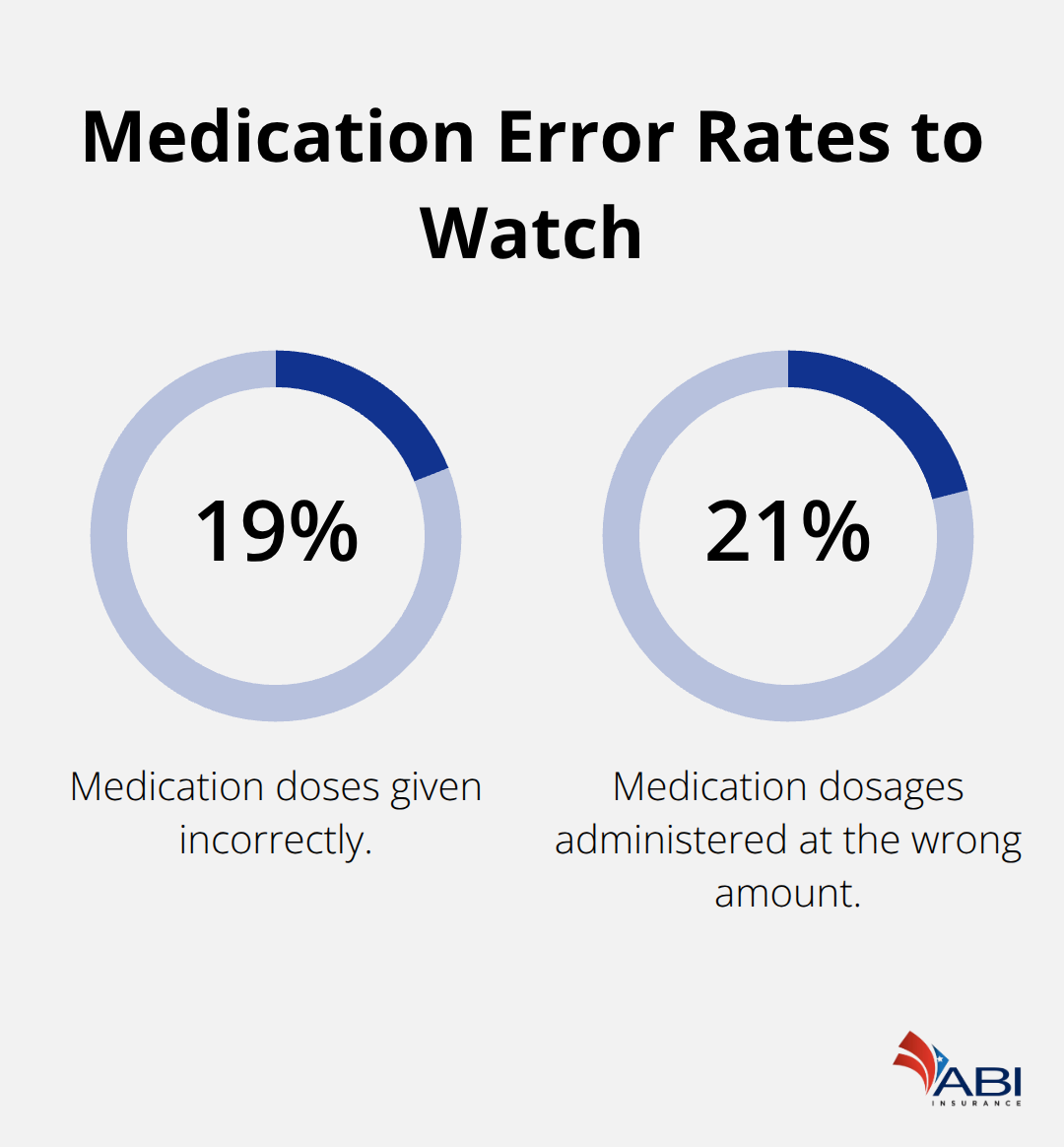
Documentation matters enormously. Narrate your thought process, document differential diagnoses, and reflect shared decision-making. About 19 percent of medication doses are given incorrectly and 21 percent of dosages are wrong according to medication safety data; many errors arise from timing or omissions.
Avoid dosing abbreviations and ambiguous drug names. A signed consent form does not shield substandard care under ORS 677.097; it requires informed disclosure of the procedure, alternatives, and known risks, but does not excuse negligent acts, such as the use of unsterilized instruments or unauthorized procedures.
Why Coverage Limits and Tail Protection Matter
The claims you face may exceed what your current policy covers. Coverage limits vary by specialty, patient volume, location, and prior claims history, so you need limits tailored to your actual risk exposure.
What Your Professional Liability Policy Actually Leaves Unprotected
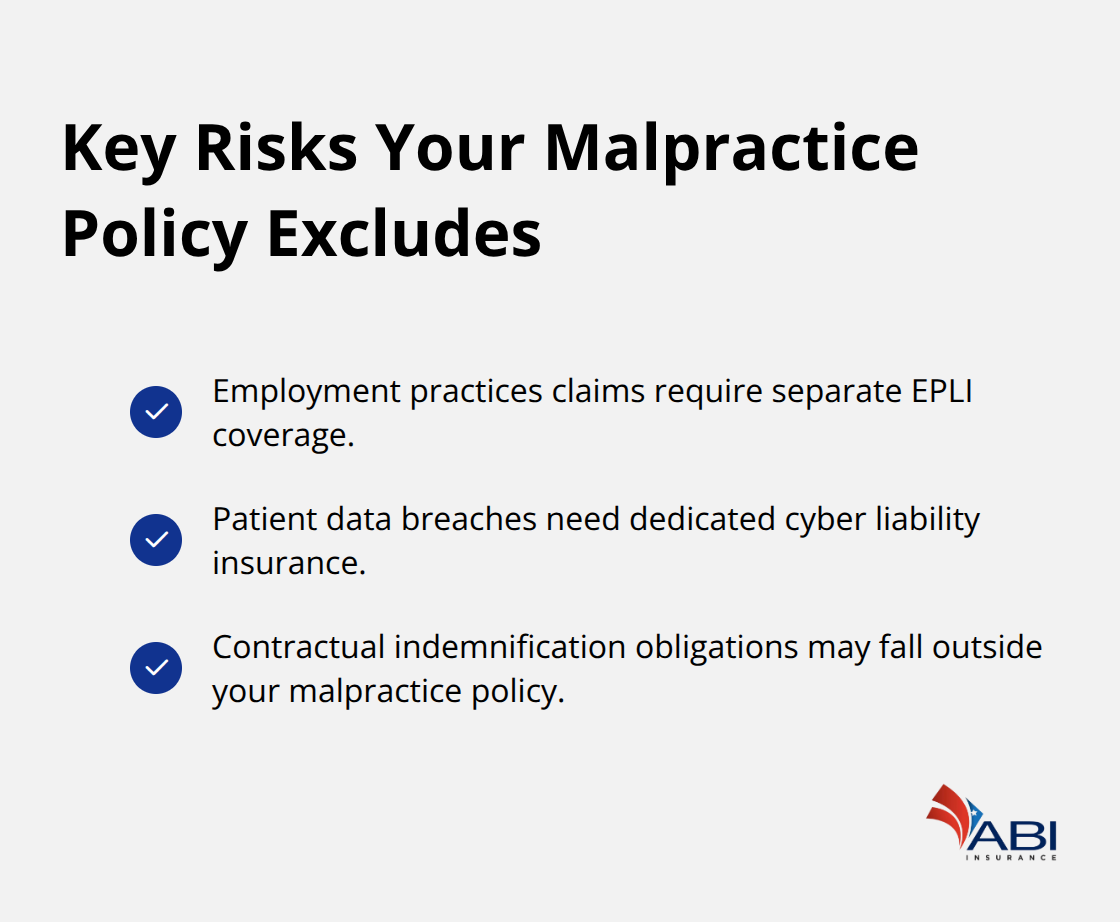
Professional liability insurance protects you against clinical errors, but Portland healthcare providers operate in a much wider risk environment. Employment disputes, patient data breaches, and contractual liability represent serious financial threats that standard malpractice policies simply don’t address. Many providers discover this gap only after a costly incident forces them to pay out of pocket.
Clinical Coverage Has Clear Boundaries
Errors and omissions coverage applies strictly to professional acts; the care decisions you make and procedures you perform. If you contract with a medical spa, clinic, or hospital system, your professional liability policy does not automatically extend to the institution or other staff members unless they’re explicitly named. This matters because contractual relationships often require you to indemnify your employer or partner against their own negligence.
Oregon risk management guidance recommends using a formal risk assessment to set appropriate per-claim and annual aggregate limits based on potential harm severity and service volume. If you work under a claims-made policy rather than occurrence coverage, you must secure tail coverage of at least 24 months after contract termination to avoid gaps in protection. Many Portland providers overlook this requirement and face uninsured exposure when they transition practices.
Employment Liability Gaps Create Real Exposure
Employment practices liability insurance covers discrimination claims, wrongful termination suits, and harassment allegations-situations where professional liability offers zero protection. A single employment lawsuit costs $50,000 to $150,000 in legal defense alone, regardless of merit. Standard professional liability policies explicitly exclude employment disputes, making this coverage non-negotiable for any practice with staff.
Data Breaches Carry Escalating Costs
Cyber liability specifically covers patient data breaches, notification costs, credit monitoring, and regulatory fines. Oregon medical boards and state agencies increasingly investigate data breaches, and HIPAA violations result in penalties ranging from $100 to $50,000 per patient record exposed. If your practice stores electronic health records without dedicated cyber coverage, you carry significant uninsured risk. Standard professional liability policies explicitly exclude data incidents, leaving your practice vulnerable to costs that can reach six figures.
Understanding these gaps positions you to make informed decisions about the coverage your practice actually needs. The next section walks you through the specific protection options available to Portland healthcare providers.
Matching Coverage to Your Actual Risk Profile
Map Your Practice to Set Appropriate Limits
Start by mapping what you actually do. A solo family medicine practice in Northeast Portland operates differently from a multi-specialty clinic with 40 staff members or a physician running a medical spa on the side. Your coverage limits should reflect the financial exposure that follows from your specific work. The Oregon State Bar’s Professional Liability Fund caps aggregate coverage at $300,000, illustrating that different professions need vastly different protection levels. Healthcare typically requires higher limits than legal practice because patient harm can result in catastrophic damages.
If you perform procedures, manage complex diagnoses, or work in high-risk specialties like emergency medicine or cardiology, your per-claim limit should start at aggregate coverage of $3,000,000 or higher. Family medicine practices with lower procedural volume might operate effectively at $500,000 per claim, but only after you honestly assess whether you perform anything beyond standard office-based care.
Verify Contractual Insurance Requirements
If you work under contract with a hospital or medical group, that entity likely requires minimum coverage limits as a condition of credentialing. Request their specific insurance requirements in writing before shopping for coverage, because you must match coverage limits to your practice complexity and specialty. Hospitals and large medical groups typically demand $1,000,000 per claim and $3,000,000 aggregate at minimum, with some requiring higher limits for surgical or procedural roles.
Choose Between Claims-Made and Occurrence Coverage
Your policy structure matters as much as your limits. Claims-made policies cost less upfront but create a trap: when you leave a practice, retire, or change carriers, you must purchase tail coverage extending protection for claims reported after you stop practicing. Tail coverage for claims-made policies typically costs 150 to 300 percent of your annual premium for a 24-month tail period. If you pay $5,000 annually for claims-made coverage, tail protection could cost $7,500 to $15,000 when you transition practices.
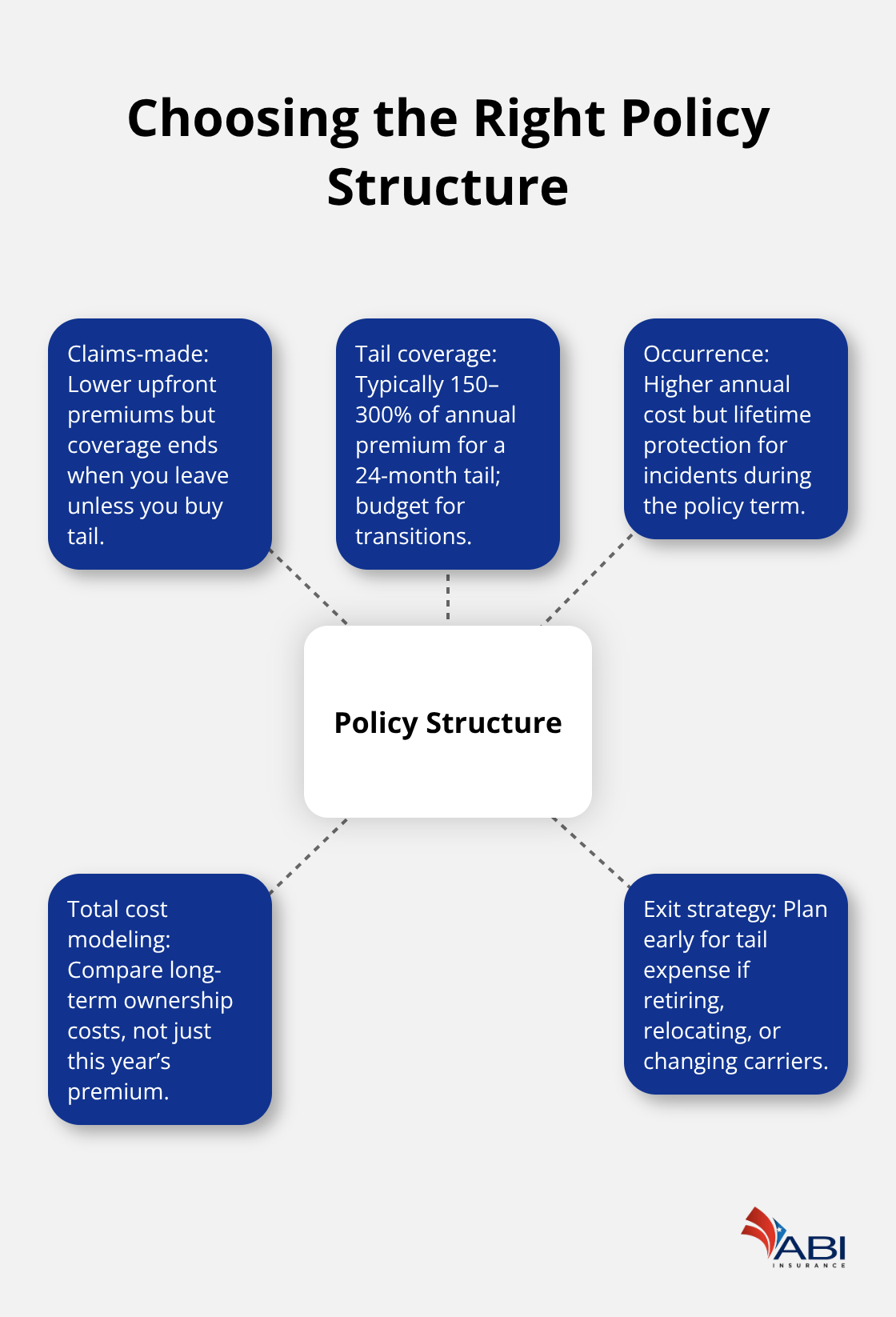
Occurrence-form policies cost more annually but provide lifetime protection for incidents that occur during your coverage period, eliminating tail coverage expense. For Portland providers planning to practice for 20-plus years, occurrence coverage often costs less over a lifetime. For physicians nearing retirement or considering relocation, the tail expense becomes critical to your exit strategy. Model both options with actual quotes from carriers, showing the total cost of ownership rather than just annual premium. Many providers discover through this analysis that occurrence coverage makes financial sense.
Protect Against Coverage Gaps During Transitions
If you work under multiple contracts or transition between practices, gaps in coverage occur when tail protection lapses or claims-made policies terminate. Document your coverage dates meticulously and verify tail coverage is in place before your final day at any practice location. A lapse of even 30 days can leave you uninsured for claims reported during that period, exposing you to significant financial risk.
Final Thoughts
Healthcare professional liability in Portland requires more than hoping nothing goes wrong. From 2019 to 2024, the Oregon Medical Board received over 1,000 malpractice reports, and while most didn’t result in disciplinary action, all of them required defense costs. Your professional liability policy covers clinical errors, but employment disputes, data breaches, and contractual indemnification fall outside that protection. A single employment lawsuit costs $50,000 to $150,000 in legal defense alone, and a data breach affecting patient records can trigger HIPAA penalties reaching $50,000 per exposed record.
The practical path forward starts with honest assessment of what your practice actually does and verification of your contractual insurance requirements in writing. Model the total cost of ownership for both claims-made and occurrence policies, confirm tail coverage is in place before you transition practices, and secure employment practices liability insurance if you manage staff. If you store electronic health records, cyber liability coverage protects against escalating breach costs that standard malpractice policies simply don’t address.
We at ABI Insurance have spent more than 40 years helping Portland healthcare providers navigate these decisions and work with multiple carriers to secure preferred pricing. Contact ABI Insurance for a free, no-obligation quote to match coverage to your actual risk exposure. Your practice deserves protection that matches the complexity of what you do.


 Condo Association Insurance Portland: A Homeowners Guide