Running a business in Portland means facing unique risks that generic insurance policies often miss. A Business Owners Policy bundles the coverage you actually need, but choosing the right Portland BOP coverage options requires understanding what’s included and what gaps might still exist.
We at ABI Insurance help local business owners navigate these decisions so they’re protected without overpaying for unnecessary add-ons.
What a Business Owners Policy Actually Covers
The Three Core Components of a BOP
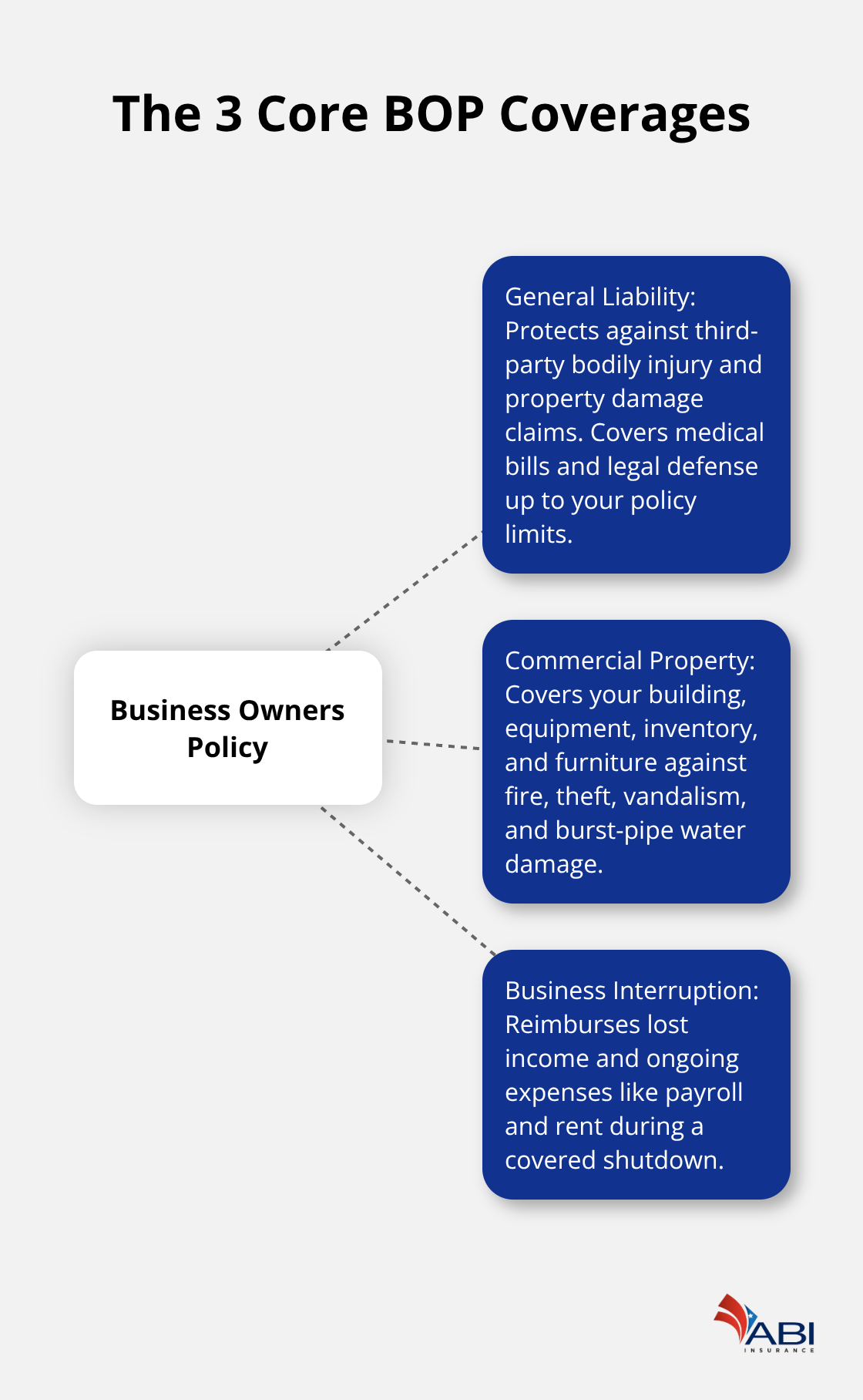
A Business Owners Policy bundles three essential coverages into one package: general liability, commercial property, and business interruption insurance. General liability protects you when a customer gets injured at your location or you accidentally damage their property, covering medical bills and legal defense costs up to your policy limits. Commercial property covers your building, equipment, inventory, and furniture against fire, theft, vandalism, and water damage from burst pipes. Business interruption insurance reimburses lost income and ongoing expenses like payroll and rent if a covered event forces you to temporarily close.
Why Bundling Saves Money and Simplifies Operations
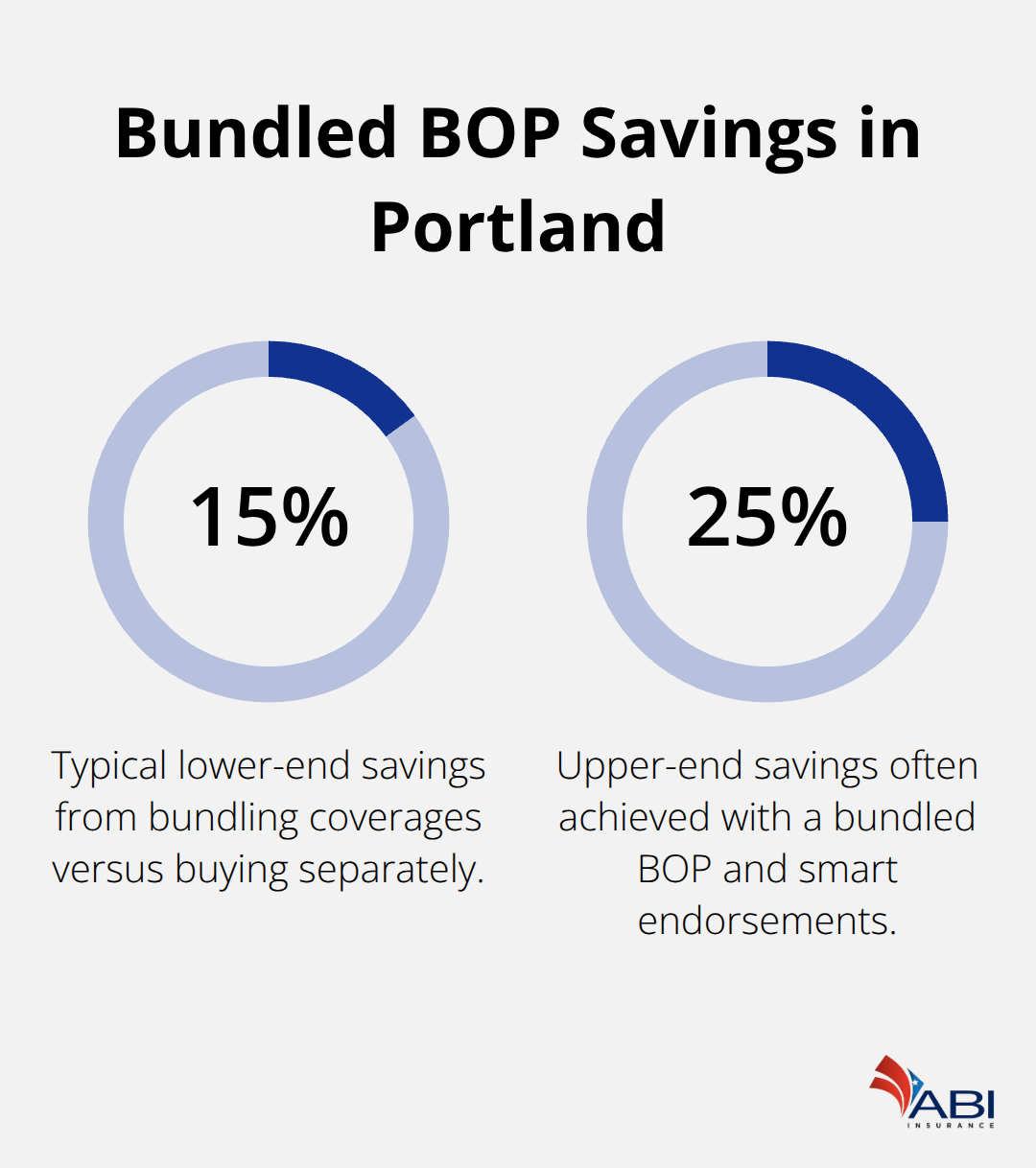
This three-part structure makes sense for Portland businesses with physical locations. According to the Oregon Department of Consumer and Business Services, bundling these coverages typically costs less than purchasing them separately, and the administrative simplicity means fewer policies to track and renew each year. The cost varies based on your industry, building age, annual revenue, payroll, and claims history, but the bundled discount often saves 15 to 25 percent compared to individual policies.
Regional Risks a BOP Actually Addresses
Portland businesses frequently encounter property risks specific to the region: seasonal wildfire smoke affects operations, heavy rain causes water damage, and occasional earthquakes damage structures and equipment. A BOP addresses these predictable threats without forcing you to guess which standalone policies you actually need.
What a Standard BOP Leaves Out
Many Portland business owners assume a standard BOP covers everything. It doesn’t. A BOP excludes professional liability (errors and omissions), cyber liability for data breaches, employment practices liability for harassment or wrongful termination claims, and workers’ compensation for employee injuries. If you work as a contractor, accountant, consultant, or medical professional, professional liability coverage is non-negotiable. Oregon requires it for some licensed professions, and clients routinely demand proof before hiring.
Cyber liability has become essential for any business that handles customer data or payment information; Oregon data breach notification laws require you to notify affected parties if exposed, and those notification costs plus investigation fees can exceed $50,000 for small incidents. Workers’ compensation is mandatory in Oregon for any business with employees, with penalties of double the annual premium (minimum $1,000) for the first violation and $250 per day for ongoing noncompliance.
A BOP gives you the foundation, but gaps appear quickly once you examine your actual operations and contractual obligations. Understanding these exclusions helps you identify which additional coverages protect your specific business model and meet your lease or lending requirements.
The Three Coverages That Actually Matter in Your Portland BOP
General Liability: Your First Line of Defense
General liability protects you when a customer slips on your floor, your employee accidentally damages client equipment, or your business operations injure someone. This coverage pays medical expenses, property damage to others, and legal defense costs up to your policy limits. Most commercial leases in Portland require proof of general liability before you occupy the space, and landlords typically demand minimum limits of $500,000 per occurrence. Without this coverage, a single injury claim can wipe out your business savings and force closure.
Commercial Property: Protecting Your Physical Assets
Commercial property covers your building structure, equipment, inventory, furniture, and accounts receivable if those records are destroyed. The Oregon Division of Financial Regulation emphasizes that you can choose between actual cash value (which accounts for depreciation) or replacement cost coverage (which pays to rebuild or replace at current prices). Replacement cost costs more but protects you from the reality that a five-year-old piece of equipment costs far more to replace than its depreciated value. This distinction matters enormously when you file a claim.
Business Interruption: Covering Lost Income During Closures
Business interruption insurance reimburses lost income and ongoing expenses like payroll, rent, and utilities if a covered event forces temporary closure. Portland faces real threats from wildfires, water damage from heavy rain, and occasional earthquakes that disrupt operations. For a small restaurant grossing $500,000 annually, two weeks of forced closure costs roughly $19,000 in lost revenue alone, not counting fixed expenses that continue whether you’re open or closed.
Essential Endorsements for Portland Operations
Portland’s specific geography and business environment make certain endorsements practical additions rather than optional luxuries. Wildfire smoke and seasonal closures are real threats; adding wildfire-related business interruption coverage protects you if air quality forces voluntary closure or local authorities mandate it. Data breach and cyber liability endorsements have shifted from nice-to-have to essential for any business processing payments, storing customer information, or managing digital assets. Oregon’s data breach notification laws require notification within 60 days of discovery, and investigation plus notification costs easily exceed $50,000 for small incidents. Employment practices liability insurance protects against harassment, wrongful termination, and discrimination claims, which general liability explicitly excludes. If you have employees, this endorsement prevents one employment dispute from bankrupting your business.
Matching Endorsements to Your Actual Business Model
The Oregon Department of Consumer and Business Services notes that bundled coverage with smart endorsements typically saves 15 to 25 percent compared to purchasing separate policies, but only if you select endorsements that match your actual operations and risk profile rather than adding everything available. A construction contractor needs different endorsements than a software development firm; a retail shop handling credit cards needs cyber coverage, while a consulting practice may prioritize professional liability instead. The key is matching your BOP structure to your specific business model and contractual requirements. Once you understand what your BOP covers and which endorsements protect your operations, identifying coverage gaps becomes straightforward-and that’s where many Portland business owners discover they need additional specialized policies beyond the standard package.
Where Your Portland BOP Leaves You Exposed
A standard Portland BOP handles the basics, but your actual business risks extend far beyond general liability, property, and business interruption. The gap between what a BOP covers and what your business genuinely needs shows up the moment you sign a client contract, face a data breach, or deal with an employment dispute.
Professional Liability and Service-Based Risks
Professional liability insurance protects against negligence claims in service-based work. Oregon requires it for some licensed professions like accounting and engineering, and clients routinely demand proof before engaging your services. If you work as a contractor, consultant, or professional service provider, clients will request your errors and omissions certificate before signing agreements. Without it, you lose deals. A single negligence claim can cost $30,000 to $100,000 in legal defense alone, regardless of whether you lose or win the case.
Cyber Liability for Data Handling
Cyber liability has moved from optional to essential for any Portland business handling customer data or payment information. Oregon data breach notification laws require you to notify affected parties within 45 days of discovering an exposure. Those notification costs plus forensic investigations, credit monitoring services, and PR campaigns easily exceed $50,000 for small incidents. A restaurant processing credit cards, a salon storing client information, or a tech firm managing customer databases all face this threat.
Employment Disputes and Liability Exposure
Employment practices liability insurance covers harassment, wrongful termination, and discrimination claims that general liability explicitly excludes. One employment dispute can cost $30,000 to $100,000 in legal defense alone, regardless of the outcome. A standard BOP provides no protection here, leaving you exposed if an employee files a claim.
Industry-Specific Coverage Gaps
Construction contractors face different exposures than software development firms, which face different risks than retail shops. A contractor needs commercial auto coverage for vehicles, tools and equipment coverage for job sites, and often a surety bond that a BOP does not address. A retail shop handling credit cards needs cyber liability and possibly product liability if you sell merchandise. A medical practice needs professional liability, HIPAA-compliant cyber coverage, and often higher limits than standard BOP policies provide.
The Oregon Department of Consumer and Business Services emphasizes that your lease and lending agreements typically spell out specific coverage requirements. Review those documents first to identify what insurers demand before you negotiate policy limits. Most Portland commercial leases require general liability minimums of $500,000 per occurrence and name the landlord as additional insured, which a standard BOP can accommodate through an endorsement. Some leases demand specialized coverage like pollution liability or contractual liability that falls outside standard packages. Lenders often require multiple coverage types before approving business financing; using a BOP as your foundation and adding targeted endorsements and specialized policies gets you to compliance faster than building from scratch.
Evaluating Your Actual Operational Exposures
Start by listing your specific operational exposures: employees, vehicles, professional services, customer data handling, physical inventory, contractual obligations, and lending requirements. For each exposure, identify what a standard BOP covers and what gaps remain.
If you have employees, workers’ compensation is mandatory in Oregon with no exceptions for small businesses. Penalties for noncompliance are double the annual premium (minimum $1,000) for the first violation and $250 per day for ongoing violations, making this non-negotiable. If you use vehicles for business, commercial auto insurance is required.
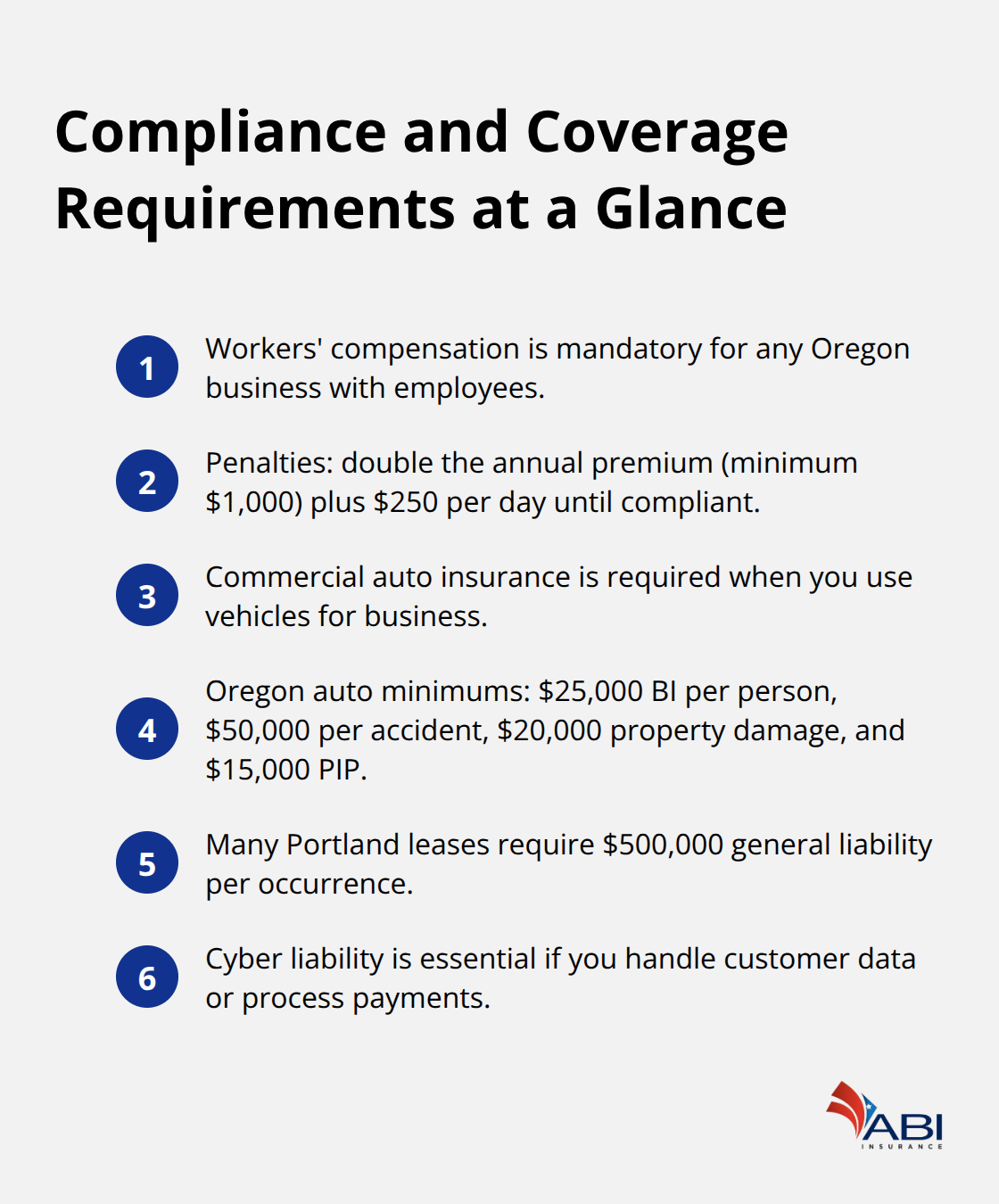
Oregon minimums include $25,000 per person bodily injury, $50,000 per accident, $20,000 property damage, and $15,000 PIP, though most lenders and clients demand higher limits like $1,000,000 combined single limit. If you handle customer data or process payments, cyber liability with breach response services becomes essential, not optional. If you provide professional services, professional liability insurance protects against negligence claims and often satisfies licensing requirements. Once you map your actual exposures against BOP coverage, the gaps become obvious and addressing them prevents costly claim denials when incidents occur.
Final Thoughts
A Business Owners Policy gives Portland businesses the foundation they need, but your actual protection depends on matching your coverage to your specific operations and contractual obligations. Start by reviewing your lease and lending agreements to identify what insurers demand, since most commercial leases require general liability minimums of $500,000 per occurrence and lenders often require multiple coverage types before approving financing. Map your actual operational exposures against what your current BOP coverage options provide-if you have employees, workers’ compensation is mandatory with no exceptions; if you use vehicles for business, commercial auto insurance is required; if you handle customer data or process payments, cyber liability moves from optional to essential.
The cost of addressing coverage gaps now is far lower than the cost of claim denials later. A single professional liability claim, data breach, or employment dispute can exceed $50,000 in legal defense alone, regardless of outcome. Professional liability protects against negligence claims and often satisfies licensing requirements if you provide professional services.
We at ABI Insurance help Portland business owners navigate these decisions with personalized guidance based on your actual business model and risk profile. Contact ABI Insurance to review your current protection and identify which Portland BOP coverage options and additional policies protect your business without overpaying for unnecessary add-ons.


 The ABC’s of Building Ordinance or Law Coverage