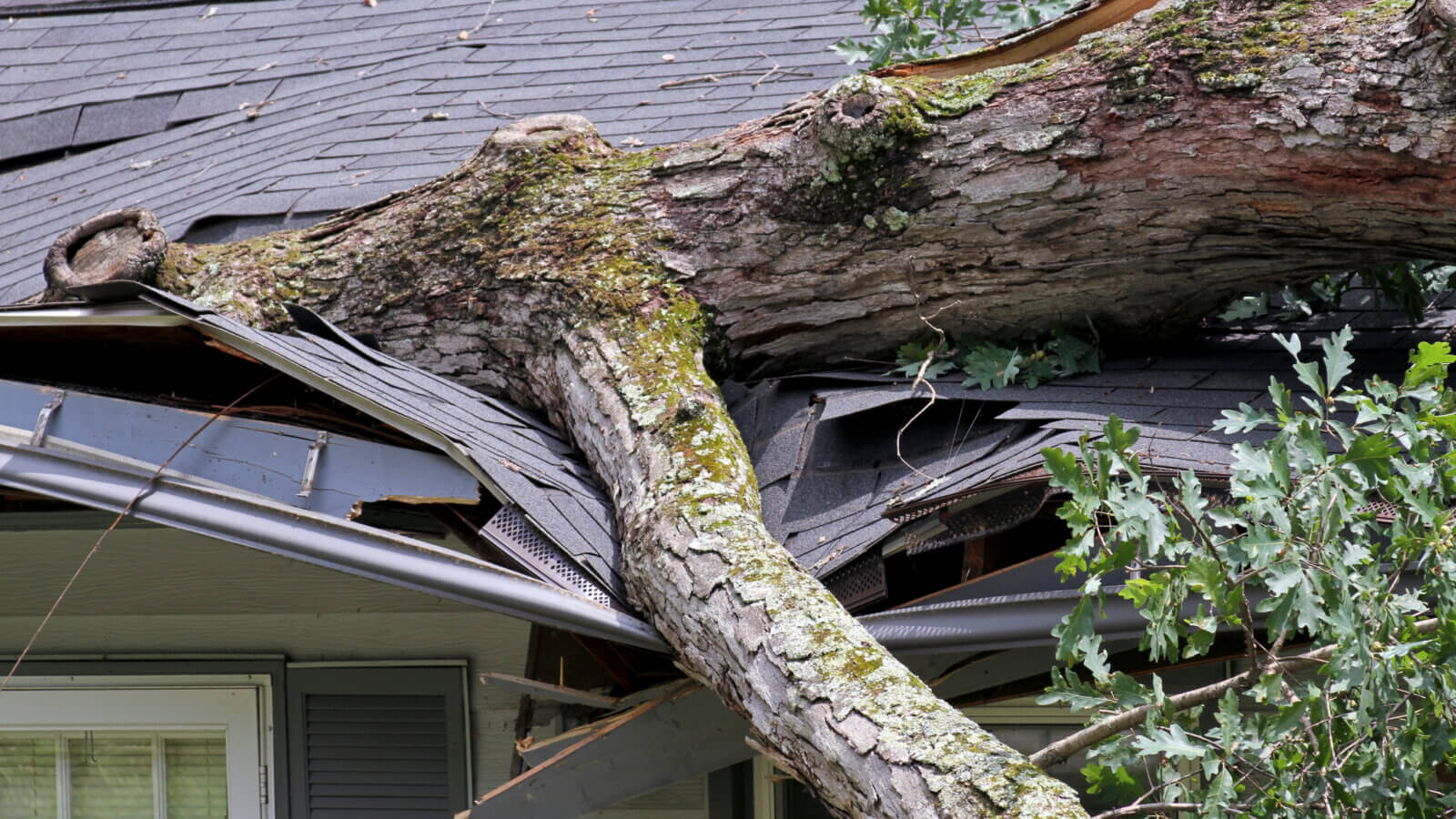
In January 2024, Oregon and Washington experienced a series of deadly storms that caused power outages and extensive destruction. In many of the areas hit by the storm branches snapped, and trees fell damaging structures and vehicles. With winter approaching, it is important to understand how your homeowner policy works if a tree falls and what you can do now to maintain and care for trees on your property.
It can be difficult to understand who is responsible when a tree falls and damages a structure. Below are some common questions related to insurance coverage for fallen trees.
Is structure damage caused by a fallen tree covered by insurance?
Typically, property policies cover structure damage caused by a fallen tree if it fell due to a covered peril. Usually, covered perils include storms, wind, etc. Property policies may not cover damage caused by a fallen tree if it fell due to negligence or a maintenance-related issue.
If my neighbor’s tree falls on my home and causes damage, whose insurance would cover the loss?
Since the damage occurred to your home, your insurance policy would respond to a claim regardless of whose tree fell. Your homeowner policy may cover the repair cost after the policy deductible.
If a tree from your yard fell and hit your neighbor’s home their insurance policy would respond to a claim.
What if negligence is involved?
If your home is damaged, your insurance policy pays for the damage after you file a claim and coverage is determined. During the claim adjustment process, the adjuster may try to subrogate to a responsible party to recoup a loss if negligence is discovered. The insurance company needs to find proof that the owner of the fallen tree had prior knowledge that the tree was dead, diseased, or damaged in such a way that it was at risk of falling.
How can I maintain trees on my property?
Regular tree maintenance by a licensed and insured professional is critical to avoid property damage caused by fallen trees or branches. If your arborist alerts you to a potential hazard connected to a tree, heed their advice and have them eliminate the hazard right away.
Here are five tree maintenance tips from the National Arbor Day Foundation.
- Inspect trees frequently. The size, color and condition of leaves, and overall leaf cover, are good indicators of a tree’s health. Cavities or disfiguration can be a warning sign, although they don’t always mean a tree is a hazard. Keep a close eye on it. Dead branches are a big risk because they can fall easily. Branches that cross or rub can create weak spots.
- Plant a tree in an appropriate space. Are you planting a tree that will grow to be large? Don’t put it near power or sewer lines, or close to your home. And avoid brittle trees – their limbs are weak and more likely to break and fall. Examples include Silver Maples and Willows.
- Prune correctly. If a tree needs pruning, hire a certified arborist to do the work. Don’t allow a tree to be topped.
- Leave it to an expert. Once a year, have a qualified arborist thoroughly evaluate the trees on your property. An arborist can identify ones that need to come down immediately, as well as those to watch. Trees that have been topped, or that have lost large limbs unexpectedly, could cause trouble. Taking down trees can be very dangerous, so leave it to a professional.
- Remember, you’re responsible if a tree falls in your yard, or if it hurts someone. If your tree falls into a neighbor’s yard, your neighbor’s homeowner insurance would be responsible for the fallen tree. Keep your trees healthy, your space beautiful and your liability low!
Tree maintenance can be important and costly. When hiring an arborist for tree work, always ask for a copy of the company’s insurance certificate.
If you have questions about your policy, please contact us at 503.292.1580.


 Turkey Fryer Safety Tips