
Flooding poses a real threat to Oregon homeowners, and understanding Oregon flood insurance rates is the first step toward protecting your property. We at ABI Insurance know that many residents underestimate their flood risk or overpay for coverage they don’t fully understand.
This guide breaks down what you’ll actually pay, why rates vary across regions, and concrete strategies to reduce your premiums without sacrificing protection.
What Oregon Homeowners Actually Pay for Flood Insurance
Regional Price Variation Across Oregon
Oregon’s average NFIP flood insurance cost sits at $1,184.46 per policy as of late 2025, but dramatic regional variation directly affects your wallet. This variation isn’t random. Distance to water sources, foundation type, ground elevation, and local flood frequency drive these differences. Under FEMA’s Risk Rating 2.0 system implemented in 2021, insurers now price policies based on your specific property rather than broad flood zones. A home two blocks from a river pays differently than one ten blocks away, even if both sit in the same flood zone on older maps.
How Risk Rating 2.0 Changed Oregon Premiums
The real story emerges when you examine how Risk Rating 2.0 affected Oregon policyholders. About 30% saw premiums decrease, some saving up to $1,200 annually, particularly in Portland where Special Flood Hazard Area premiums dropped more than 55% from 2020 to 2023. However, roughly 58% experienced small increases of $0–$120 per year, 8% faced $120–$240 hikes, and 4% absorbed increases exceeding $1,200 yearly.
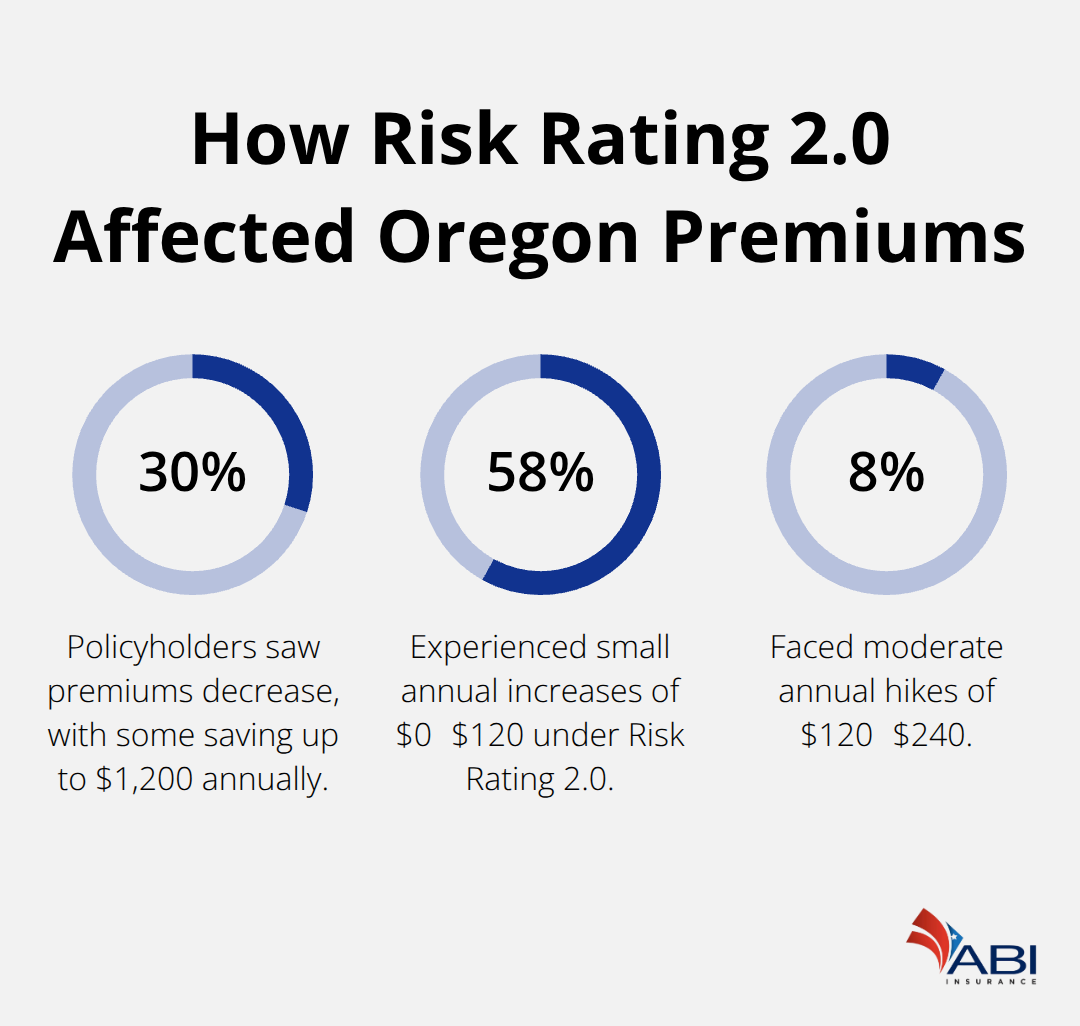
FEMA applies an 18% annual increase cap to smooth the transition toward full risk-based pricing, but properties with certain characteristics still see substantial jumps.
Specific Property Features That Lower Your Rate
Your home’s physical characteristics directly reduce what you pay. A crawlspace foundation sitting several feet above grade could yield discounts versus ground-level slabs, while raising your lowest enclosed floor just one foot above the Base Flood Elevation could cut premiums. Installing proper flood openings could save and relocating machinery above the first floor could save as well. These aren’t theoretical savings. FEMA quantifies these reductions for every property. If you haven’t obtained quotes recently, your rate has likely shifted under Risk Rating 2.0, making immediate comparison shopping essential rather than optional.
How to Cut Your Flood Insurance Costs
Compare Quotes Across Multiple Carriers
Portland homeowners who shop quotes often discover private insurers undercutting NFIP significantly. Regional variation matters because private carriers price flood risk differently than the federal program.
Increase Your Deductible Strategically
Adjusting your deductible is the second lever you control directly. NFIP offers deductible options ranging from $500 to $30,000, and increasing your deductible typically reduces your annual premium. For homeowners with solid emergency savings, this trade-off makes financial sense. You pay less annually but accept more out-of-pocket costs if flooding occurs. This approach works best when combined with other strategies rather than standing alone.
Invest in Permanent Mitigation Improvements
Mitigation improvements deliver permanent rate reductions without trade-offs that deductible increases require. Raising your lowest enclosed floor one foot above Base Flood Elevation cuts premiums 30% according to FEMA data, while installing compliant flood openings saves 11.8%. These investments lower your rate every single year you own the property. If your home sits in a Community Rating System qualifying area like Salem or Oregon City, you access CRS discounts up to 35% just by living there. Obtaining an Elevation Certificate from a licensed surveyor could cost $300 or more, but often pays for itself in premium reductions within two years. Start with whatever improvement offers the quickest payback, then layer additional mitigation as your budget allows.
Stack Your Savings for Maximum Impact
The combination of shopping quotes, strategic deductible increases, and targeted home improvements typically could save Oregon homeowners hundreds of dollars annually compared to passive acceptance of renewal rates. Each strategy works independently, but they compound when applied together. A homeowner who compares carriers, raises their deductible, and installs flood openings captures savings across all three categories. Your next step involves identifying which strategy fits your situation first, whether that’s immediate quote shopping or planning a mitigation project that pays dividends for years.
Why Working with a Local Agent Matters
Local Expertise Identifies Carrier-Specific Savings
Most homeowners treat flood insurance as a commodity, a checkbox on their renewal letter, but your location, home construction, and mitigation history create a unique risk profile that demands personalized attention. An agent who understands Oregon’s flood patterns, FEMA’s Risk Rating 2.0 calculations, and which carriers price competitively in your specific city can identify savings you’d never find alone. When Portland floods occur during spring runoff, your property’s distance from the Willamette River matters more than any generic rate table. Similarly, a Bend homeowner needs an agent who recognizes that private carriers often price mountain properties differently than NFIP does.
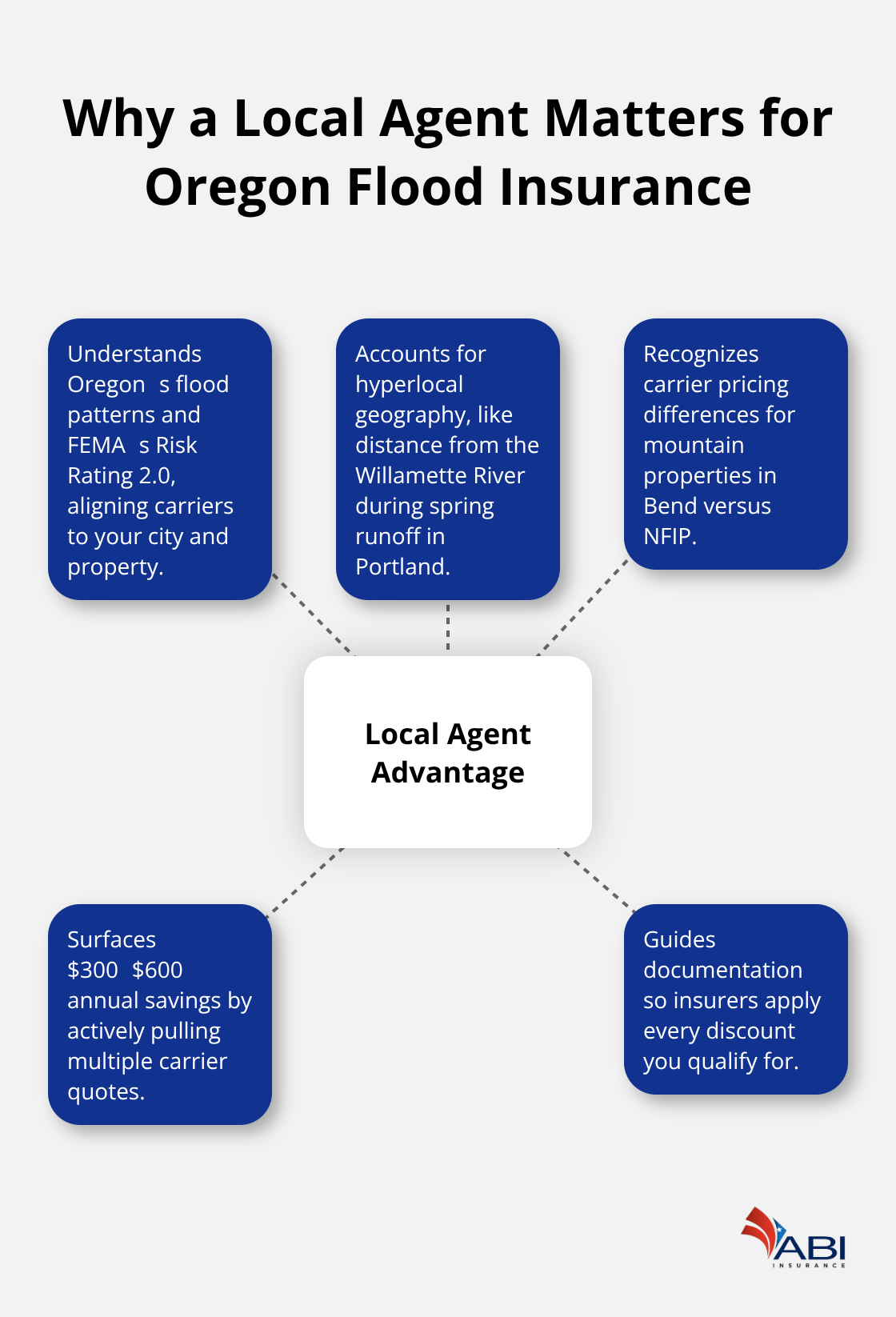
Clients frequently discover $300–$600 annual savings simply because someone took time to pull actual quotes from multiple carriers rather than accepting their renewal rate.
Mitigation Strategy and Proper Documentation
Local agents outperform online quote tools when it comes to mitigation strategy and documentation. FEMA’s system rewards homeowners who raise their lowest floor, install flood openings, or obtain Elevation Certificates, but many policyholders don’t know these reductions exist or how to properly document them. An agent can review your home’s specific characteristics, identify which improvements deliver the fastest premium payback, and confirm your insurer recognizes every discount you qualify for. Community Rating System discounts in Salem and Oregon City require specific local knowledge about which improvements your city recognizes. Many homeowners spend thousands on mitigation improvements but never receive premium reductions because their documentation fails to meet FEMA standards. A local agent catches these gaps before money gets wasted.
Coverage Limits and Underinsurance Risk
An agent also ensures your coverage limits match your home’s actual replacement cost. NFIP caps residential coverage at $250,000 for the building, which leaves many Oregon properties significantly underinsured. Your agent determines whether private flood policies or excess coverage makes sense for your situation, protecting you from catastrophic gaps in protection when a major flood event occurs.
Final Thoughts
Oregon flood insurance rates demand action, not acceptance. Regional variation creates dramatic differences. The concrete strategies outlined here work: comparing quotes across carriers, adjusting deductibles strategically, and investing in mitigation improvements typically save Oregon homeowners $200–$600 yearly, with homeowners who raise their lowest floor one foot above Base Flood Elevation capturing a 30% premium reduction every single year.
Your next step depends on your situation. If you haven’t compared quotes recently, start there first. If you’re considering home improvements, calculate which mitigation project delivers the fastest payback for your property, or verify you’re receiving your Community Rating System discount if you live in Salem or Oregon City.
We at ABI Insurance have spent more than 40 years helping Portland metro families and businesses navigate insurance decisions with personalized expertise. Our agents identify carrier-specific savings you’d never find alone, ensure your mitigation improvements receive proper documentation for premium reductions, and confirm your coverage limits protect against underinsurance. Contact ABI Insurance to discuss your flood insurance strategy and discover what you’re actually paying versus what you should pay.



 Physician Professional Liability Oregon: Protecting Your Practice and Patients