
Portland auto insurance rates vary wildly depending on who you are and where you live. Your driving history, vehicle choice, and neighborhood all play a role in what you pay each month.
At ABI Insurance, we’ve seen firsthand how small changes can lead to real savings. This guide breaks down exactly what insurers look at when calculating your premium and how you can take control of your costs.
What Really Drives Your Portland Premium
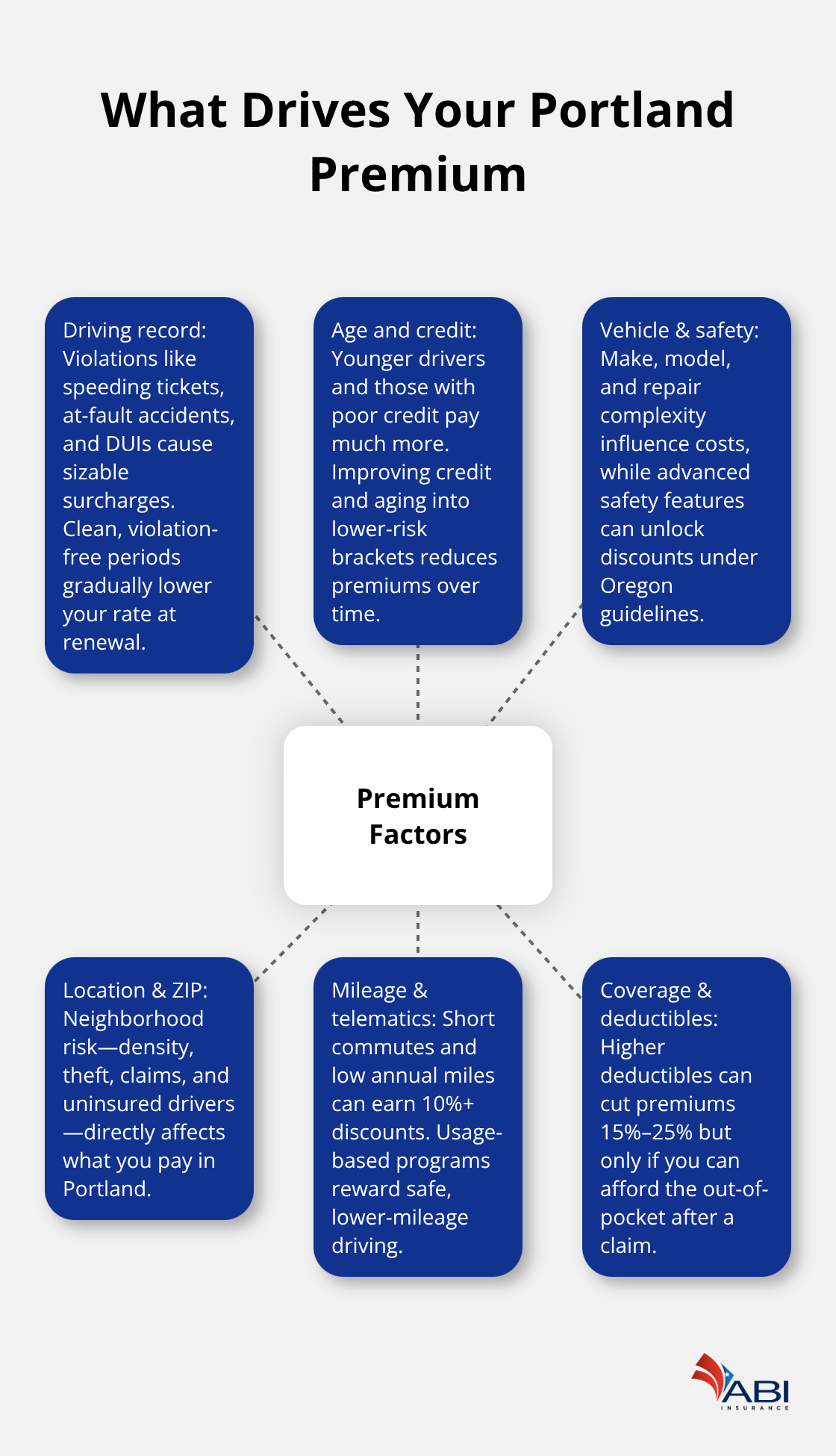
Your driving record stands as the single most important factor insurers examine when pricing your policy. A speeding ticket adds roughly 22% to your premium, while an at-fault accident jumps it by about 49%, and a DUI pushes costs up around 70% relative to a clean record, according to Bankrate’s analysis. Oregon’s DMV maintains driving records for five to seven years, meaning a mistake from a few years back still affects what you pay today. If you’ve had violations, time works in your favor-older infractions carry less weight than recent ones. Clean records matter so much that some drivers save hundreds annually simply by avoiding tickets and accidents over time.
Age and Credit Score Create Outsized Premium Impacts
Age dramatically shapes your premium, especially if you’re under 25. Teen drivers face the harshest rates, with 18-year-olds on their own policy paying around $6,126 per year according to Bankrate data, compared to adults in their 40s paying roughly half that for the same coverage. The gap narrows as you age, but your credit score creates an equally powerful effect on pricing. Drivers with poor credit pay about 78% more than those with excellent credit — the difference between roughly $3,774 per year and $1,793 per year in Oregon. Many insurers use credit-based insurance scores to assess risk, and even modest improvements in your credit can lower your premium substantially. If your credit has improved, request a rate review from your current insurer or shop new quotes to capture the savings.
Vehicle Type and Safety Features Determine Repair Costs
The specific make and model you drive directly affects your rate. A Toyota Camry averages around $2,121 annually in Oregon, a Ford F-150 runs $2,037, while a BMW 330i climbs to $2,548 according to Bankrate data. Newer vehicles with expensive computer systems and complex repairs cost more to insure, even if they’re safer. However, advanced safety features and high safety ratings qualify you for discounts under Oregon guidelines, which offsets some of that cost. Older, paid-off vehicles cost less to insure overall, particularly if you drop collision coverage — a practical move if your car is worth less than about $4,000. Insurers care about repair costs, theft risk, and how often that model appears in accident claims, not just the sticker price.
Location Matters More Than Most Drivers Realize
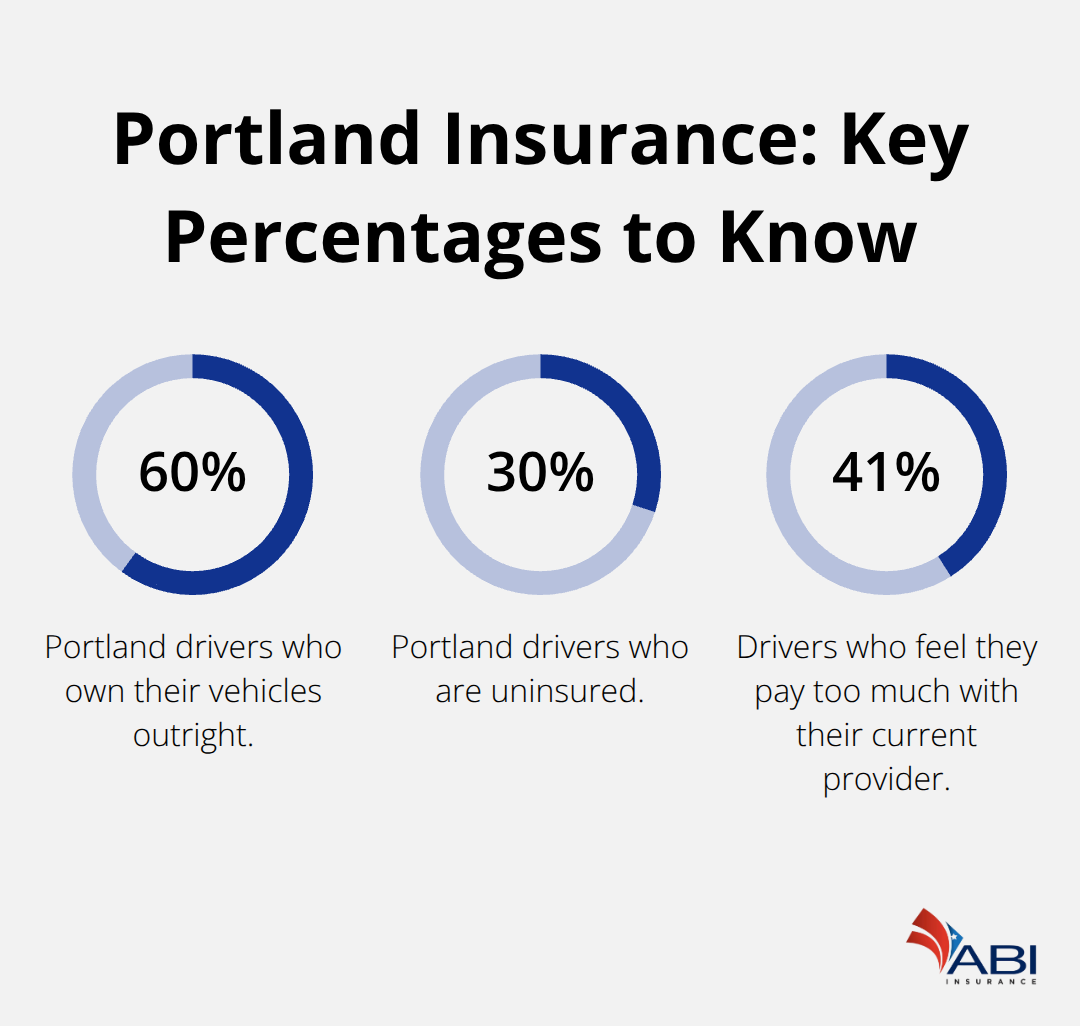
Where you live in Portland shapes your premium as much as what you drive. Population density, crime rates, claim frequency, and the prevalence of uninsured drivers all influence what insurers charge in your area. About 30% of Portland drivers are uninsured, which pushes rates higher for everyone else. Shopping around with local agents who understand Portland’s neighborhoods helps you find rates that match your specific location and risk profile. If you live in an expensive ZIP code, you pay for your neighborhood’s risk profile, not just your personal driving habits. Switching insurers won’t change this, but understanding your area’s risk factors helps you decide whether higher coverage limits make sense for your situation.
How Many Miles You Drive Directly Cuts or Raises Your Cost
Annual mileage dramatically affects your premium, yet most drivers overlook this factor when shopping for quotes. Work-from-home drivers and those with short commutes qualify for low-mileage discounts that can reduce your annual cost by 10% or more. Conversely, a long commute or high annual mileage signals greater accident exposure, pushing your rate upward. Many insurers now offer telematics or usage-based programs that track your actual driving patterns, rewarding safe drivers who log fewer miles with meaningful savings.
If your work situation changed-you shifted to remote work or retired-contact your insurer immediately to request a mileage review. Some carriers won’t volunteer this adjustment, so you must ask. For drivers under 25 or those with recent violations, proving low mileage becomes even more valuable since it partially offsets the age or violation surcharge.
Raising Your Deductible Works Only If You Can Actually Pay It
Coverage limits and deductible choices directly control your monthly payment, but this decision requires honest self-assessment. Raising your deductible from $250 to $500 or $1,000 lowers your premium immediately-sometimes by 15% to 25%-but only makes sense if you have cash reserves to cover that amount after an accident. About 60% of Portland drivers own their vehicles outright, giving them flexibility to increase deductibles without lender restrictions.
If you financed or leased your car, your lender dictates minimum coverage requirements. Dropping collision coverage entirely appeals to drivers with paid-off vehicles worth less than $4,000, but this strategy backfires if you cause an accident and can’t afford repairs. Oregon’s minimum liability requirements of 25/50/20 provide only baseline legal compliance, not adequate protection. A single accident with insufficient limits can financially devastate you far more than saving $30 per month on premiums.
Bundle Your Auto Policy With Home or Renters Insurance
Bundling auto with home or renters insurance can save 10% or more. Your credit score, age, and driving history all shift between insurers’ rating models, meaning one company’s quote might beat another’s by hundreds annually. Local agents who understand Portland’s neighborhoods and Oregon’s specific requirements help you navigate these differences and identify discounts you might otherwise miss. Bundling your auto policy with home or renters insurance delivers the fastest path to lower rates, and the numbers prove it works.
Maintain a Clean Driving Record for Long-Term Savings
Your driving record carries long-term financial weight that most drivers underestimate. A clean record over the next three to five years reduces your premium far more than any single discount, because insurers reward accident-free and violation-free driving with rate reductions at renewal. If you’ve had recent violations, focus ruthlessly on safe driving for the next 18 to 24 months-once that incident ages off your record, your rate drops noticeably. Low-mileage discounts and safety feature discounts address immediate concerns but pale next to the savings from a clean record.
Qualify for Low-Mileage and Safety Feature Discounts
Work-from-home drivers should contact their insurer immediately and request a mileage adjustment, since many carriers offer 10% to 15% reductions for drivers logging under 7,500 miles annually. Vehicles with advanced safety features like automatic emergency braking, blind-spot monitoring, and lane-keeping assistance qualify for discounts under Oregon guidelines-check your vehicle’s manufacturer specifications and tell your insurer exactly which features your car includes. Some carriers require proof of these features, so have your vehicle documentation ready when you call. These discounts stack with bundling, meaning a work-from-home driver with a safe vehicle and bundled coverage can reduce their six-month premium by $200 or more compared to a baseline quote.
Final Thoughts
Your Portland auto insurance rates reflect factors both within and outside your control. Your driving record, credit score, vehicle choice, and neighborhood all determine what you pay each month, but understanding these elements gives you real power to reduce costs through bundling, maintaining a clean record, and requesting low-mileage discounts. Shopping around remains your most effective tool for finding better rates, since different insurers weight your age, driving history, and location differently — one company’s quote might save you hundreds compared to another’s. About 41% of Portland drivers feel they overpay with their current provider, yet most never request competing quotes from multiple carriers.
Contact ABI Insurance today to review your current policy and receive a personalized quote. Bring your driving record, vehicle information, and current coverage details so our team can compare rates across multiple carriers and uncover savings opportunities you didn’t know existed. A quick conversation often reveals ways to lower your Portland auto insurance rates without sacrificing the protection your family needs.


 Medical Office E&O Coverage: What Your Practice Should Know