Medical office E&O coverage protects your practice from the financial devastation of malpractice claims. Without it, a single lawsuit can drain your savings and force you to close your doors.
At ABI Insurance, we’ve seen too many practices operate without adequate protection. This guide walks you through what you need to know to safeguard your business.
What E&O Coverage Actually Protects
E&O insurance for medical offices covers claims that allege mistakes or omissions in professional services, regardless of whether you actually made an error. A patient can sue claiming negligence, misdiagnosis, miscommunication about treatment options, or breach of contract, and your E&O policy pays for your legal defense and any settlement or judgment. Healthcare professionals typically pay about $38 per month for standalone E&O coverage, making this protection relatively affordable compared to other professions. Architects and engineers, for example, pay around $239 per month on average. What matters most is understanding that E&O covers your defense costs separately from settlements, meaning the insurer pays your lawyer’s fees even while the claim is being evaluated. Without this distinction, a single defense could exhaust your practice’s cash reserves before any settlement is reached.
Medical offices must verify that their policy covers both defense costs and settlements as distinct protections, not one bundled amount that depletes as legal fees accumulate.
Claims That Hit Medical Practices Hard
Common E&O claims in medical settings include negligence allegations, errors or omissions in patient care, failure to obtain informed consent, misrepresentation of treatment options, and disputes over billing or administrative decisions. A patient who declines a recommended test and later claims they were never informed that test was available can trigger a claim, even if your records show otherwise. Documentation becomes your strongest defense tool here.
Coverage limits and deductible choices directly impact your monthly cost, with higher deductibles reducing premiums but increasing your out-of-pocket exposure when a claim occurs. Location and state regulatory requirements also drive costs upward in some regions. Your practice size, annual revenue, the complexity of services offered, and your claims history all influence the final premium.
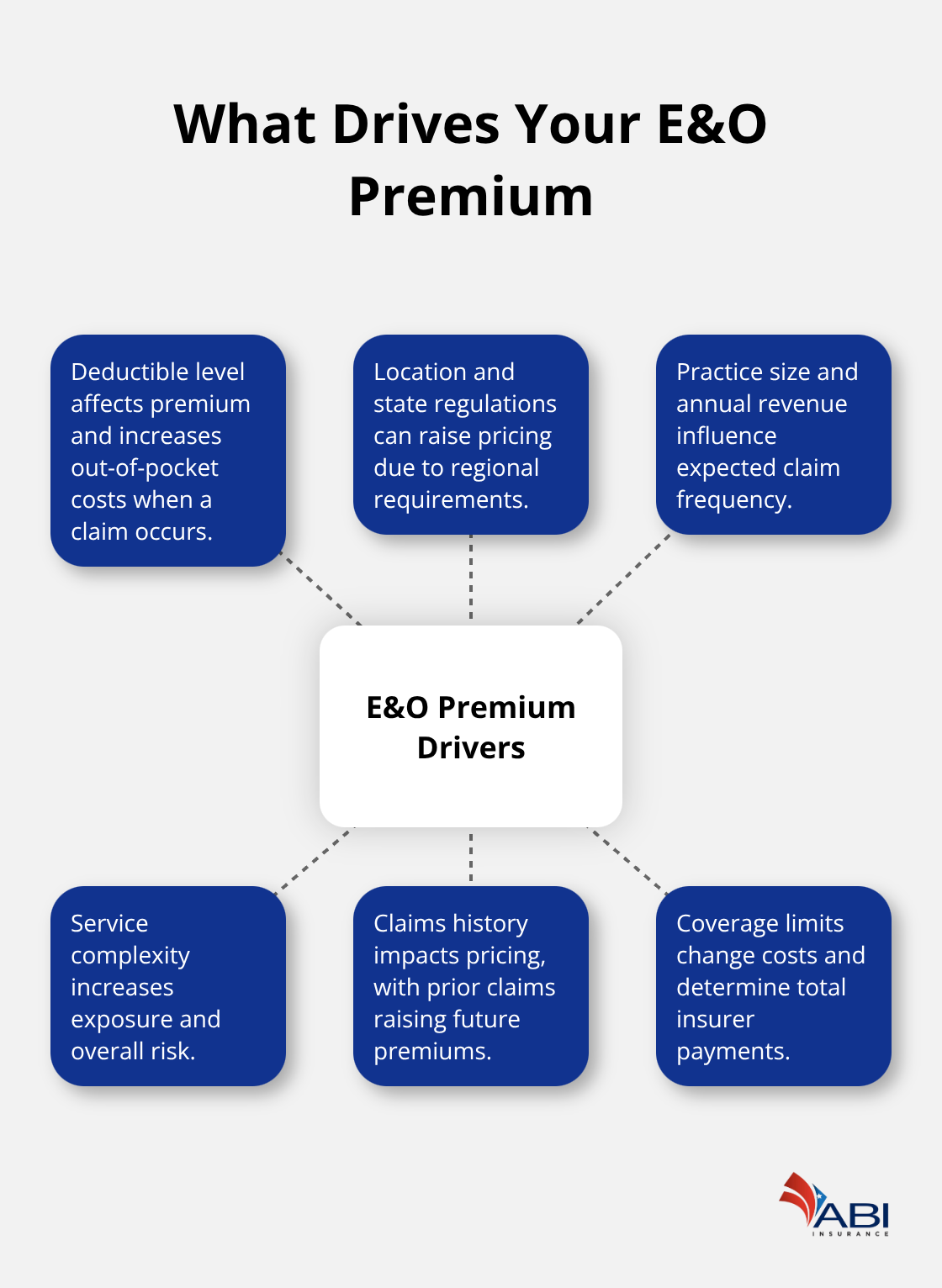
A clean claims record keeps costs down, while past claims significantly increase future premiums.
Risk Factors That Raise Your Premiums
If you operate multiple locations, offer specialized procedures, or handle significant patient data volumes, your E&O costs will reflect that elevated risk profile. A healthcare-focused insurance broker identifies which specific exposures your practice faces and ensures your coverage limits match your actual liability exposure rather than leaving gaps. These professionals understand the nuances of medical practice risk and can recommend appropriate coverage structures for your situation.
Who Cannot Afford to Skip This Coverage
Every medical practice needs E&O protection, including solo practitioners, group practices, clinics, and any operation where clinical decisions affect patient outcomes. If you provide patient care, order tests, recommend treatments, or document medical decisions, you face E&O exposure. Even practices with strong patient outcomes and excellent safety records cannot prevent lawsuits from being filed.
The financial impact of defending a claim without insurance can exceed $100,000 in legal fees alone, before any settlement is considered. Your malpractice insurance, if you carry it, may not cover all the gaps that professional liability addresses. Malpractice typically covers clinical errors in patient care, while E&O fills gaps by protecting administrative, billing, and ancillary activities that fall outside traditional malpractice scope.
Coverage Gaps You Might Miss
If your practice includes med spas, laboratory services, credentialing activities, or medical director duties, those exposures require explicit E&O coverage or targeted endorsements. Staff training on informed consent, documentation standards, and patient communication directly reduces your risk profile and can help lower premiums over time. The next section walks you through how to assess your specific risk exposure and select a policy that actually matches your practice’s needs.
Why Medical Practices Face Growing Liability Risk
Healthcare liability has transformed dramatically over the past decade. Medical practices that have not updated their risk management strategies operate with dangerous exposure. Patient expectations have risen sharply, regulatory compliance requirements multiply each year, and defending a single claim now routinely costs six figures before any settlement is paid.
Administrative Decisions Generate More Claims Than Clinical Errors
Most practices underestimate their actual exposure because they focus only on clinical malpractice risk and ignore the administrative, billing, and operational decisions that trigger the majority of modern E&O claims. Documentation gaps, informed consent failures, billing disputes, and miscommunication about treatment availability now generate more lawsuits than outright clinical errors. A patient who claims they never learned a recommended test was available can file a claim regardless of what your records show, and defending that claim costs money whether you win or lose.
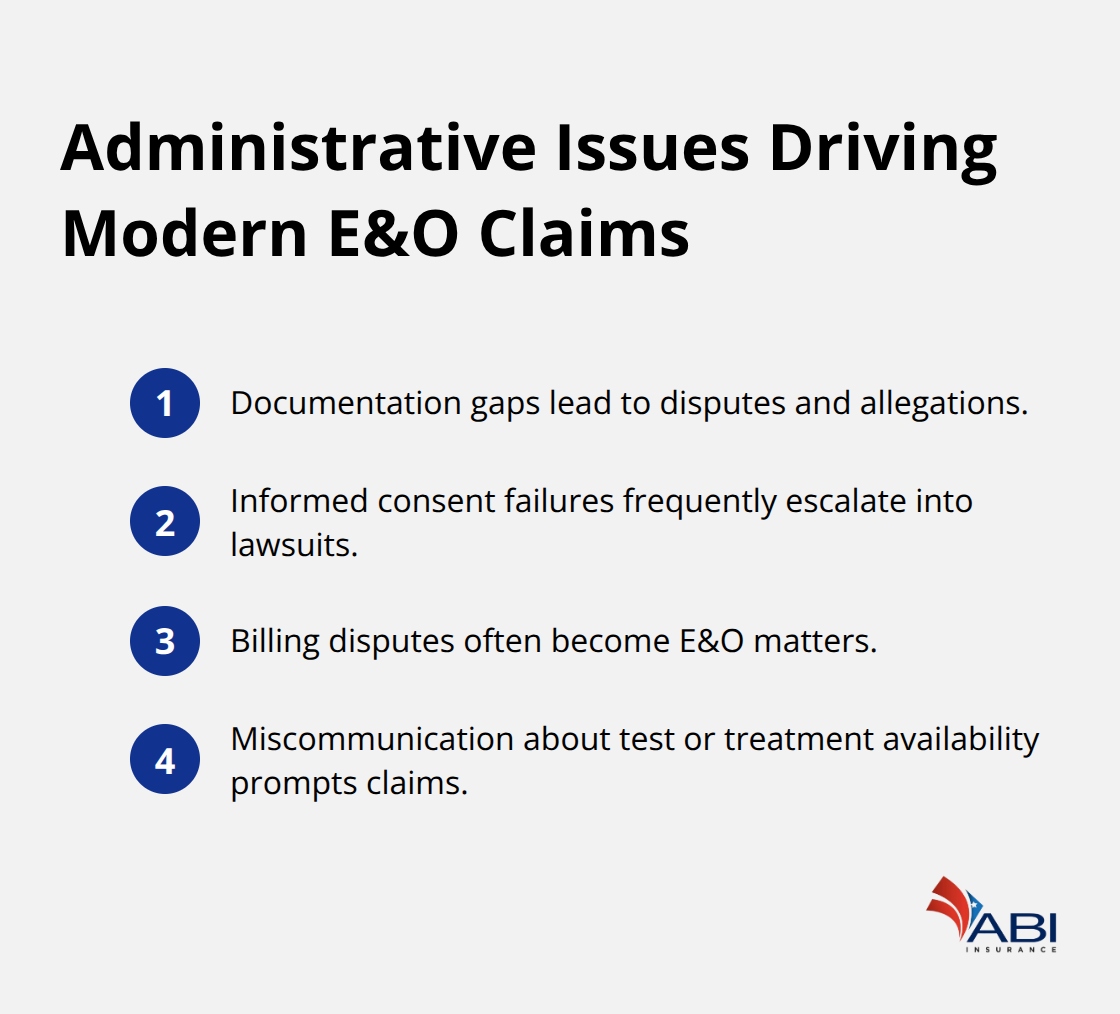
Your malpractice insurance covers clinical errors in direct patient care, but it leaves gaps in administrative exposures like credentialing disputes, billing errors, and failure to arrange appropriate referrals. These administrative gaps fall squarely into E&O territory and can devastate an unprepared practice.
Regulatory Tightening Creates New Exposure
Regulatory requirements have tightened significantly, and state licensing boards now expect documentation standards that exceed what many practices currently maintain. HIPAA violations, data security failures, and compliance missteps create additional liability exposure that traditional malpractice policies do not address. A single data breach involving patient health information can cost your practice tens of thousands in breach notification, forensic investigation, and potential regulatory fines, yet most medical offices carry no cyber liability coverage to absorb those costs.
The True Financial Cost of Uninsured Claims
The financial reality is stark: defending a complex claim without insurance protection can force a practice to liquidate assets, delay payroll, or close entirely. Practices that operate without adequate E&O coverage place their owners’ personal assets at risk because claims can exceed practice revenue by multiples. The Hartford reports that healthcare professionals face continuous pressure from rising claim frequency, meaning the question is not whether your practice will face a claim, but when.
How Risk Management Reduces Premiums Long-Term
Staff training on informed consent procedures, accurate documentation, and patient communication directly reduces your claims frequency, which means your E&O premiums stay lower over time. The practices that maintain the lowest premiums are those that invest in preventive risk management and carry coverage limits that actually match their exposure, not coverage that looks cheap upfront but leaves them catastrophically underinsured when a claim arrives. Understanding your specific risk profile and selecting appropriate coverage limits requires working with an insurance professional who understands medical practice exposures.
How to Select E&O Coverage That Matches Your Practice’s Real Exposure
Choosing an E&O policy requires matching your coverage limits and deductible to your actual liability exposure, not selecting whatever carries the lowest monthly premium. Healthcare professionals typically pay about $76 per month for standalone E&O coverage, but that price varies significantly based on practice size, services offered, claims history, and location. A solo practitioner offering basic primary care faces different exposure than a multi-location clinic performing specialized procedures and handling extensive patient data.
Document Your Practice’s Full Service Scope
Start by listing every service your practice provides, every location where you operate, and every administrative function your staff handles. If you operate med spas, laboratories, credentialing services, or offer medical director duties, those activities require explicit coverage or targeted endorsements that many standard policies exclude. Your practice size and annual revenue directly impact pricing because larger practices with higher patient volumes face greater frequency of claims, even with identical care quality. A healthcare-focused insurance broker assesses these factors against your financial capacity to absorb out-of-pocket losses.
Match Your Deductible to Your Cash Reserves
If you carry a $5,000 deductible, you must have cash reserves to cover that amount immediately when a claim arrives, which means selecting a deductible that exceeds your available capital creates financial hardship. Standalone E&O coverage costs vary depending on the product and endorsements, demonstrating that targeted coverage additions cost far less than underinsuring your core exposure. Higher deductibles reduce your monthly premium but increase your out-of-pocket exposure when a claim occurs.
Set Coverage Limits That Protect Your Assets
Coverage limits determine the maximum your insurer will pay toward defense costs and settlements combined. A practice defending a complex claim can spend $100,000 in legal fees before any settlement is considered, which means coverage limits below $250,000 leave most medical practices dangerously exposed. Your state may impose minimum coverage requirements that affect what you can purchase, and some regulatory bodies now expect documentation standards that exceed traditional malpractice requirements.
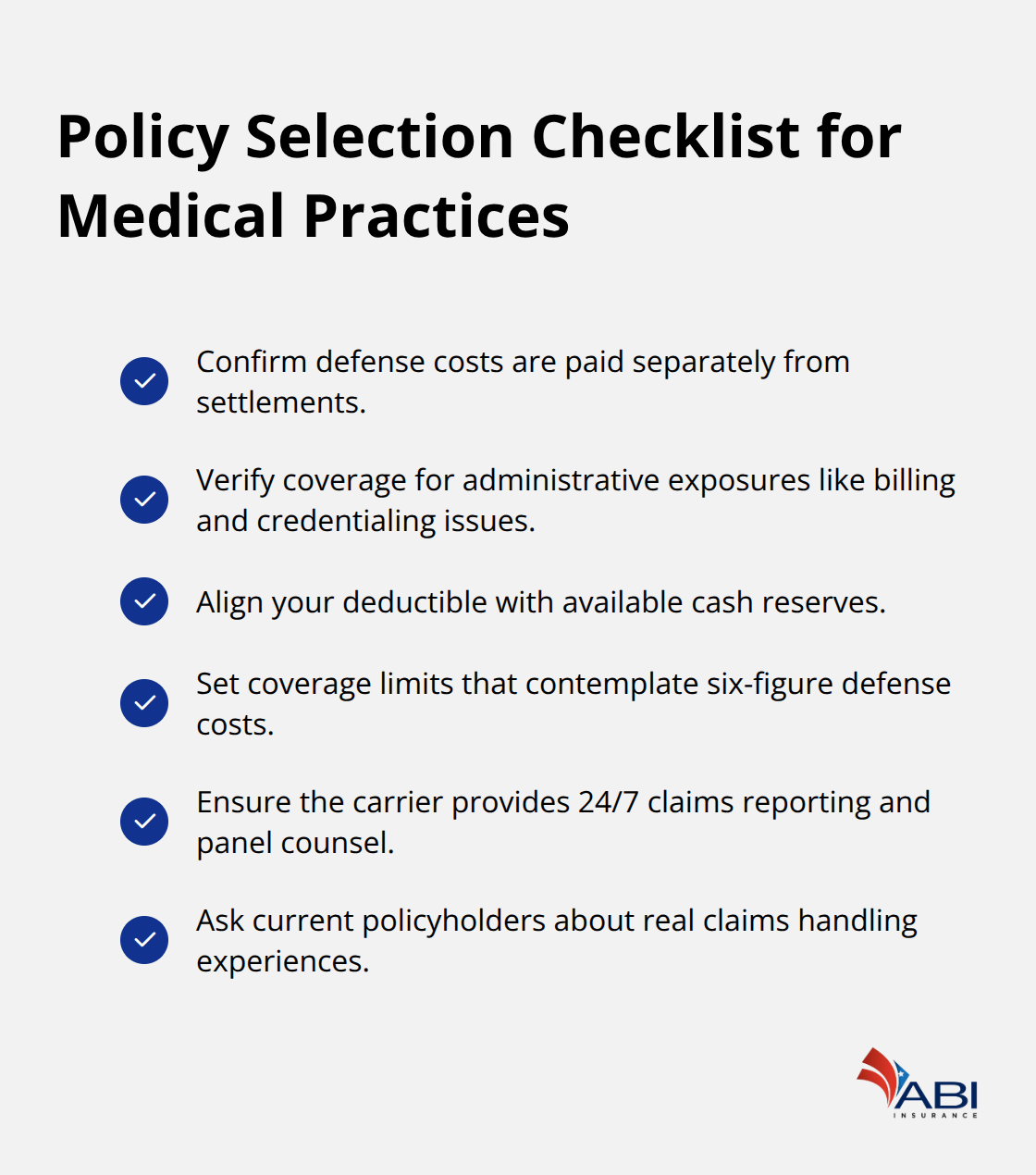
Work with an insurance professional who specializes in medical practice coverage to confirm your policy covers both defense costs and settlements as separate protections, not a single pool that depletes as legal fees accumulate. Ask your potential insurer directly whether they cover administrative exposures like billing disputes, informed consent failures, credentialing issues, and miscommunication about treatment availability, because many policies address only clinical errors.
Evaluate Claims Support and Carrier Responsiveness
The insurer’s claims support matters enormously when a claim arrives, meaning you should verify whether the carrier provides access to qualified legal counsel, whether defense costs are paid separately from settlement funds, and whether the insurer offers a 24/7 claims hotline. A carrier that forces you to find your own attorney and reimburses you later creates cash flow disasters for small practices. Ask current policyholders about their actual experience with claims handling, not just promotional materials. The carrier that responds quickly to claims and provides immediate legal support protects your practice far better than one that processes claims slowly or requires you to advance costs before reimbursement.
Final Thoughts
Medical office E&O coverage protects your practice from financial devastation that a single lawsuit can inflict. A complex claim costs $100,000 in legal fees alone, and that expense arrives whether you win or lose, which means operating without this protection forces you to liquidate assets or close your doors. Your malpractice insurance covers clinical errors, but it leaves dangerous gaps in administrative exposures like billing disputes, informed consent failures, and credentialing issues that now generate the majority of modern claims.
The practices that survive liability threats match their coverage limits to their actual exposure rather than chasing the lowest monthly premium. Your deductible must align with your available cash reserves, your coverage limits must protect your assets, and your insurer must provide immediate legal support when a claim arrives. Verify that your potential insurer covers administrative exposures explicitly, ask current policyholders about their actual claims experience, and confirm that defense costs are paid separately from settlement funds.
We at ABI Insurance specialize in medical professional coverage and understand the specific exposures your practice faces. Contact ABI Insurance today to assess your risk profile, select appropriate coverage limits, and connect with carriers that respond quickly when claims arrive.


 Pre-Vacation Checklist: Secure Your Home Before You Leave