

Portland sits on active seismic zones, and standard homeowners policies won’t protect your condo when an earthquake strikes. High-rise buildings face c risks that most condo owners overlook until it’s too late.
Earthquake insurance for condos is essential in Portland, yet many residents remain uninsured or underinsured. We at ABI Insurance help condo owners understand their coverage options and find the right protection for their investment.
Why Your Portland Condo Needs Earthquake Protection Right Now
Portland Sits on a Dangerous Fault Line
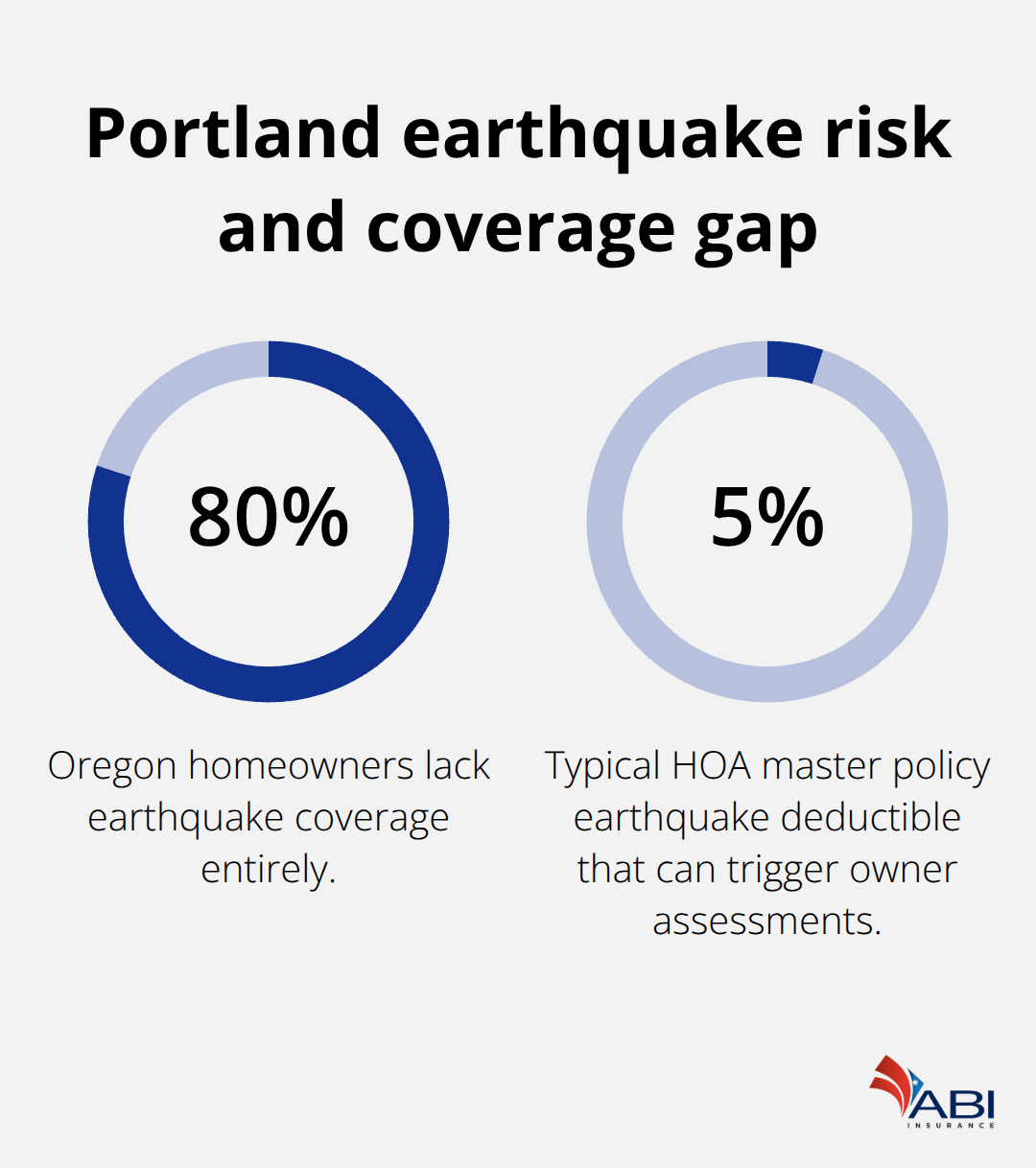
Portland sits directly in the path of the Cascadia Subduction Zone, one of the most dangerous fault lines in North America. The U.S. Geological Survey estimates that a magnitude 8-9 earthquake could strike the Pacific Northwest within the next 50 years, potentially causing billions in property damage. This isn’t theoretical risk; it’s a documented geological reality that affects your condo’s value and your financial security. About 80% of Oregon homeowners lack earthquake coverage, leaving themselves exposed to catastrophic losses that standard homeowners insurance will not cover.
Your HO6 Policy Won’t Protect You
Your HO6 condo policy explicitly excludes earthquake damage, which means the moment seismic shaking begins, your policy becomes worthless for structural repairs, personal property losses, or temporary housing costs.
The Master Policy Leaves You Exposed
High-rise condos in Portland face a specific vulnerability that single-family homeowners often avoid. When the building sways and shifts during an earthquake, the master policy held by your HOA may cover only part of the structural damage. If the association’s insurance limit falls short of full reconstruction costs, the remaining bill gets passed to unit owners as a special assessment.
Consider a realistic Portland scenario: a high-rise with a $105 million replacement value and a $30 million association limit leaves a $75 million gap. With a typical 5% deductible, each of 125 unit owners could face a $42,000 deductible assessment before any other repairs are covered. After that deductible is met, owners could still be assessed roughly $600,000 per unit for the remaining damage. Loss assessment coverage in your HO6 policy can protect you from the deductible portion, but it won’t shield you from the massive special assessments that follow when the master policy is exhausted.
Older Buildings Multiply Your Risk
Portland’s pre-1970 conversions and older concrete structures compound this risk because they cost more to repair and sustain greater earthquake damage. This means underinsurance becomes a financial catastrophe rather than an inconvenience. These buildings also face higher insurance premiums due to their vulnerability, making the cost of protection a serious budget consideration for owners. Understanding what your building’s master policy actually covers and what it does not is the first step toward protecting yourself from these devastating assessments.
What Your Master Policy Really Covers
Your HO6 Policy Leaves Critical Gaps
Your individual HO6 policy must fill the gaps the master policy does not. Standard HO6 coverage provides about $60,000 for personal property and $300,000 for liability. However, earthquake damage isn’t covered unless you purchase a separate earthquake endorsement or a stand-alone policy. That endorsement costs roughly $150 to $300 or more annually in Portland, depending on your building’s age and construction type. The real protection comes from adding loss assessment coverage to your earthquake policy, which typically costs $50 to $100 per year and shields you from paying your share of the master policy’s deductible.
Understanding the Special Assessment Risk
A realistic Portland scenario illustrates this exposure: a high-rise with a $105 million replacement value and a $30 million association limit leaves a $75 million gap. With a typical 5% deductible, each of 125 unit owners could face a $42,000 deductible assessment before any other repairs are covered. After that deductible is met, owners could still be assessed roughly $600,000 per unit for the remaining damage. This gap between what the master policy covers and what reconstruction actually costs represents your true financial vulnerability in a major seismic event.
The question then becomes: how do you assess whether your specific building’s coverage is adequate, and what steps should you take to evaluate your personal exposure?
Choosing the Right Earthquake Coverage for Your Portland Condo
Gather Your Building’s Critical Documents
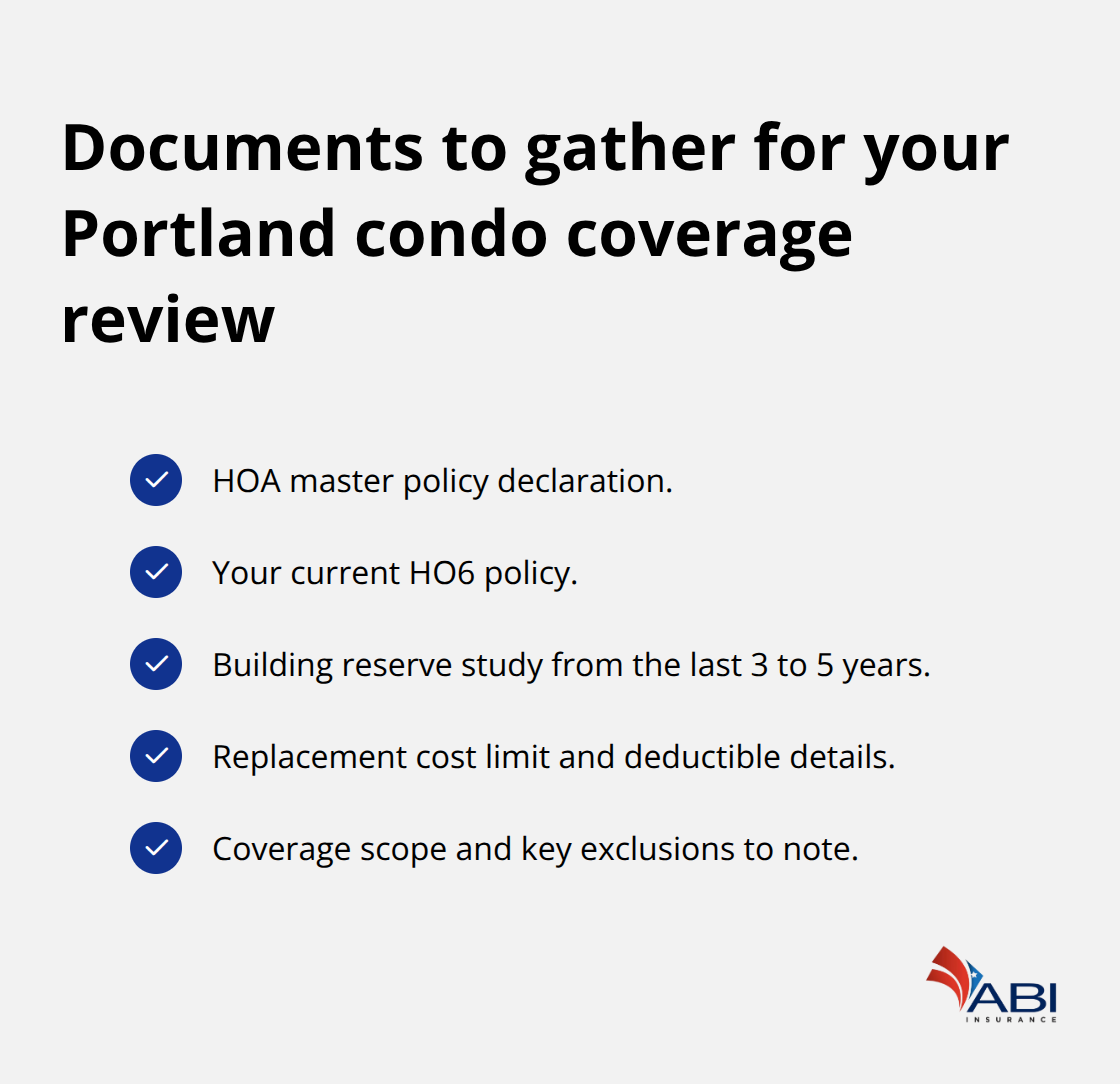
Start with three essential documents: your HOA’s master policy declaration, your current HO6 policy, and your building’s reserve study dated within the last three to five years. The master policy declaration reveals exactly what the association covers, what the deductible is, and what the replacement cost limit sits at-this number matters more than anything else because it determines your exposure to special assessments.
Request a Quote
Avoid quotes without detailed breakdowns showing base premium, endorsements, discounts, and exclusions-vague quotes hide gaps that will hurt you later. Request quotes that specify whether sewer backup, flood, and earthquake endorsements are included or priced separately, then verify whether deductibles apply separately to dwelling and contents coverage.
Account for Your Building’s Age and Construction Type
Your building’s age and construction type drive both premium and vulnerability. Pre-1970 conversions and concrete structures in Portland cost significantly more to insure because they sustain greater earthquake damage and require costlier repairs, so expect premiums 20 to 40% higher than newer wood-frame buildings. For a Portland condo, earthquake coverage typically costs $150 to $300 or more annually, and loss-of-use coverage (temporary housing if uninhabitable) adds roughly 10 to 15% to your base premium.
Maximize Discounts and Work with Local Expertise
Work with a local Portland insurance agent who understands condo underwriting and earthquake risk. They can identify which carriers offer the best rates for your specific building, connect you with reputable contractors if you’re considering seismic retrofits, and help you structure coverage so you’re not left exposed to large special assessments after a major quake.
Final Thoughts
Earthquake insurance for condos protects you from exposure to large special assessments after a major seismic event in Portland. The Cascadia Subduction Zone poses a genuine threat, and your master policy alone won’t shield you from the gap between what the association covers and what reconstruction actually costs. Without proper coverage, a single earthquake could force you to pay tens of thousands in deductible assessments plus hundreds of thousands more in special assessments to rebuild your building.
Gather your master policy declaration and reserve study, then request a detailed quote. Add loss assessment coverage to your earthquake policy, account for your building’s age and construction type when comparing premiums, and maximize bundling discounts with auto or umbrella policies. A local Portland insurance agent who understands condo underwriting can identify which carriers offer the best rates for your specific building and help you structure coverage that actually protects your investment.
We at ABI Insurance understand earthquake risk and the unique vulnerabilities that high-rise condos face in the Pacific Northwest. Contact us today to discuss earthquake insurance for your Portland condo and take control of your financial security before the next major quake strikes.


 Do You Need Rental Car Insurance? Here’s Why Extra Insurance Matters









