


Cyberattacks cost businesses an average of $4.45 million per incident in 2024, according to IBM’s latest data breach report. Most companies lack adequate financial protection when these attacks happen.
We at ABI Insurance know that business cyber liability insurance fills this gap. It covers the real costs that follow a breach from notification expenses to legal fees and lost revenue. Without it, your business faces serious financial and reputational risks.
What Your Cyber Liability Policy Actually Covers
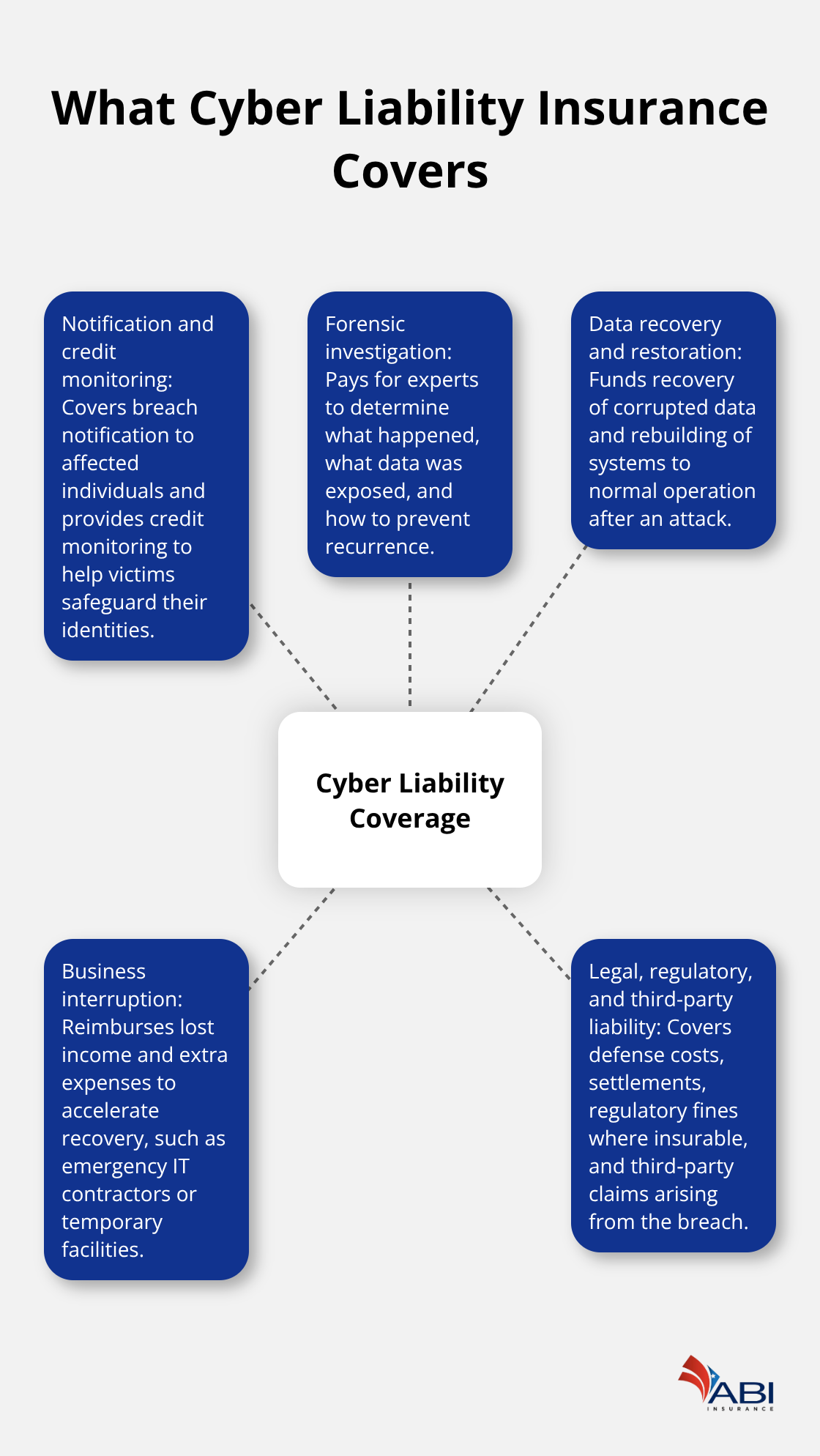
Cyber liability insurance addresses four distinct cost categories that follow a breach, and understanding each one matters because they represent real expenses your business will face. When a breach occurs, notification costs alone can reach $5 to $15 per affected individual, according to the Identity Theft Resource Center, which means a breach affecting 10,000 people would cost $50,000 to $150,000 just to notify them. Your policy covers these cyber breach notification costs, plus credit monitoring services for victims and the forensic investigation required to determine what happened. This first-party coverage also includes data recovery and system restoration, which typically costs $100,000 to $300,000 depending on the scope of the attack.
When Your Operations Stop
Business interruption coverage is where cyber liability insurance shows its real value. The global average data time to detect and contain a data breach is 280 days, according to IBM’s 2025 Cost of a Data Breach report, and during that time, your revenue stops while costs continue. If your systems go down for a week, you lose customer transactions, productivity, and income. Cyber liability policies reimburse this lost income and cover the extra expenses you incur to restore operations faster, such as emergency IT contractors or temporary facilities. For small businesses, this coverage often means the difference between surviving an attack and closing permanently.
Remediation and Recovery Costs
A ransomware incident can cost over $300,000 to remediate, and business interruption coverage protects your cash flow while you recover. Your policy covers the direct expenses of restoring your systems and operations to normal function, which extends far beyond the initial attack response.
Legal Fees and Regulatory Fines
Legal fees mount quickly in breach situations, especially when regulators investigate or customers file lawsuits. Regulatory fines vary by jurisdiction and industry, but healthcare organizations under HIPAA and payment processors under Payment Card Industry Data Security Standard (PCI-DSS) face substantial penalties for non-compliance. Your policy covers defense costs, settlements, and regulatory fines that result from the breach.
Third-Party Claims and Liability Exposure
The final component addresses third-party claims and liability exposure when your breach affects customers, vendors, or other businesses. If hackers access customer credit card data through your systems, those customers can sue you for fraud monitoring costs and identity theft expenses. Your policy covers these liability claims, which is essential because general liability insurance explicitly does not cover cyber incidents. Understanding these four coverage areas helps you identify which protection gaps matter most to your operation and which policy limits you actually need.
Why Attackers Target Your Business
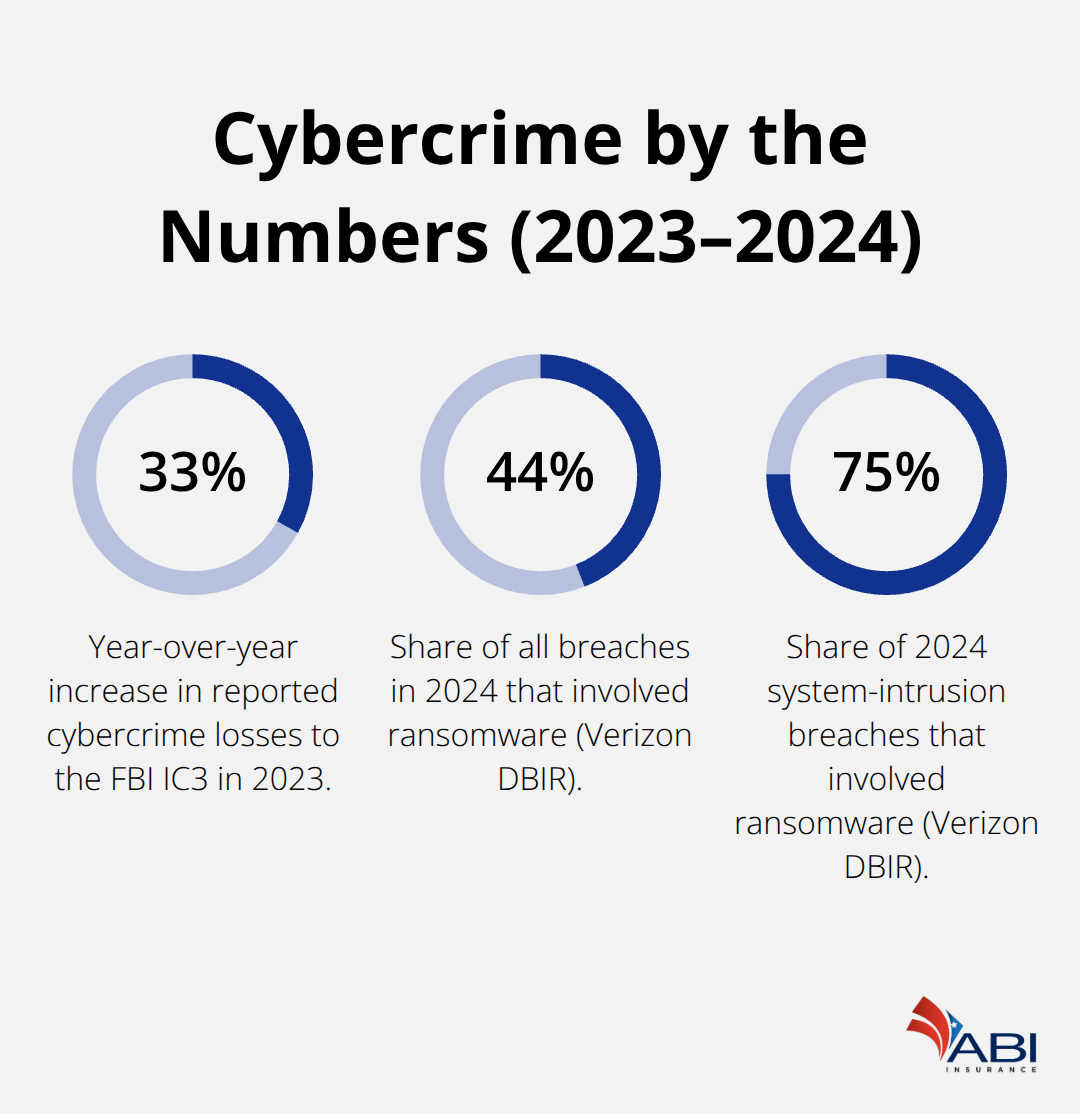
Cyberattacks strike with increasing frequency because attackers have discovered a profitable formula and possess the tools to scale it rapidly. The FBI’s Internet Crime Complaint Center logged over 880,000 cybercrime complaints in 2023, with reported losses exceeding $16 billion, a 33% year-over-year increase. This growth trajectory reveals that attackers refine their methods, test new vulnerabilities, and move faster than most businesses can defend against them. Ransomware specifically appeared in 44% of all breaches in 2024 and 75% of system-intrusion breaches, according to Verizon’s Data Breach Investigations Report.
The Financial Toll of Ransomware
Small businesses face ransomware demands averaging around $1,000,000, with remediation costs routinely exceeding $300,000. These figures represent real cash that leaves your business the moment an attack succeeds. For small and mid-sized operations, a single incident can trigger permanent closure because the financial shock overwhelms cash reserves and operational capacity. The speed at which attackers extract value means your business has little time to respond before damage compounds.
Notification and Compliance Costs
Regulatory pressure adds another layer of urgency that many business owners underestimate. Healthcare organizations operating under HIPAA, payment processors bound by PCI-DSS standards, and companies handling personal data face substantial fines if they fail to protect customer information adequately. A breach notification alone costs $5 to $15 per affected individual, meaning a breach affecting 50,000 customers runs $250,000 to $750,000 just for notifications and credit monitoring. These mandatory expenses hit your balance sheet immediately, regardless of whether you have insurance protection.
Reputational Damage and Customer Loss
The reputational damage that follows a public breach is nearly impossible to quantify, but customer trust evaporates fast. Many customers simply switch to competitors after learning their data was compromised, which means you lose revenue long after the technical incident ends. The combination of direct costs (notification, remediation, legal defense) and indirect costs (lost customers, operational downtime) creates a financial crisis that most businesses cannot absorb without proper protection. This is where cyber liability insurance addresses these exposures directly, covering notification costs, regulatory defense, and the business interruption that follows when systems shut down for investigation and recovery. Understanding these attack vectors and their financial consequences helps you recognize why cyber liability protection matters for your specific operation.
Matching Coverage to What Your Business Actually Risks
The gap between what you think you need and what actually protects your business often costs companies thousands in out-of-pocket expenses after an attack. Your industry determines which cyber threats matter most, which means a healthcare practice faces different exposures than a retail operation or a software company. Healthcare organizations handle PHI under HIPAA, which means regulatory fines for breaches can reach $1.5 million per violation category, so your policy must include regulatory defense and fines coverage with limits high enough to absorb these penalties. Retail businesses processing credit card payments need coverage for payment card data breaches and PCI-DSS compliance costs, while professional service firms handling client financial data need privacy liability limits that reflect the sensitivity of information they store.
Identify Your Data and Set Coverage Limits
Start by listing the specific data your business collects and maintains including customer names, addresses, payment information, health records, Social Security numbers, or proprietary client data. Then match those data types to coverage limits. A business handling 5,000 customer records with full payment information needs higher limits than one storing only email addresses. The Verizon Data Breach Investigations Report shows that breach costs scale directly with the number of affected records and the sensitivity of data exposed, so your coverage limits should reflect worst-case scenarios for your operation, not average incidents. Most small businesses underestimate their required limits and purchase $1 million in coverage when a single breach affecting 50,000 customers could easily exceed $2 million in notification costs alone at $5 to $15 per person.
Choose Your Deductible Based on Cash Flow
Deductibles work differently in cyber policies than in property insurance because each cyber loss triggers a separate deductible, not an annual aggregate. If your business experiences two ransomware attacks in one year, you pay the deductible twice, which means a $10,000 deductible becomes $20,000 in out-of-pocket expenses across two incidents. Higher deductibles reduce your premium, but only choose this trade-off if your cash reserves can absorb the full deductible amount without straining operations. A small business with $50,000 in monthly revenue cannot afford a $25,000 deductible because a single incident would consume half a month’s profit before insurance coverage begins. Conversely, a company with $500,000 in monthly revenue can comfortably absorb a $25,000 deductible and save 15 to 20% on annual premiums.
Lower Your Premium Through Security Practices
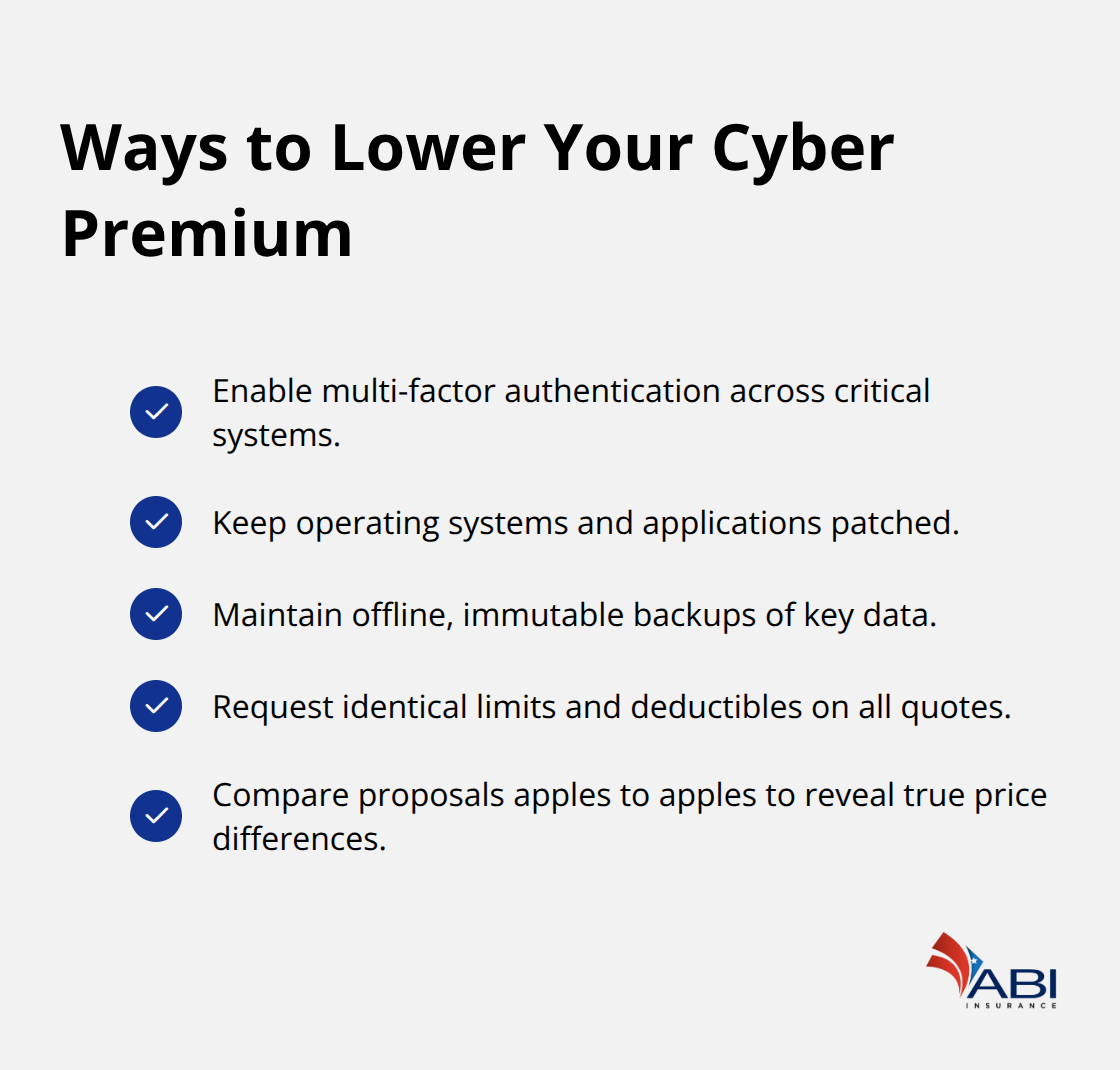
Your premium also depends on your security practices and claims history, so implementing multi-factor authentication, keeping systems patched, and maintaining offline backup copies of critical data can reduce your rate by 10 to 15% according to underwriting guidelines from major carriers. When comparing quotes, request identical coverage limits and deductibles across all proposals so you can evaluate actual price differences rather than comparing different protection levels. This approach ensures you compare apples to apples across all insurers.
Examine Policy Exclusions and Endorsements
Policy exclusions often hide in the fine print, and many carriers exclude coverage for social engineering losses, ransomware extortion payments, or regulatory fines unless you purchase specific endorsements that add to your base premium. Ask each insurer explicitly whether social engineering and ransomware payments are covered under the standard policy or require add-ons, then calculate the total cost including endorsements before deciding which quote represents the best value for your actual protection needs.
Final Thoughts
Cyber attacks strike every business eventually, and the financial toll proves devastating without proper protection. A single breach costs companies an average of $4.45 million, while small businesses face ransomware demands reaching $1,000,000 with remediation expenses exceeding $300,000. Business cyber liability insurance covers notification costs, regulatory fines, legal defense, business interruption, and third-party claims — the exact expenses that follow a breach and often determine whether your business survives.
Strengthen your security posture first by implementing multi-factor authentication, maintaining offline backups, and patching systems regularly. These actions reduce your risk and can lower your insurance premiums by 10 to 15 %, creating immediate financial benefits alongside better protection. Then purchase business cyber liability insurance with coverage limits that match your actual data exposure and deductibles your cash flow can absorb.
We at ABI Insurance help Portland-area businesses and organizations across the Western U.S. build comprehensive protection strategies that address cyber risk alongside other business exposures. Contact us today to discuss your cyber liability needs and receive a quote tailored to your operation.


 Doctor Malpractice Insurance Options: What Portland Doctors Should Consider









