


Running a business in Portland means understanding your workers comp insurance obligations. Oregon’s requirements are strict, and getting them wrong can cost you thousands in penalties.
At ABI Insurance, we’ve helped hundreds of Portland employers navigate local rates and build safer workplaces. This guide covers everything you need to know about workers comp insurance in Portland — from what coverage includes to practical steps for reducing your premiums.
What Workers Comp Actually Covers in Oregon
Workers comp in Oregon covers medical expenses, wage replacement, and disability benefits when an employee sustains an on-the-job injury or develops an occupational disease. Medical coverage includes doctor visits, hospital care, surgery, rehabilitation, and prescription medications with no deductibles. If an employee misses work, they receive temporary disability payments at two-thirds of their average weekly wage, capped by the state maximum. Oregon’s system also covers permanent disability benefits if an injury causes lasting impairment, vocational rehabilitation to help workers return to suitable employment, and death benefits to the worker’s family if a fatal injury occurs. The Oregon Department of Consumer and Business Services manages these benefit levels and updates them annually.
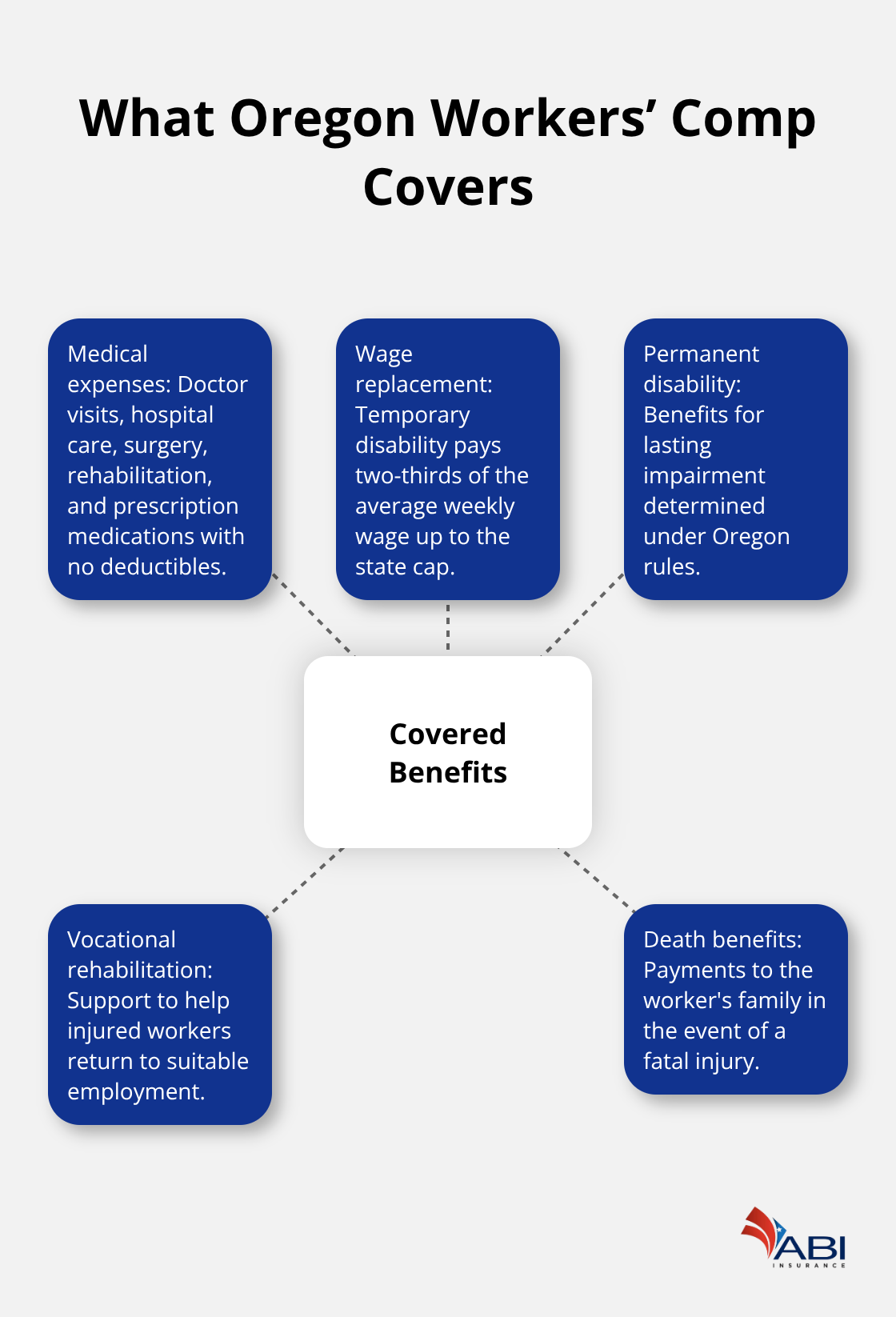
What many Portland employers miss is that workers comp does not cover injuries that happen outside work, self-inflicted injuries, or injuries from illegal activity. It also does not cover the worker’s pain and suffering or punitive damages. Independent contractors are not automatically covered unless you specifically add them to your policy, which is optional in Oregon. Misclassifying an employee as an independent contractor can result in significant penalties and back premiums.
Oregon’s Coverage Mandate Is Nearly Universal
Oregon requires almost all employers with one or more employees to carry workers comp insurance. Sole proprietors without employees, partners in partnerships, and corporate officers who own the company may qualify for exemption, but you must formally apply and get approval. If you hire even one person to do work, that person is almost certainly your employee and must be covered.
The penalty for operating without required coverage is steep: Oregon can assess fines, shut down your business, and hold you personally liable for any worker injuries. SAIF Corporation, Oregon’s not-for-profit workers comp insurer serving more than 54,000 employers statewide since 1914, emphasizes that nearly all Oregon employers are subject to the mandate. The state’s strict approach has worked. Oregon maintains some of the lowest workplace injury rates in the nation. This is not a gray area where you can guess. Contact the Oregon Workers’ Compensation Division at 888-877-5670 or email wcd.employerinfo@dcbs.oregon.gov if you are unsure whether your workers are covered.
Local Rates Reflect Portland’s Industry Mix
Portland employers pay pure premium rates set by the National Council on Compensation Insurance (NCCI) based on your industry classification and the state’s loss history. These rates receive approval from the Oregon Insurance Commissioner and update annually. Your actual premium depends on your class code, payroll, claims history, and safety record. Portland’s economy includes technology, healthcare, manufacturing, retail, and construction, each with different risk profiles and rate levels.
A software company in the Pearl District pays significantly less than a roofing contractor because the industry classification reflects injury likelihood and medical cost severity. SAIF publishes 2026 pure premium rates and minimum premiums for all Oregon class codes, and the Oregon Department of Consumer and Business Services maintains rate history on data.oregon.gov so you can track year-over-year changes. Since 1990, SAIF has returned more than 2.6 billion dollars to Oregon businesses, which directly reduces your net insurance costs. This means Portland employers benefit from the state’s overall safety success through lower baseline rates and potential dividend returns. ABI Insurance works with SAIF and can offer you a quote from Oregon’s not-for-profit workers compensation insurer.
Getting an Accurate Quote for Your Portland Business
An accurate quote requires you to provide your specific class code, annual payroll, and loss history to an agent who understands Portland’s local market. Your class code determines your baseline rate because it reflects the specific hazards and injury patterns of your industry.
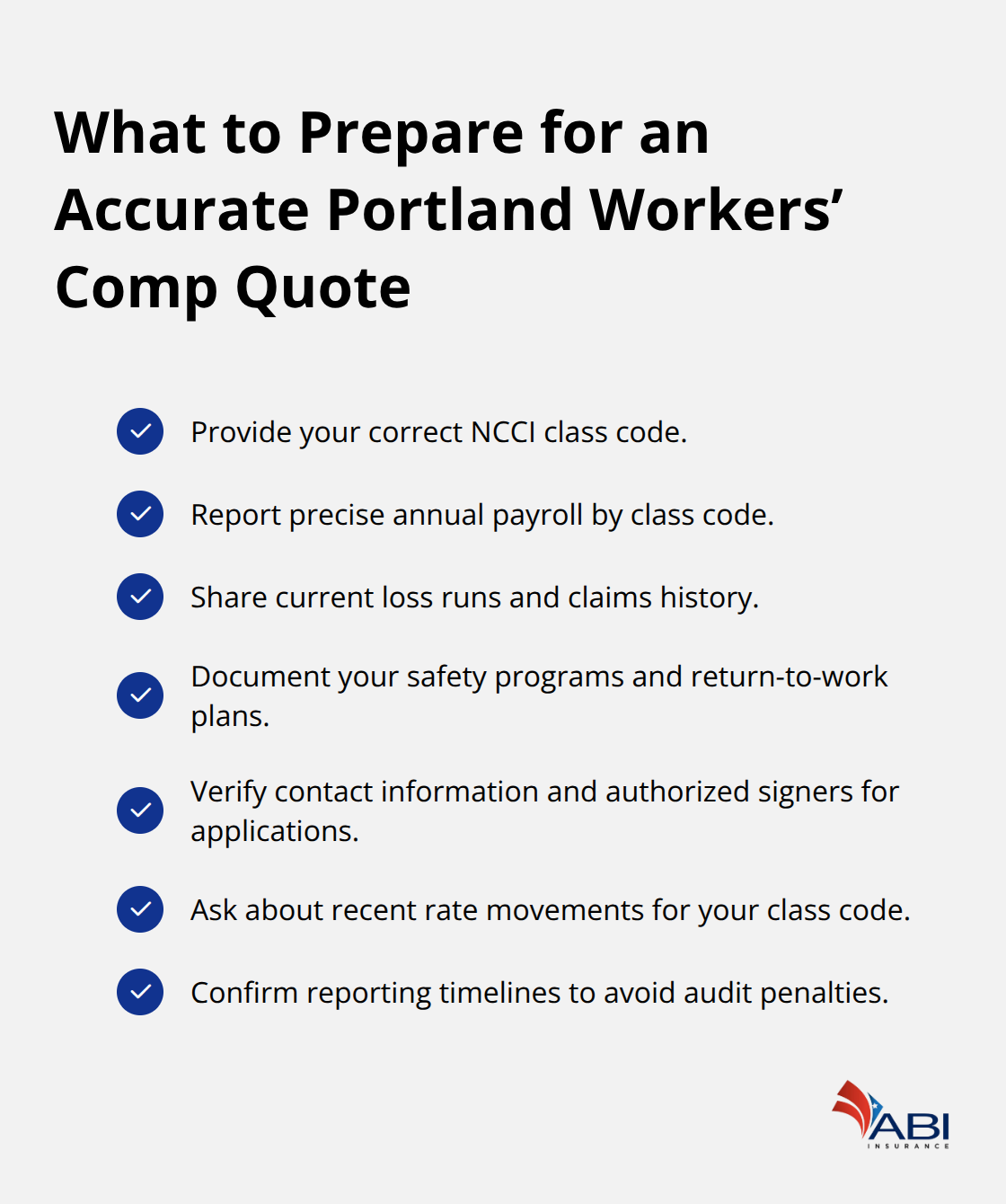
Payroll accuracy matters because your premium scales with the wages you report. Underreporting payroll can trigger audits and back premiums, while overreporting inflates your costs unnecessarily. Your claims history and safety record directly influence your rate; employers with fewer injuries and faster return-to-work outcomes pay lower premiums than those with poor safety records. Understanding these factors helps you anticipate rate movements and budget accurately.
What Really Drives Your Portland Workers Comp Rate
Your workers comp premium in Portland is not random, and it is not the same for every business. The Oregon Insurance Commissioner approves pure premium rates developed by the National Council on Compensation Insurance, but your actual cost depends on three specific factors that you control to varying degrees.

Industry Classification Sets Your Baseline
Your industry classification forms the foundation of your rate. NCCI maintains over 500 rating classifications, and each one reflects the actual injury patterns and medical costs from that type of work. A dental office in Northwest Portland operates under a different classification than a warehouse in Southeast Portland, which means different baseline rates regardless of company size. Your class code is assigned based on your primary business activity, and misclassifying your work can trigger audits and unexpected premium adjustments. Verify your class code is correct when you receive your quote and annually during policy renewal.
Payroll Accuracy Directly Impacts Your Premium
Your premium scales directly with reported wages because higher payroll means more exposure to potential injuries. Oregon requires you to report actual payroll, and SAIF conducts audits to verify accuracy. Underreporting saves money short-term but creates massive back-premium bills when discovered, while overreporting inflates costs unnecessarily. Track your payroll carefully and provide precise wage records when applying for coverage or renewing your policy.
Claims History and Safety Record Drive Real Savings
A business with zero claims over three years pays substantially less than one with multiple injuries, even in the same industry classification. This is where Portland employers often miss significant savings opportunities. SAIF’s return-to-work programs help injured workers resume duties faster and directly lower your overall costs. Portland businesses that invest in genuine safety training and hazard elimination see measurable rate reductions because insurers reward lower injury frequency and severity.
Track Rate Movements and Dividend Returns
The Oregon Department of Consumer and Business Services publishes rate history on data.oregon.gov, and you can track how rates have moved year-to-year for your specific class code to anticipate 2026 and 2027 adjustments. Since 1990, SAIF has returned more than 2.6 billion dollars in dividends to Oregon businesses, meaning your safety performance and the state’s collective safety record both work in your favor through lower baseline rates and potential dividend returns that directly reduce your net cost. Understanding these three factors positions you to negotiate better rates and identify where your business can cut costs without cutting corners on worker protection. The next section explores the specific resources and support available to Portland employers who want to maximize these advantages.
Getting the Right Support for Your Portland Workers Comp
Find an Agent Who Knows Portland’s Market
An insurance agent who understands Portland’s specific workers comp landscape matters far more than most business owners realize. A generic agent who treats your policy like any other will miss opportunities to lower your premiums and optimize your coverage for local conditions. When you get a quote, ask the agent directly about your specific class code, whether your industry has seen rate increases or decreases over the past two years, and what safety programs reduce premiums in your sector. An agent who cannot answer these questions quickly is not doing the work to serve you well. The Oregon Workers’ Compensation Division maintains contact information for agents and brokers, and you can verify credentials through the Oregon Insurance Commissioner’s office before committing to any policy.
Claim Tax Credits and Compliance Discounts
Tax credits and compliance discounts exist but require you to take specific actions to claim them. Oregon rewards employers who maintain safe workplaces and comply with reporting requirements, though the state does not advertise these savings heavily. SAIF’s return-to-work programs, including the Preferred Worker Program, directly lower your premiums by reducing claim duration and injury severity. Accurate payroll reporting and timely claims filing prevent audit penalties that can spike your costs unexpectedly. The Oregon Department of Consumer and Business Services offers a Small Business Ombudsman for Workers’ Compensation to help you navigate compliance and identify available benefits. Contact them at 888-877-5670 to ask specifically about credits applicable to your business type and size.
File Claims Immediately and Manage Return-to-Work
Manage claims effectively by reporting injuries immediately through the 801 form and documenting the incident thoroughly. Work with your insurer on return-to-work planning from the start because employers who delay reporting or fight legitimate claims see higher future premiums (insurers view them as higher risk).
Final Thoughts
Workers comp insurance Portland employers carry protects your employees and your bottom line when you approach it strategically. Your rate depends on your specific industry classification, the accuracy of your payroll reporting, and your actual safety performance-three factors you now control and can influence. Oregon’s strict coverage mandate protects your workers from catastrophic liability, and the state’s low injury rates mean your baseline premiums reflect a genuinely safer workforce across the region.
Local expertise makes a measurable difference because Portland’s economy includes diverse industries with different risk profiles and rate structures. An agent who understands your specific business type, knows how rates have moved in your classification, and identifies compliance credits applicable to your situation will save you money and headaches. We at ABI Insurance have spent more than 40 years helping Portland businesses navigate workers comp and other coverage needs with personalized solutions backed by local knowledge.
Your next step is straightforward: contact ABI Insurance to discuss your specific situation, get an accurate quote from an agent who knows Portland’s workers comp landscape, and verify your class code and payroll information are correct. Commit to genuine safety practices that reduce injuries and lower your premiums over time. We understand the Portland market and can help you get the right coverage at the right price.


 Earthquake Insurance for Condos: Protecting High-Rise Living in Portland









