

Small business workers compensation insurance isn’t optional — it’s a legal requirement in most states. Yet many employers remain confused about what it covers, how much it costs, and what happens if they don’t comply.
We at ABI Insurance have helped hundreds of small business owners navigate these questions. This guide breaks down everything you need to know to protect your employees and your business.
What Your Workers Compensation Insurance Actually Pays For
Workers compensation covers five specific benefits when an employee gets injured on the job, and understanding each one matters for your budget and compliance. Medical care is the first pillar. The policy pays for all treatment related to the work injury, including hospital visits, surgery, imaging, physical therapy, and prescription medications. Medical costs are inflating faster than general inflation; expect higher bills for hospital stays, specialty care, and long-term pain management in 2026.
Temporary Disability and Wage Replacement
The second benefit is temporary disability payments, which replace roughly two-thirds of the employee’s lost wages starting after a three-day waiting period (though hospitalization or injuries lasting more than 14 days can change the timing). These payments go out biweekly and continue until the employee returns to work or reaches maximum medical improvement. The financial impact hits fast-one injury in a three-person company removes about one-third of your workforce, making wage replacement a significant expense that compounds quickly.
Permanent Disability Benefits
The third benefit covers permanent disability if the injury causes lasting impairment; formal rating schedules determine the calculation, and payments can range from small amounts for minor impairments to substantial lump sums or ongoing payments for severe cases. The rating process involves treating physicians, qualified medical examiners, or agreed medical examiners, with a panel process available for disagreements. Understanding your potential exposure here helps you budget for long-term claim costs.
Vocational Rehabilitation and Return-to-Work Support
The fourth benefit, vocational rehabilitation and return-to-work support, is where you can genuinely reduce claim costs. Supplemental Job Displacement Benefits provide retraining for eligible injuries, allowing employees to fund education, certification programs, or licensing requirements that help them transition to new roles if they cannot return to their original job. Coordinate closely with your occupational health provider to develop realistic, gradual job-specific return-to-work duties. Structured return-to-work programs pay for themselves through maintained productivity and faster claim closure.
Death Benefits and Survivor Protection
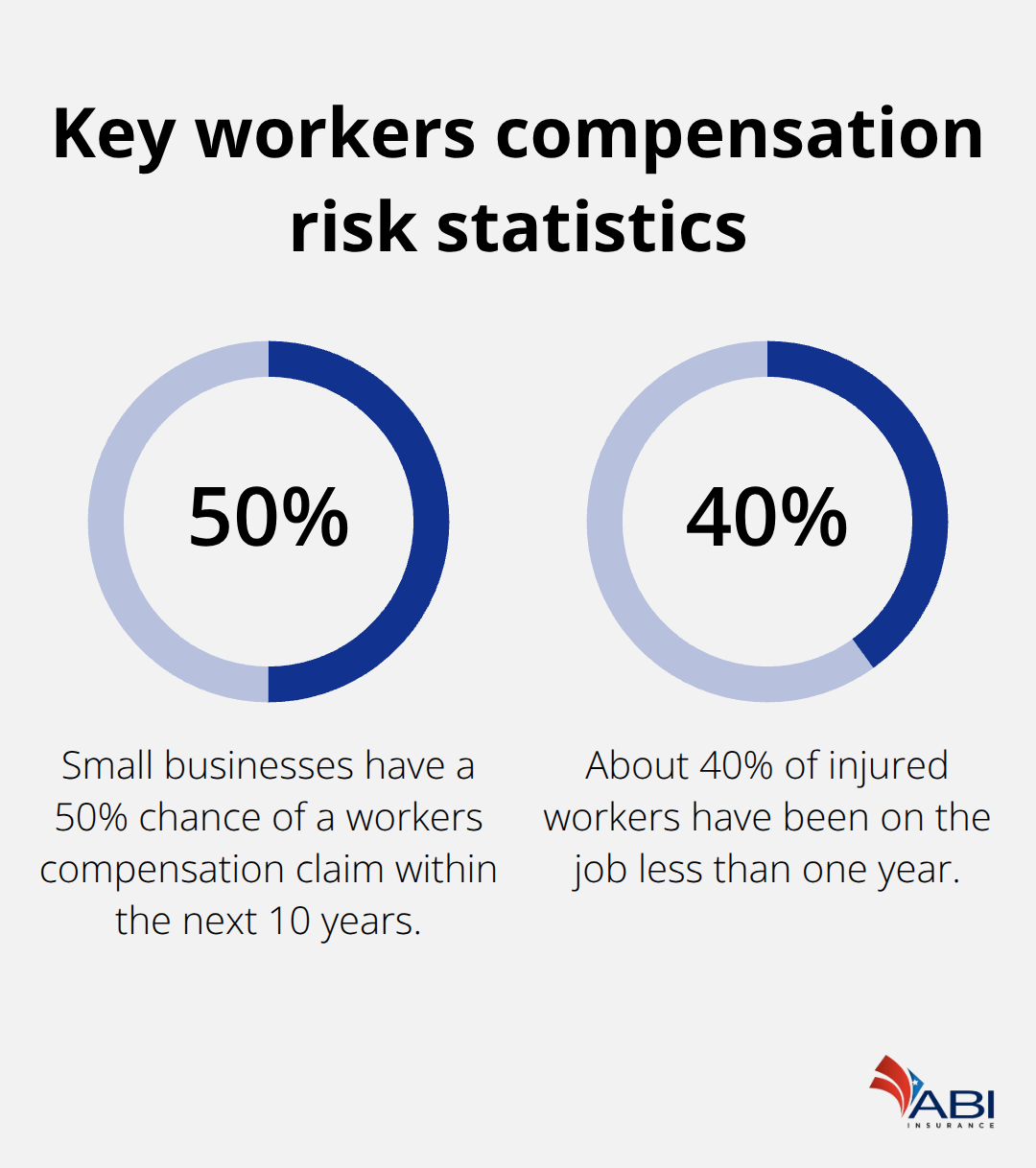
The fifth benefit covers death benefits if a workplace fatality occurs — burial expenses up to the statutory maximum plus ongoing survivor benefits based on dependents. These payments align with temporary disability benefit rates and provide critical financial protection for families. With data showing a 50% chance your small business will experience a workers compensation claim in the next 10 years, understanding all five benefits positions you to respond effectively when injuries happen. The next section covers the legal requirements that make this coverage mandatory and the penalties you face if you fail to comply.
The Critical Role of Timely Reporting
Documentation and reporting are where most small businesses stumble, and these failures compound your liability significantly. When a work injury occurs, you must provide the employee with Form 801 immediately, complete your section, and send it to your insurer without delay. Timely reporting matters because delays trigger penalties and can reduce benefits to employees, which then creates legal disputes that cost far more than the original claim. A Worker’s and Physician’s Report for Workers’ Compensation must be filed for every work injury, including minor first aid cases, and misclassifying or hiding injuries constitutes fraud that can result in criminal prosecution.
Payroll Accuracy and Audit Exposure
Your payroll records must accurately reflect employee classification and wages because workers compensation premiums are calculated from this data, and underreporting creates audit exposure. Audits can occur during your policy term and up to three years after termination, so maintain detailed records that align with your insurer’s requirements. Monthly payroll reporting is often available and reduces audit risk by providing real-time accuracy. Oregon Workers Compensation Division provides free resources and guidance on proper documentation procedures, and consulting these materials prevents costly mistakes.
Coordinating Claims to Prevent Disputes
Assign someone on your team to manage claim coordination with your insurer because consistent communication speeds resolution and prevents disputes that drive up costs. This person tracks claim activity, reviews trends, and adjusts strategies as needed to control expenses. Strong documentation and incident reporting (including witness statements) reduce disputes and improve outcomes, protecting both your employees and your bottom line. When you move into cost management the strategies you implement here, combined with solid documentation practices, determine whether your premiums stay stable or climb year after year.
How to Lower Your Workers Compensation Costs
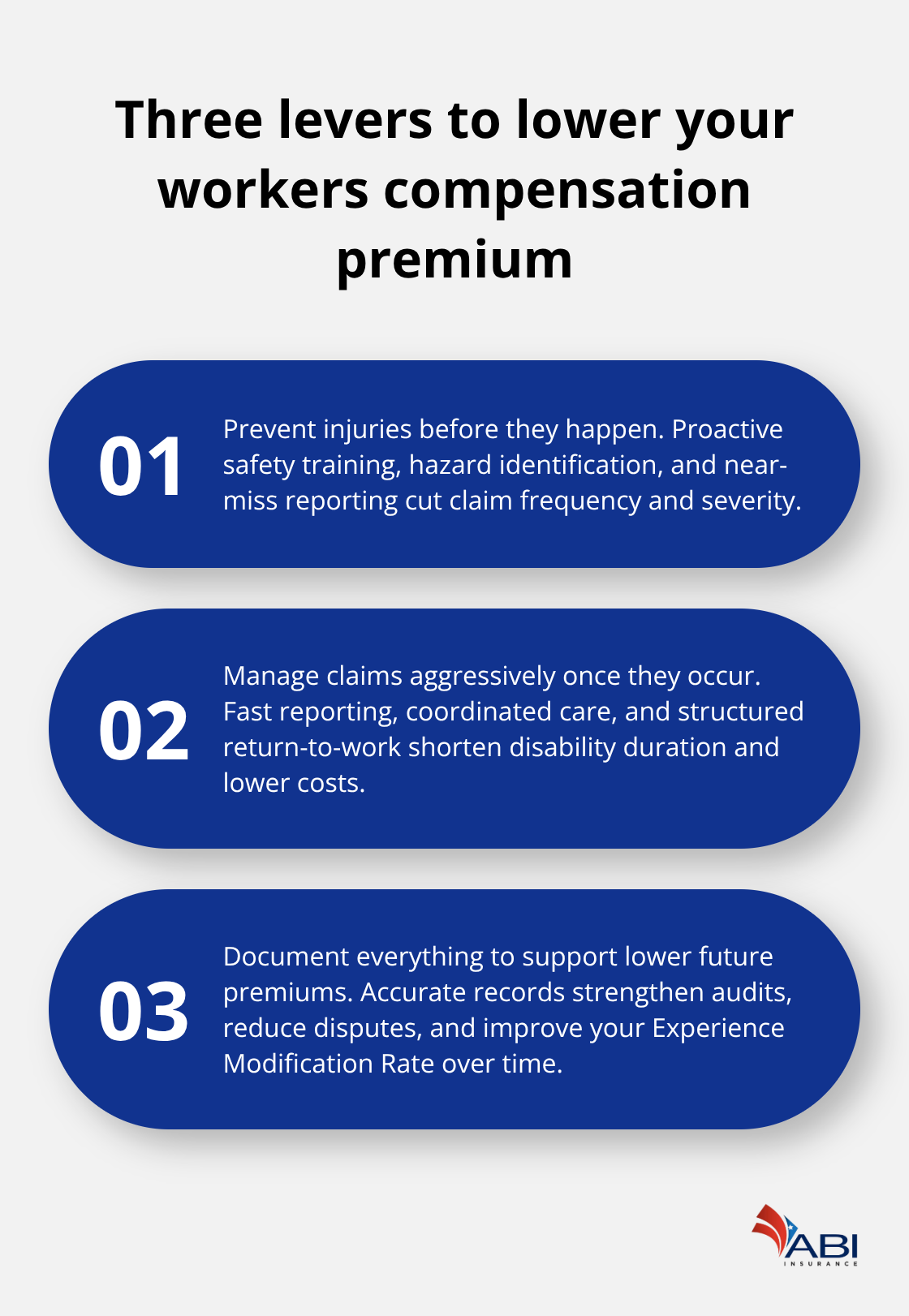
Your Experience Modification Rate, or EMR, directly controls what you pay for workers compensation insurance, and most small business owners have no idea they can influence it. The EMR compares your claims history to other businesses in your industry classification; a rate below 1.0 means you pay less than average, while anything above 1.0 means you pay a premium for higher-than-average claims. This single number can swing your annual premium by thousands of dollars, which is why reducing claim frequency should be your primary cost-control focus. Hartford’s analysis of small business claims data shows a 50% chance your company will experience a workers compensation claim within the next 10 years, making proactive risk reduction essential for cash flow management. The most effective cost reduction strategies attack this problem from three angles: preventing injuries before they happen, managing claims aggressively once they occur, and documenting everything to support lower future premiums.
Safety Programs That Actually Reduce Claims
Safety training works because about 40% of injured workers have been on the job for less than one year, according to Bureau of Labor Statistics data, meaning new hires represent your highest injury risk. Develop a baseline safety training program for all new employees that covers hazard identification, proper equipment use, and reporting procedures specific to your operations. Walk through every station in your workplace, identify specific risks, and document them with photos if needed. Do not rely on generic templates. Require near-miss reporting because injuries that almost happened reveal system failures before someone gets hurt; create a simple form that takes two minutes to complete and review these reports monthly to spot patterns.
Oregon OSHA offers free consultation services on workplace safety, industrial hygiene, and more to help reduce accidents. Medical inflation is driving claim severity upward in 2026 and beyond, so early intervention matters tremendously. Establish relationships with occupational health providers who can see injured employees quickly and guide treatment toward faster recovery rather than prolonged care.
Claims Management That Controls Expenses
Assign one person on your team to serve as claims coordinator, and this single decision can reduce your total claim costs by 10 to 15 percent through consistent follow-up and early intervention. This person should contact the injured employee within 24 hours of the injury to gather details, confirm they understand the claims process, and arrange initial medical care if needed. Track every claim in a simple spreadsheet that notes the date of injury, the body part affected, initial medical expenses, temporary disability duration, and return-to-work status; review this data quarterly to reveal whether certain job roles or departments generate repeat injuries that need targeted safety improvements. Structure return-to-work programs with realistic, job-specific duties that gradually increase in responsibility as the employee recovers and coordinate directly with their healthcare provider to confirm medical clearance aligns with job demands.
Telemedicine is now standard in workers compensation, reducing delays and improving outcomes; verify that your insurer’s Medical Provider Network includes telemedicine options and encourage employees to use virtual visits for follow-ups rather than waiting for in-person appointments. Document everything related to every claim: witness statements, photos of the injury scene, the employee’s description of what happened, and all communications with medical providers and your insurer. This documentation protects you during audits and prevents disputes that extend claim duration and inflate costs.
Lowering Premiums Through Measurable Loss Control
Your payroll classification accuracy directly affects your premium calculation, so audit your employee classifications against the National Council on Compensation Insurance (NCCI) code system annually to confirm you are not overpaying for lower-risk roles. If you have employees who work partially in different roles, classify them under the higher-risk classification to avoid audit penalties later. Monthly payroll reporting, when available from your insurer, eliminates the end-of-year audit surprise and allows real-time premium adjustments rather than facing a large bill months after your policy ends. Premium discounts exist for employers who implement documented safety programs, maintain low claims frequency, and complete loss control measures; ask your broker or insurer specifically which discounts apply to your business and what additional steps would unlock additional savings. Some insurers offer dividend plans based on claims performance, but these are never guaranteed, so focus on the controllable elements: injury prevention, quick claims resolution, and accurate reporting.
Final Thoughts
Small business workers compensation insurance protects your employees and your business from financial devastation, but only if you implement it correctly. The five benefits — medical care, temporary disability, permanent disability, vocational rehabilitation, and death benefits — form a safety net that keeps your company operational when injuries happen.
Your real opportunity lies in cost control through your Experience Modification Rate, which you influence through deliberate action on safety training, structured return-to-work programs, aggressive claims management, and accurate payroll classification. Documentation and timely reporting prevent disputes that extend claims and inflate costs, while Oregon OSHA’s consultation services help you identify workplace hazards before they cause injuries. These strategies work because they address the root cause of high premiums: preventable injuries and mismanaged claims.
Start by reviewing your current coverage with a broker who understands small business needs and verify that your classification codes match your actual operations. We at ABI Insurance help small business owners across the Portland metro area and the Western U.S. navigate workers compensation with personalized solutions that fit your budget and risk profile. Contact ABI Insurance to review your current coverage, discuss cost-reduction strategies, and protect your business.


 Workers Comp Insurance Portland: Local Rates and Resources









