


Fleet auto insurance rates can drain your budget quickly, especially when you’re managing multiple vehicles. At ABI Insurance, we’ve seen fleet owners overpay by thousands annually simply because they don’t know where to cut costs.
This guide walks you through the real factors driving your premiums and the proven strategies that work.
What Drives Your Fleet Insurance Premiums
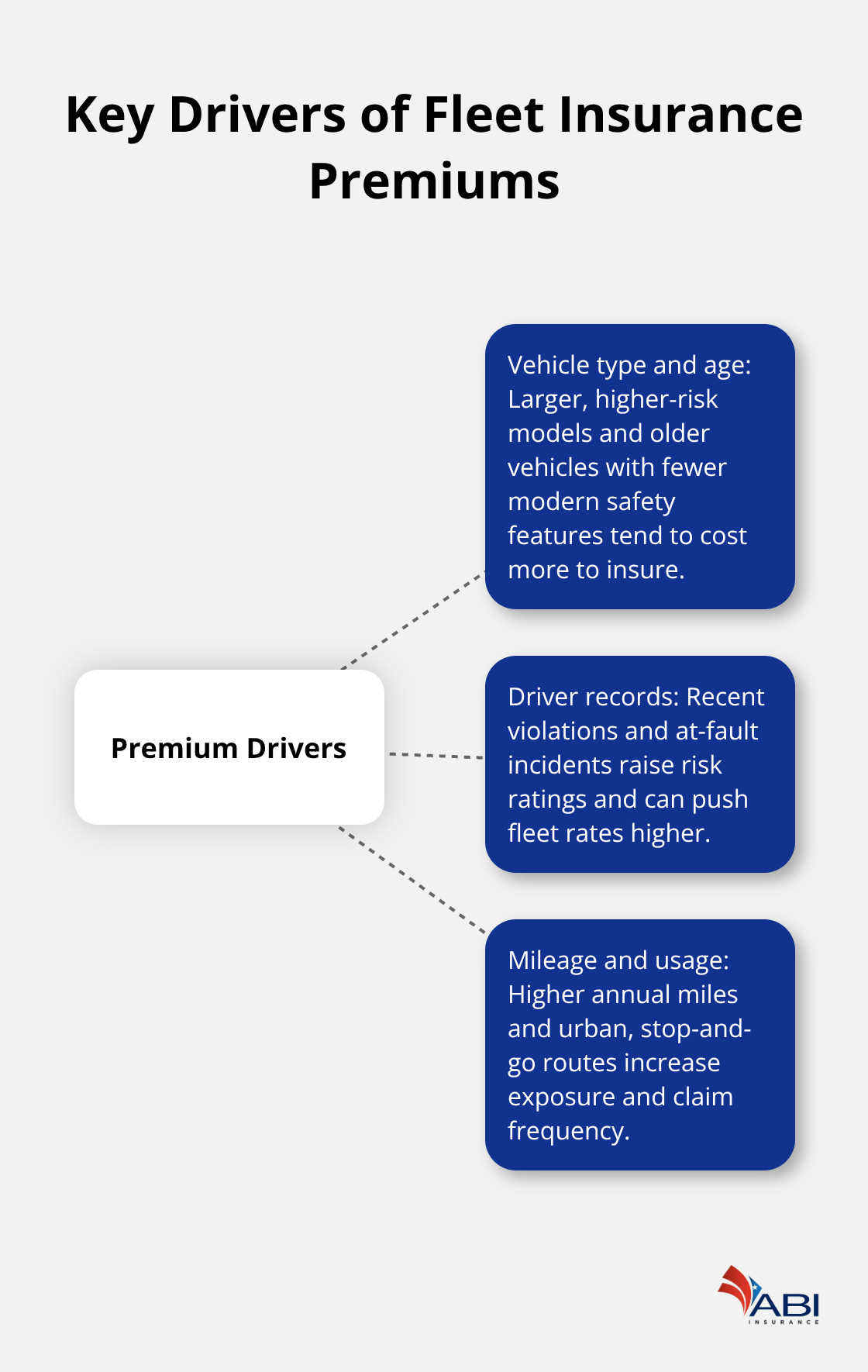
Vehicle Type and Age Shape Your Costs
Your fleet insurance rates aren’t random; insurers measure three concrete factors. Vehicle type matters more than most fleet owners realize. A 2023 analysis by the National Association of Insurance Commissioners found that commercial auto premiums have risen 15–22% annually since 2023, driven by inflation and other market factors. A newer Honda Civic in your fleet will cost significantly less than a five-year-old Ford F-250, even if both see the same annual mileage.
Age compounds this problem substantially. Vehicles over ten years old attract higher premiums because safety features, braking systems, and collision-protection technology have improved significantly since they were manufactured. Replacing older vehicles with newer models often pays for itself within 2-3 years through lower insurance costs alone, not counting improved fuel efficiency and reduced maintenance expenses.
Driver Records Control a Major Portion of Your Rates
Driver records represent the second major factor. A single driver with multiple violations can increase your entire fleet’s rates by 15-25%, according to data from the Insurance Institute for Highway Safety. Insurers use Motor Vehicle Records to assess risk and weight recent violations more heavily than older infractions. This means a clean driving record for your team translates directly into lower premiums across your entire operation.
Mileage and Usage Patterns Determine Exposure Risk
Annual mileage and usage patterns round out the equation. Vehicles driven 50,000 miles yearly will cost more to insure than those driven 15,000 miles because accident exposure increases proportionally. Local versus highway driving matters too. City driving generates more claims than highway-only operations.
If your drivers work the same route daily versus random service calls across multiple regions, your rates reflect that difference. Vehicles that spend most time on low-risk routes rather than high-traffic urban areas qualify for lower premiums. Documenting usage patterns and sharing this information with your insurer can reveal savings opportunities you might otherwise miss.
How to Cut Fleet Insurance Costs Without Sacrificing Coverage
Driver Safety Programs Deliver Immediate Results
Driver safety programs return the fastest savings for fleet owners willing to implement them properly. The National Safety Council reports that commercial fleets with formal driver training programs experience up to a 50% reduction in preventable accidents. Your program should include initial defensive driving certification, quarterly refresher training, and documented feedback sessions after any incident. Telematics systems amplify these results by tracking harsh braking, speeding, and rapid acceleration in real time, allowing you to coach drivers on specific behaviors rather than guessing at problems.
Fleets with formalized safety programs may lower commercial auto insurance premiums by 30–50% according to industry findings. This matters because lower accident counts directly lower your renewal rates at every policy anniversary. Fleets that combine structured training with telematics monitoring reduce premiums by 10-15% within the first year of launch.
Negotiation Tactics That Work
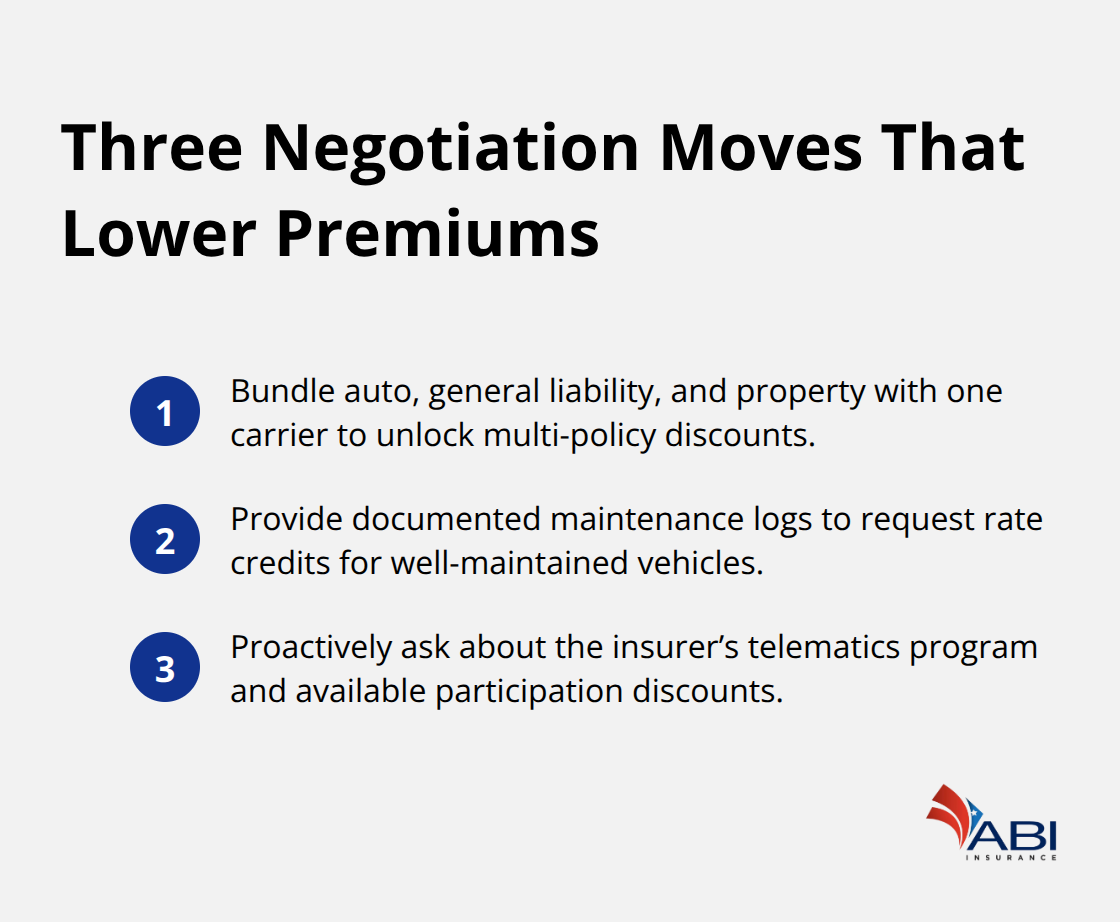
Negotiating with insurers requires three concrete moves most fleet owners never attempt. First, bundle all your commercial coverage — auto, general liability, property — with a single carrier rather than splitting policies across multiple companies. Bundling typically generates 15-25% discounts on your overall premium package.
Second, request specific rate reductions for vehicles you maintain exceptionally well; fleets with documented maintenance schedules on every vehicle may qualify for discounts because well-maintained vehicles file fewer claims. Third, ask your insurer directly about telematics discounts. Some carriers offer discounts for fleets that install their preferred systems.
Maintenance Schedules Prevent Claims Before They Happen
Vehicle maintenance itself prevents costly claims that drive up future rates. Tire replacement, brake inspections, and fluid changes reduce breakdowns and accidents. A fleet that replaces tires at 4/32 tread depth rather than waiting until they’re bald avoids blowout accidents. This may reduce claims and help prevent a renewal increase.
Schedule maintenance on a fixed calendar tied to mileage intervals rather than waiting for problems to emerge. This approach (preventive rather than reactive) keeps your vehicles in peak condition and demonstrates to insurers that you take risk management seriously. Vehicles that receive consistent maintenance file fewer claims, and insurers reward this behavior with lower premiums.
The strategies above address how you operate your fleet today, but fleet owners often overlook a category of mistakes that silently inflate their costs year after year.
Mistakes That Silently Drain Your Fleet Budget
Underinsuring Creates Financial Exposure You Can’t Afford
Most fleet owners discover their insurance mistakes only when renewal notices arrive with double-digit rate increases. The first mistake is catastrophic underinsuring. You might think liability limits of 100/300/100 (bodily injury per person/per accident and property damage) are sufficient because they meet your state’s legal minimums, but they don’t protect your assets. A single serious accident involving your vehicle and another driver’s vehicle can generate medical bills exceeding $500,000 easily.
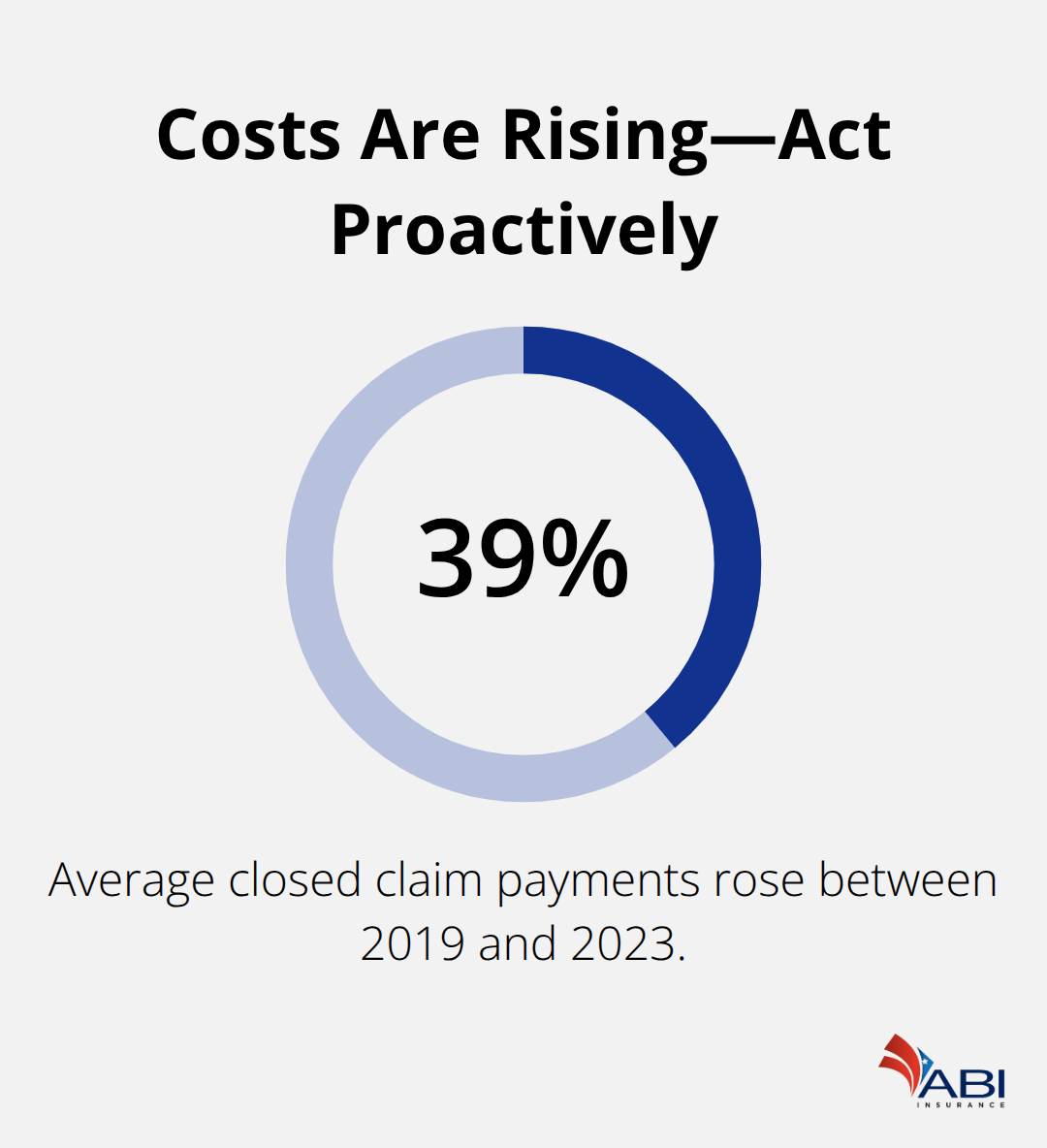
Average closed claim payments rose 39% between 2019 and 2023, meaning incidents that cost $50,000 five years ago now cost roughly $70,000. Try carrying 250/500/250 minimum limits, and 500/500/500 for fleets with higher-value cargo or frequent highway driving.
Vehicle coverage mistakes compound this problem substantially. Fleet owners often reduce physical damage coverage (collision and comprehensive) to lower premiums, reasoning that older vehicles don’t need full protection. This backfires spectacularly when a vehicle worth $8,000 gets damaged in an accident and your $10,000 deductible means you absorb the entire loss. Underinsurance creates a false economy that costs thousands when claims occur.
Ignoring Your Policy for Twelve Months Costs You Thousands
The second critical mistake is ignoring your policy for twelve months straight. Fleet insurance needs to change constantly as vehicles age, drivers turn over, and your operation evolves. A vehicle that was worth $35,000 when you purchased it might be worth $18,000 after three years, yet you’re still paying premiums based on outdated valuations. Annual policy reviews catch these discrepancies and reveal coverage gaps you didn’t know existed.
Many carriers now offer telematics programs that monitor driving behavior in real time, and fleets that implement these systems receive 10-15% discounts within the first year, according to industry data. However, if you never contact your insurer to discuss what’s available, you’ll never access these savings. Set a calendar reminder for your policy renewal date three months early and schedule time to review vehicle values, driver changes, mileage patterns, and available discounts with your agent.
Telematics and Safety Technology: Identify Risk Before Accidents Happen
The third mistake is treating telematics and safety technology as optional extras rather than core business tools. Fleet owners who resist installing telematics systems cite privacy concerns or upfront costs. However, this resistance is backward thinking. Third-party telematics systems usually cost between $300-$800 per vehicle annually and typically deliver some premium reductions that eventually pay back the investment. More importantly, telematics identifies drivers who create accident risks before incidents occur, allowing you to intervene through coaching or retraining.
A driver who speeds or brakes hard appears in your telematics data as a problem months before they cause an accident that destroys your claims history. Collision avoidance technology and backup cameras help reduce accident frequency. Ignoring these tools means you’re operating blindly while competitors with telematics data optimize their risk profiles quarterly.
Final Thoughts
Fleet auto insurance rates respond directly to the actions you take today. Vehicle maintenance, driver safety programs, and annual policy reviews create compound savings that accelerate year after year. Fleets that implement even two of these strategies typically could reduce premiums by 15-25% within twelve months.
Your insurance agent should understand your specific operation and advocate for rate reductions when your claims history improves. At ABI Insurance, we’ve spent over 40 years helping businesses across the Portland metro area and Western U.S. optimize their commercial coverage through fleet auto programs tailored to your actual risk profile. Schedule a policy review within the next month and bring your last three years of claims history, current vehicle valuations, and driver records to identify telematics discounts, bundling opportunities, and maintenance-based rate reductions.
The difference between paying attention to your fleet auto insurance and ignoring it amounts to thousands of dollars annually. Document your current rates and coverage limits so you can measure improvement after implementing changes. Start this conversation with your carrier or a new agent today.


 Business Vehicle Insurance Options: Protect Your Fleet and Profits









