

Your fleet is one of your biggest business assets. Yet many business owners overlook the right business vehicle insurance options until something goes wrong.
At ABI Insurance, we’ve seen firsthand how the wrong coverage, or no coverage at all, can drain profits fast. This guide walks you through the insurance types that actually matter, proven strategies to cut claims, and concrete ways to lower your premiums without sacrificing protection.
Types of Commercial Vehicle Insurance Coverage
Liability coverage stands as non-negotiable for any business with vehicles. This covers injuries or property damage your drivers cause to third parties, and most states legally require it. However, state minimums fall dangerously short of actual risk. A single accident with significant injuries can wipe out years of profit. We recommend carrying liability limits of at least $500,000 per occurrence.
Collision and Comprehensive Coverage Protects Your Assets
Collision coverage pays for accidents with other vehicles or objects, while comprehensive handles theft, weather, vandalism, and other non-collision incidents. If you finance or lease your vehicles, lenders require these coverages. For owned vehicles, skipping them might save money short-term, but a single total loss costs tens of thousands of dollars. The average cost of vehicle repairs increased roughly 20-30% between 2021 and 2023, making damage coverage more important than ever.
Uninsured and Underinsured Motorist Protection Fills Critical Gaps
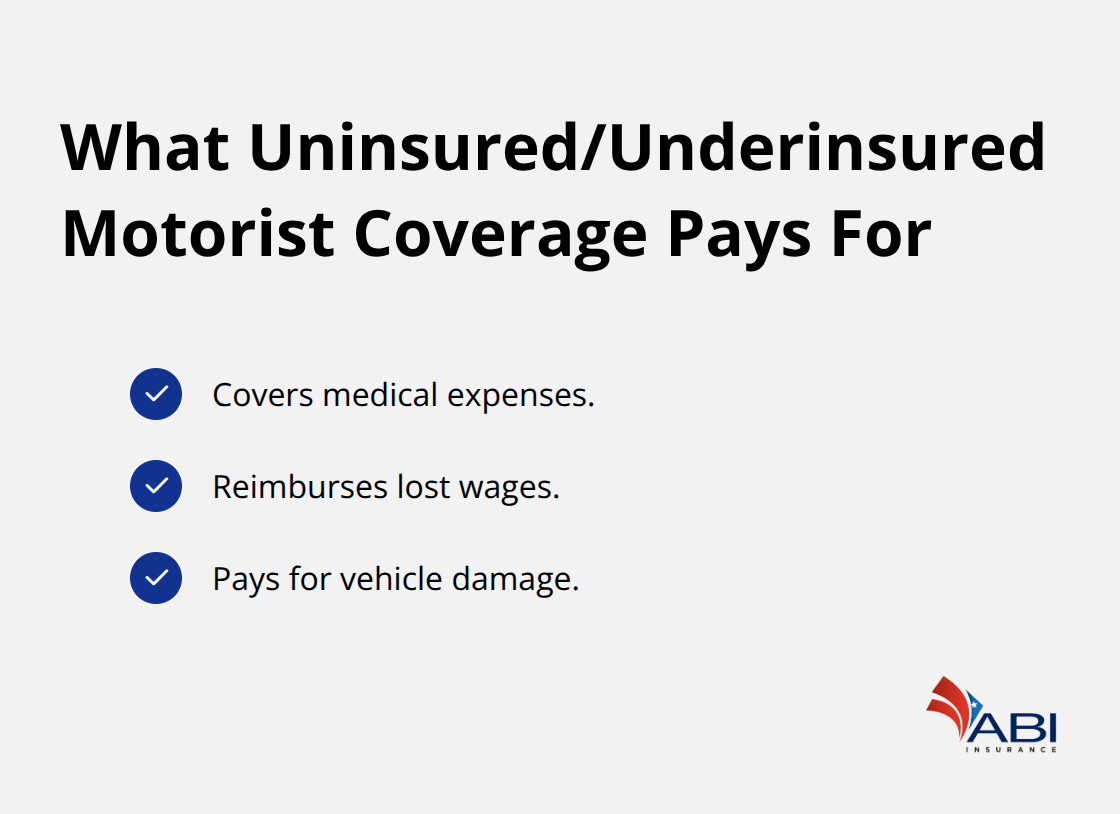
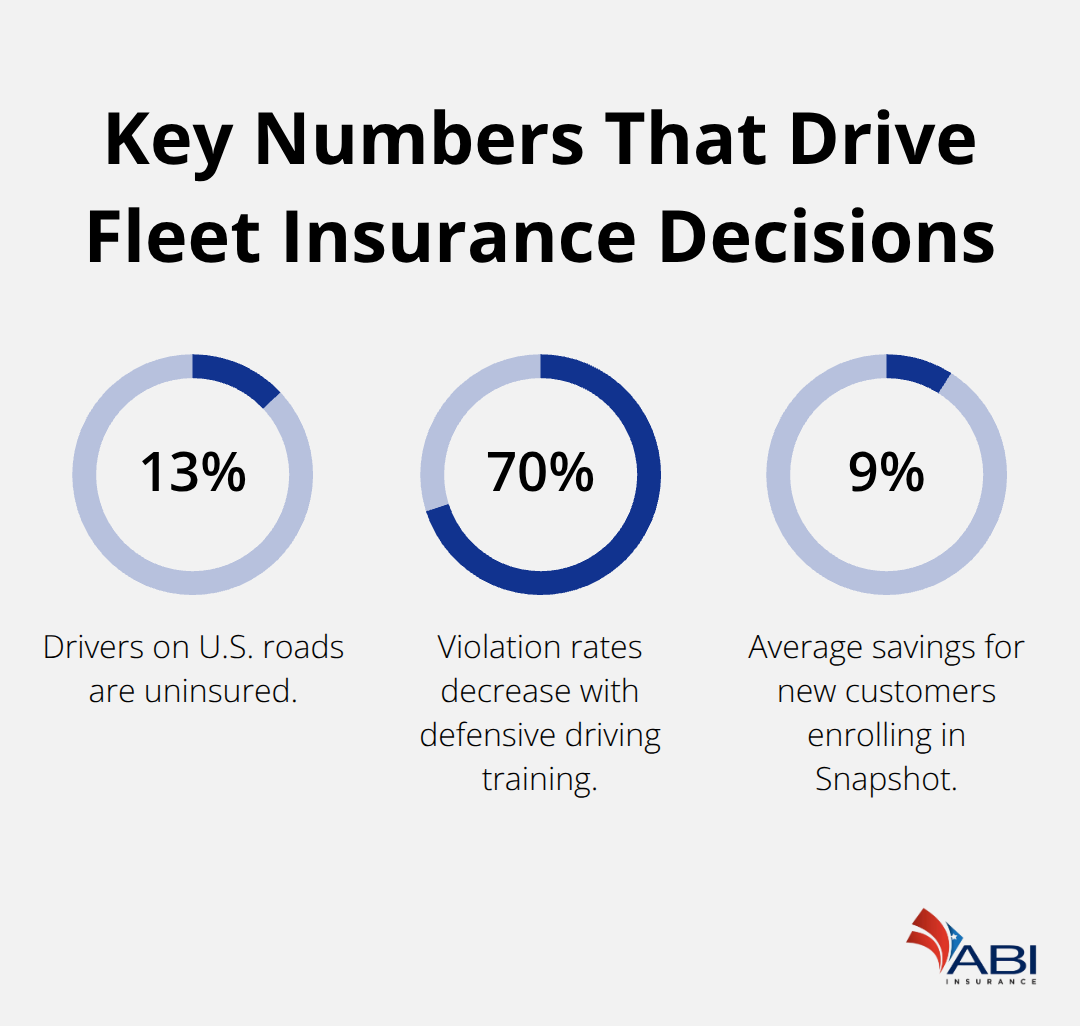
Uninsured and underinsured motorist protection covers your drivers when the at-fault party has insufficient or no insurance. About 13% of drivers on U.S. roads are uninsured, according to the Insurance Information Institute. Without this coverage, your business absorbs the cost of an accident caused by an uninsured driver. This protection applies to medical expenses, lost wages, and vehicle damage, protecting your operation’s cash flow.
Structure Coverage Limits Based on Your Actual Risk
Don’t use state minimum liability limits as your starting point. Instead, calculate coverage based on your actual risk exposure. A delivery company with 20 vehicles faces higher risk than a business with two service vehicles. Review your vehicle values, driver experience, and accident history to determine appropriate limits. If your fleet includes heavy vehicles or drivers make frequent highway trips, increase limits accordingly.
Choose Deductibles Your Business Can Actually Afford
Higher deductibles lower your premiums, but they increase out-of-pocket costs per claim. A $1,000 deductible versus a $2,500 deductible could save 15-20% annually on collision and comprehensive premiums. However, if you file two claims in a year, that extra $1,500 per claim costs you $3,000 total. Businesses with strong safety records and minimal claims history benefit from higher deductibles, while those with frequent minor claims need lower deductibles for better protection. Next, look at how driver training and vehicle maintenance reduce claims and lower your overall costs.
How to Reduce Fleet Claims and Insurance Costs
Driver training and vehicle maintenance form the backbone of any fleet operation serious about cutting insurance costs. Businesses that invest in these areas file 20-30% fewer claims than those that don’t. This isn’t theory; it’s measurable protection that directly impacts your bottom line. The National Safety Council reports that defensive driving training leads to about a 70% decrease in violation rates, which translates to fewer accidents, lower claim frequency, and substantially reduced premiums when your insurer reviews your loss history. Many carriers offer premium discounts of 5-10% for fleets that implement formal driver training programs. A company with $50,000 in annual vehicle insurance could save $2,500 to $5,000 simply through certified safety courses. These programs should cover hazard recognition, emergency braking, proper following distances, and weather-related driving techniques specific to your region.
Maintenance schedules directly affect both safety and claims
Vehicle maintenance isn’t optional if you want to control insurance costs. Poorly maintained vehicles fail more frequently, increasing accident risk and damage severity. Tire blowouts, brake failures, and mechanical issues cause preventable accidents. You need documented inspection schedules that cover brakes, tires, lights, fluid levels, and structural integrity. Commercial vehicles require inspection monthly or quarterly depending on mileage, with detailed records kept for at least three years. Your insurer will want evidence of this maintenance program, and you’ll need it if a claim occurs and someone argues your negligence contributed to the accident.
Telematics systems provide real-time risk visibility
Telematics systems have transformed fleet management through real-time data on vehicle performance, driver behavior, and maintenance needs. GPS and onboard diagnostics track hard braking, rapid acceleration, speeding, and idle time while simultaneously monitoring engine health and alerting you to maintenance issues before they cause breakdowns or accidents. Fleets using telematics report a reduction in accident rates and improvements in fuel efficiency. Insurance companies recognize this data as legitimate risk reduction, and many offer premium discounts of up to 15% for fleets with active telematics programs.
Driver behavior data shapes your risk profile
Telematics doesn’t just track vehicles; it tracks driver habits that directly influence your claims history. Aggressive acceleration, hard braking, and speeding patterns correlate strongly with accident frequency and severity. Identify these behaviors early, you can address them through additional training or coaching before they result in costly claims. This data also protects you legally; if a driver causes an accident, telematics records show whether they were operating the vehicle safely or recklessly. Insurance underwriters use this information when setting your renewal rates, meaning a fleet with documented safe driving patterns qualifies for better pricing than one without visibility into driver behavior.
Combine training, maintenance, and telematics for maximum savings
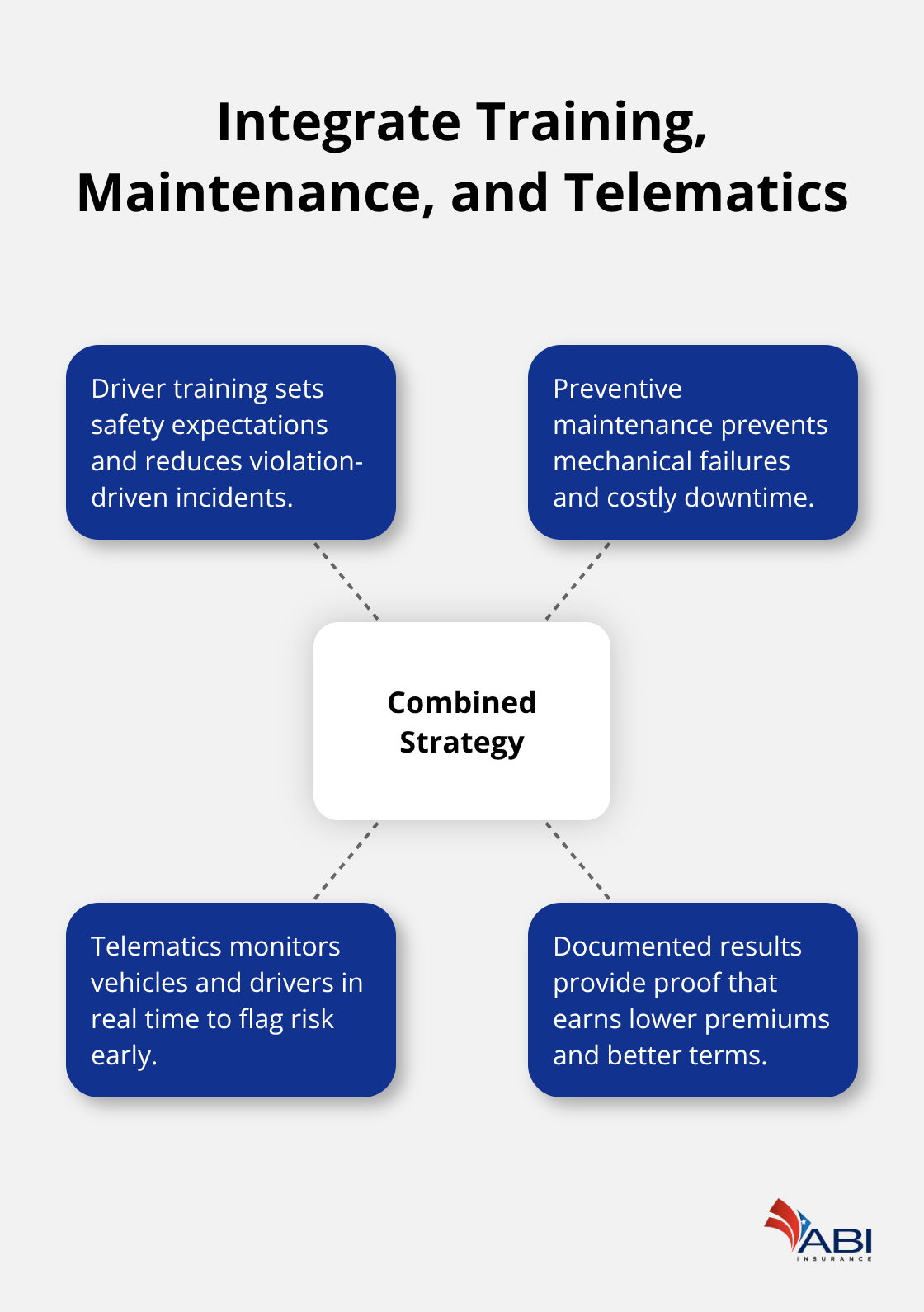
The most effective fleets don’t choose between these strategies; they integrate all three. Driver training establishes safety expectations, maintenance prevents mechanical failures, and telematics monitors both in real time. This combination creates a measurable safety record that insurers reward with lower premiums and better coverage terms. When you apply for renewal or shop for new coverage, you’ll present concrete evidence of risk reduction rather than hoping your insurer believes you run a safe operation.
With your fleet’s safety foundation in place, the next step involves controlling what you actually pay for that protection.
How to Cut Your Insurance Costs Without Cutting Coverage
The three most effective ways to lower your vehicle insurance premiums involve decisions you control directly. First, bundle your commercial policies with one carrier to generate savings. New customers may save by enrolling in a telematics program. If you carry general liability, commercial property, and workers’ compensation separately, consolidating them under one insurer immediately reduces your costs. Many carriers structure their discounts aggressively because bundling increases customer retention and lifetime value. Second, you can adjust your deductibles strategically based on your actual claims history. A business that hasn’t filed a collision claim in five years shouldn’t pay premiums designed for frequent claimants. Raising your deductible from $500 to $2,500 on collision coverage typically reduces that premium by 20-30%, meaning a fleet paying $15,000 annually could save $3,000 to $4,500 just through this single adjustment. Third, you can time your coverage review to coincide with meaningful changes in your operation.
If you reduced fleet size, implemented telematics, or completed driver training programs, your risk profile has improved materially. Carriers don’t automatically adjust your rates downward at renewal unless you tell them what changed.
Bundling Reduces Carrier Risk Across Your Account
Insurance companies price based on risk concentration. When you bundle multiple policy types, the carrier gains visibility into your total risk picture rather than seeing isolated vehicles or properties. This comprehensive view actually reduces their underwriting uncertainty, which translates into lower rates for you. A business with general liability bundled alongside commercial auto coverage demonstrates integrated risk management, not fragmented coverage gaps. When you shop for bundled quotes, don’t accept the first offer. Get quotes from at least three carriers, and specifically ask what discounts apply to bundled policies versus individual coverage. Some carriers offer 20% discounts while others only offer 10%, making comparison shopping worth several hours of effort when you’re protecting a $100,000+ annual premium. Additionally, bundling simplifies claims administration since you work with one agent and one carrier rather than juggling multiple relationships.
Your Deductible Should Match Your Financial Capacity and Claims Frequency
Increasing deductibles only makes sense if your business can absorb the out-of-pocket cost without operational disruption. A $2,500 deductible saves money only if you’re confident you won’t file two claims in a year, which would cost you $5,000 out of pocket. Analyze your actual claims history over the past three years. If you’ve filed zero or one claim annually, higher deductibles make financial sense. If you typically file two or more claims yearly, the premium savings disappear when you factor in increased out-of-pocket expenses. For fleets that implement telematics and formal driver training, higher deductibles become viable because your claims frequency should decline measurably within 12-18 months.
Coverage Adjustments Compound When You Align Them With Operational Changes
Your renewal date presents the ideal moment to reassess coverage limits and types. If you eliminated certain vehicle types, reduced fleet size, or shifted to lower-risk driving patterns, your insurance needs have genuinely changed. Document these operational changes before contacting your carrier. Provide specifics like vehicle count reduction from 15 to 10 units, implementation of a telematics system with documented safety improvements, or completion of certified driver training programs. Carriers use this information when calculating renewal rates, and documented risk reduction justifies lower premiums or better coverage terms. Proactive communication with your agent 60-90 days before renewal allows time for underwriting adjustments rather than accepting whatever rate your carrier sends.
Final Thoughts
Your fleet’s profitability rests on three interconnected decisions: selecting the right coverage types, reducing claims through proven safety practices, and controlling what you pay for that protection. Liability limits that exceed state minimums, collision and comprehensive coverage for your vehicles, and uninsured motorist protection form the foundation of any responsible business vehicle insurance strategy. Driver training programs that reduce violation rates by approximately 70%, maintenance schedules that prevent mechanical failures, and telematics systems that cut accident rates transform insurance from a cost center into a competitive advantage.
Start with an honest assessment of your current situation. Review your existing coverage limits against your actual risk exposure rather than state minimums, pull your claims history from the past three years to identify patterns, and calculate whether your current deductibles align with your financial capacity and claims frequency. If you haven’t implemented driver training or telematics, these investments typically pay for themselves within 12-18 months through premium reductions and fewer claims.
We at ABI Insurance have spent over 40 years helping businesses across the Portland metro area and Western U.S. navigate business vehicle insurance options that match their specific operations. Contact ABI Insurance to review your fleet’s protection and identify concrete savings opportunities.


 Personal Umbrella Insurance Benefits: Extra Coverage You Can Trust









