


Globally, cyberattacks cost businesses an average of $4.45 million in 2023, according to IBM’s latest data. Most companies lack proper cyber liability coverage, leaving them exposed to financial ruin.
At ABI Insurance, we’ve seen firsthand how quickly a single breach can devastate operations. This roadmap walks you through real strategies to protect your business from cyber threats.
Growing Cyber Threats Facing Modern Businesses
Rising Frequency and Cost of Data Breaches
Cyberattacks strike every 39 seconds on average, according to research from the University of Maryland. This constant exposure affects businesses of all sizes and industries. The financial damage from breaches has reached staggering levels, with the average breach cost hitting $4.45 million in 2023, according to IBM’s data breach report.
Small businesses have become primary targets rather than secondary ones. Attackers recognize that smaller companies often lack sophisticated defenses and cyber liability awareness, making them easier prey than enterprises with dedicated security teams. The Verizon Data Breach Investigations Report found that about 43% of breaches involved small businesses, yet many operate without proper cyber liability coverage.
Ransomware Dominates the Attack Landscape
Attackers exploit unpatched systems, weak password protocols, and employee negligence through phishing emails. Your employees represent your first line of defense, yet 82% of breaches involve a human element, according to Verizon research. Implementing multi-factor authentication and regular security training reduces ransomware vulnerability significantly, though these measures alone cannot guarantee protection.
Industry Risk Varies Dramatically
Healthcare organizations face unprecedented pressure from cybercriminals because patient data commands premium prices on dark markets. The healthcare sector experienced an average breach cost of $9.77 million in 2024, making it the most expensive industry for data breaches according to IBM’s report.
Manufacturing facilities face attacks that disrupt production lines and compromise intellectual property, simultaneously creating operational and competitive damage. Financial services firms encounter sophisticated attackers targeting transaction systems and customer funds. Retail businesses struggle with point-of-sale malware and payment card theft. Professional service firms handling client confidential information face exposure through email compromise and contractor vulnerabilities.
Your specific industry determines which threats require immediate attention and which coverage types matter most for your cyber liability protection strategy. Understanding these industry-specific risks shapes how you should approach your cyber defense plan.
Understanding Cyber Liability Coverage
What Cyber Liability Insurance Actually Covers
Cyber liability insurance protects your business from the financial fallout of data breaches and cyberattacks, but most business owners misunderstand what they’re buying. Two distinct coverage categories serve different purposes. First-party coverage pays for your direct costs when a breach happens — forensic investigations, notification expenses, credit monitoring for affected customers, business interruption losses, and recovery efforts.
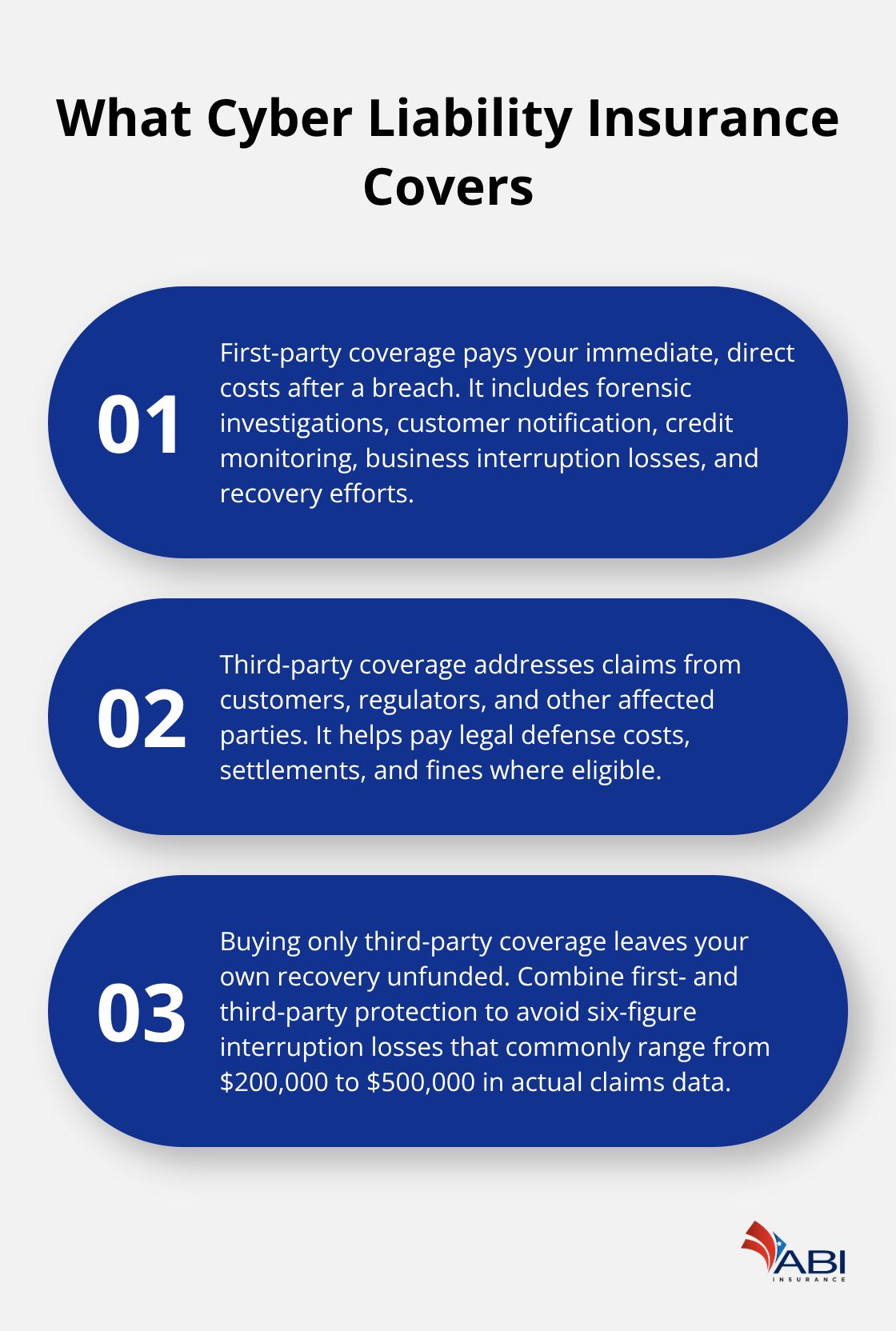
Third-party coverage handles liability claims from customers, regulators, and other parties harmed by the breach, including legal defense costs and settlement payments.
Many small and medium-sized businesses purchase only third-party coverage because it costs less, then face massive out-of-pocket expenses when a breach occurs because they lack first-party protection for their own recovery costs. This is a critical mistake. A ransomware attack that shuts down your operations for three days costs far more in lost revenue than defending against a customer lawsuit. The average business interruption claim from a cyber incident runs $200,000 to $500,000 depending on industry and company size, according to insurance industry reports tracking actual claims.
Coverage Gaps That Leave Businesses Exposed
Standard cyber liability policies contain exclusions that leave businesses dangerously exposed. Most policies exclude losses from known vulnerabilities you failed to patch, which means if attackers exploit a security flaw you knew about, your claim gets denied. Policies typically exclude losses from inadequate security practices, employee dishonesty, and system failures unrelated to external attacks.
Coverage limits matter tremendously. A $1 million policy sounds substantial until you face a data breach affecting customer information and regulatory fines from state attorneys general that reach $2 million. Healthcare and financial services companies regularly need $5 million to $10 million in cyber liability limits to match their actual exposure. Try conducting a specific cyber risk assessment for your industry before selecting coverage limits, because generic policies almost always underprotect businesses in regulated sectors.
Industry-Specific Protection Needs
Small manufacturers often overlook that their cyber liability should cover intellectual property theft and production interruption, not just customer data exposure. Review your policy’s definition of a covered incident. Some insurers require proof of a malicious external attack, while others cover accidental data loss and insider threats (the difference determines whether you have protection when an employee accidentally emails customer information to the wrong recipient or a contractor downloads files to an unsecured personal device).
Your industry determines which exclusions matter most and which coverage types protect your actual operations. Understanding these gaps shapes how you should approach your cyber defense plan and what coverage you need to avoid financial disaster.
Building Your Cyber Risk Management Strategy
Conduct a Comprehensive Security Audit
Start with a security audit that identifies exactly where your business stands right now. Most companies skip this step and jump straight to software purchases or consultant hiring, wasting thousands on solutions that don’t address their actual vulnerabilities. Your audit should map every system that handles sensitive data, identify which devices connect to your network, document your current security tools, and assess employee access levels across departments.
The National Institute of Standards and Technology (NIST) publishes a free cybersecurity framework for small businesses. This guide walks through this process without requiring expensive consultants, though some businesses benefit from hiring external auditors to spot blind spots their internal teams miss. Once you complete the audit, you’ll know whether your biggest risk comes from outdated payment systems, unpatched servers, weak password policies, or unsecured remote access. This clarity prevents you from installing expensive firewalls that don’t solve your problems.
A manufacturing company that learns 60% of breaches involve employee credentials should prioritize multi-factor authentication and security training over advanced threat detection software. Healthcare providers handling patient records need different protections than retail businesses processing credit cards. Your specific vulnerabilities determine which investments matter most.
Implement Layered Defense Systems
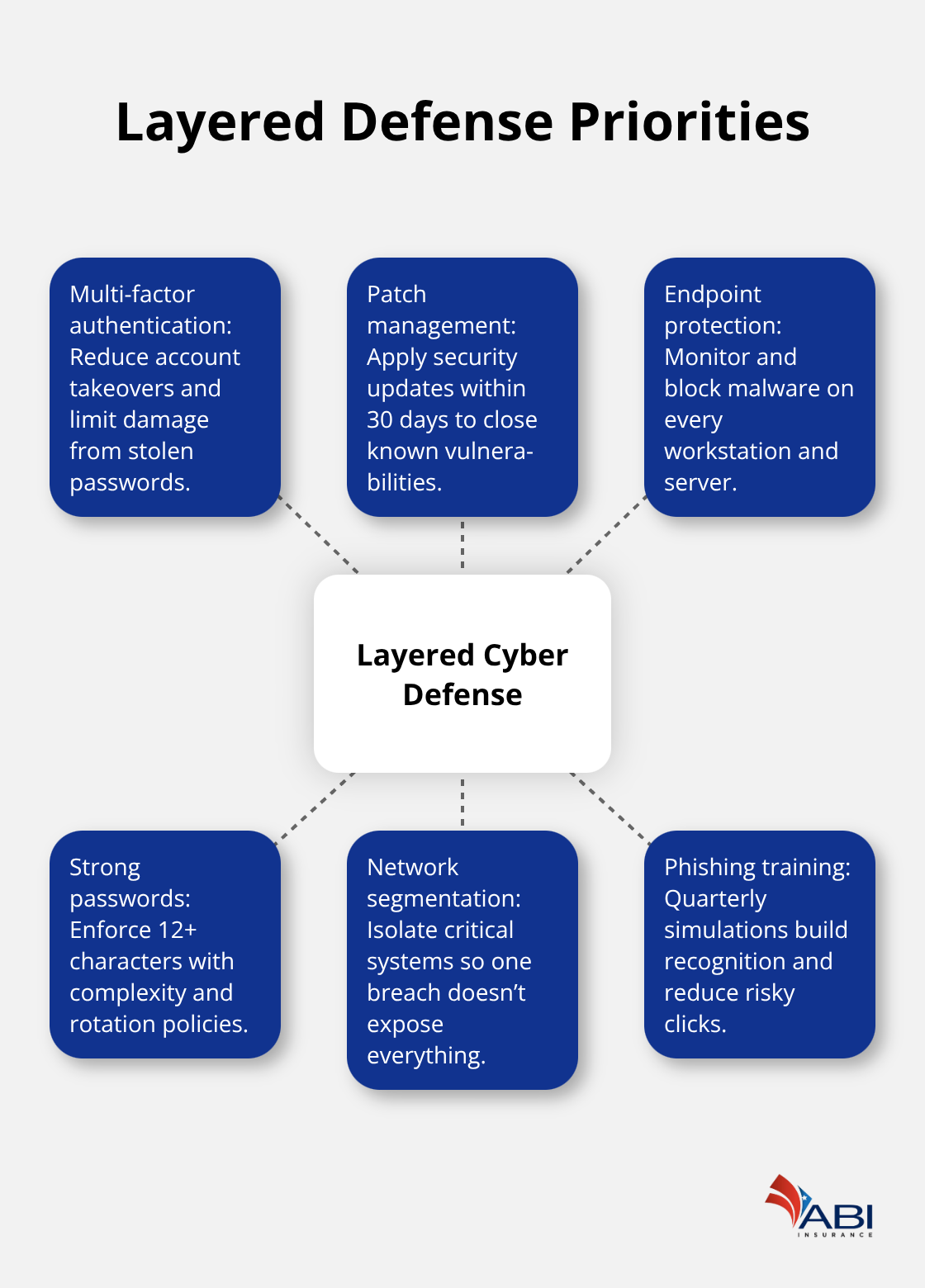
Implement layered defenses that make attacks progressively harder rather than trying to create an impenetrable wall. Start with multi-factor authentication across all critical systems because credential abuse was involved in 22% of breaches according to Verizon’s 2025 Data Breach Investigations Report. Next, establish a patch management schedule that addresses security updates within 30 days of release, since most ransomware exploits known vulnerabilities that patches have already fixed.
Deploy endpoint protection software on all devices, enforce strong password requirements with a minimum of 15 characters, and segment your network so that attackers who penetrate one section cannot instantly access your entire system. Train employees quarterly on phishing recognition because human error remains the most cost-effective attack vector for criminals (your staff represents your first line of defense against social engineering tactics).
Create an Incident Response Plan
Create a written incident response plan that designates who handles different aspects of a breach response. Specify notification procedures for affected customers and regulators and include contact information for your cyber liability insurance provider before a crisis hits. This plan should cover immediate containment steps, forensic investigation coordination, customer notification timelines, and regulatory reporting requirements specific to your industry.
Test your response plan annually through tabletop exercises that reveal gaps before they cause real damage during an actual incident. These exercises help your team practice decision-making under pressure and identify communication breakdowns that could delay critical response actions. A well-tested plan reduces recovery time significantly and demonstrates to regulators that your organization takes breaches seriously.
Final Thoughts
Cyberattacks will continue targeting your business regardless of industry or size, and the $4.45 million average breach cost in 2023 represents financial hardship for most companies without proper cyber liability for businesses coverage. Your security audit reveals where attackers will likely penetrate your defenses, your layered defense systems make attacks progressively harder for criminals to execute, and your incident response plan ensures your team responds quickly when breaches occur. These three elements work together to minimize both the likelihood and impact of cyberattacks on your operations.
Cyber liability insurance fills the gaps that your internal defenses cannot cover, paying for forensic investigations, customer notifications, business interruption losses, and legal defense costs that would otherwise drain your cash reserves entirely. The roadmap outlined here moves you from reactive panic to proactive protection through understanding your actual cyber liability exposure, implementing layered defenses that address your specific vulnerabilities, and securing proper insurance coverage before disaster strikes. Your cyber liability policy transforms a potential financial catastrophe into a manageable risk with clear recovery pathways.
Contact ABI Insurance to conduct a cyber liability assessment for your business and build a protection strategy that addresses your real vulnerabilities rather than theoretical risks.


 Fleet Auto Insurance Rates: How to Save on Your Insurance









