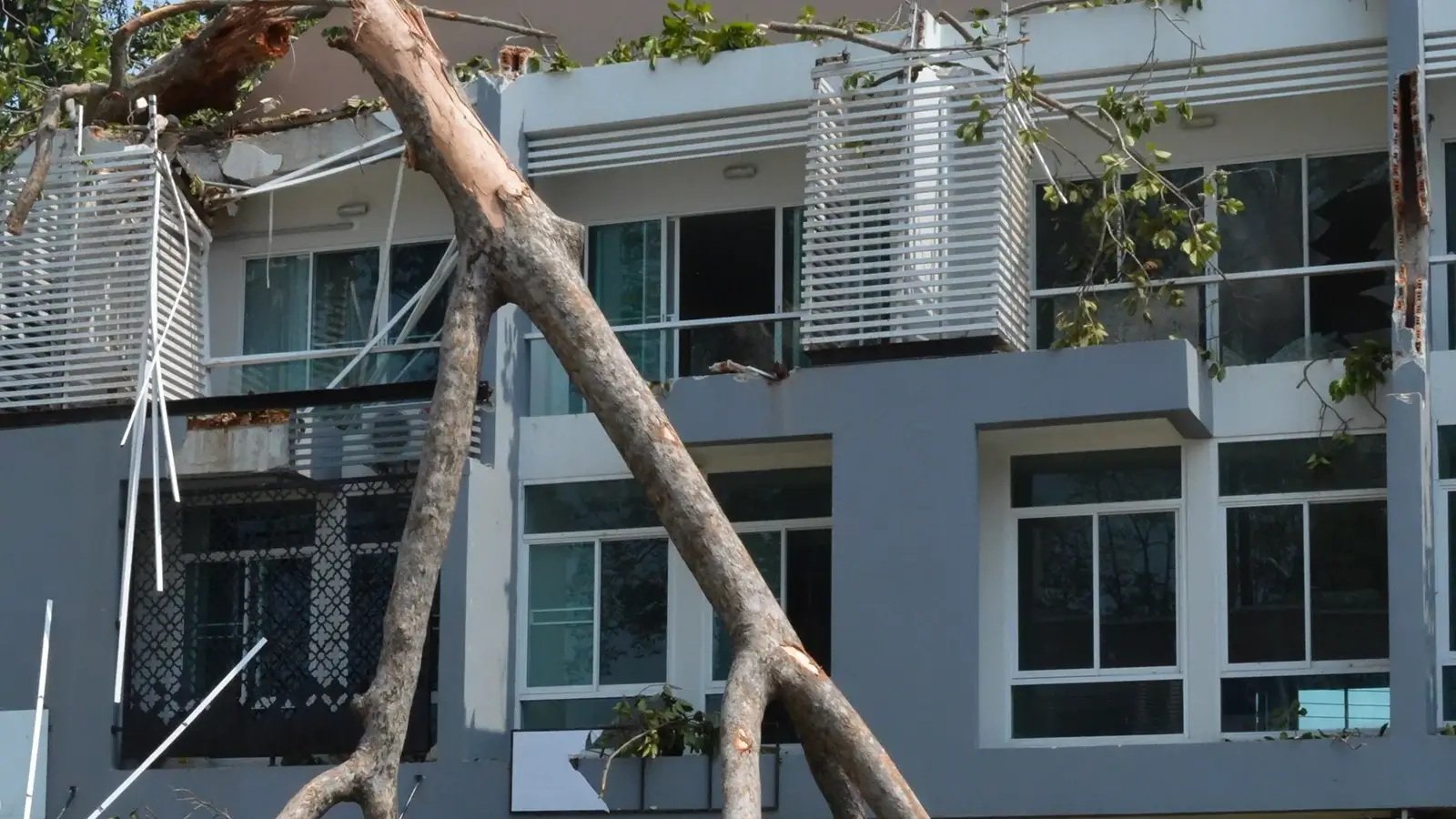
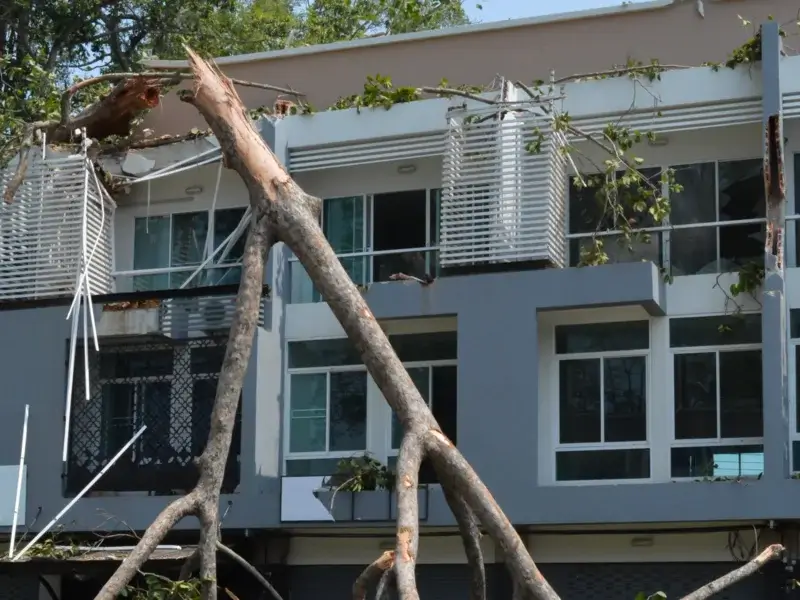
 There is rarely a bad time to conduct a tree hazard assessment, but the best time is before the next storm hits! With the Pacific Northwest rainy season fast approaching and a potential super El Niño on the horizon, it is highly recommended that your association conducts its annual tree hazard assessment before the weather turns.
Tree-related hazards are one of the most common ways a storm turns into an insurance claim for an association, but this can be prevented. To an untrained eye, a tree may appear perfectly healthy and safe while it is dying, decaying, diseased, has shallow roots, has large overhanging limbs, or is too close to a building or utility lines. This is why it is important for associations to hire an ISA-certified arborist to document the inventory and health of trees within the association and complete any necessary pruning. This will minimize the potential for any tree-related property and liability claims.
Most associations are also responsible for maintaining the common area where these trees may be found. By having an arborist assess the association’s trees, the board demonstrates its fiduciary duty of maintaining these common areas.
Insurance companies also love to see an association that regularly hires an arborist and adheres to their reports and recommendations. This can help prevent a possible non-renewal or open the association up to new, more competitive markets with lower rates.
So, before we find out what the super El Niño has in store, conduct your association’s annual tree assessment to be best prepared for this year’s winter storms.


 Commercial Auto Deductibles Explained: How to Budget for Claims