


Small businesses face cyber threats every single day, yet many operate with inadequate insurance protection. Standard business policies create dangerous gaps that expose your company to data breaches, ransomware, and costly downtime.
We at ABI Insurance know that cyber liability policy tips matter because the right coverage can be the difference between recovering quickly and facing financial ruin. This guide walks you through what to look for, how to strengthen your defenses, and the practical steps to get comprehensive protection in place.
What Cyber Liability Actually Covers
Cyber liability insurance protects your small business from the financial wreckage of data breaches, ransomware attacks, and other digital threats. The coverage splits into two main categories: first-party costs that hit your business directly, and third-party costs when someone sues you. First-party coverage pays for incident response, forensics, customer notification, credit monitoring, business interruption losses, and extortion demands.
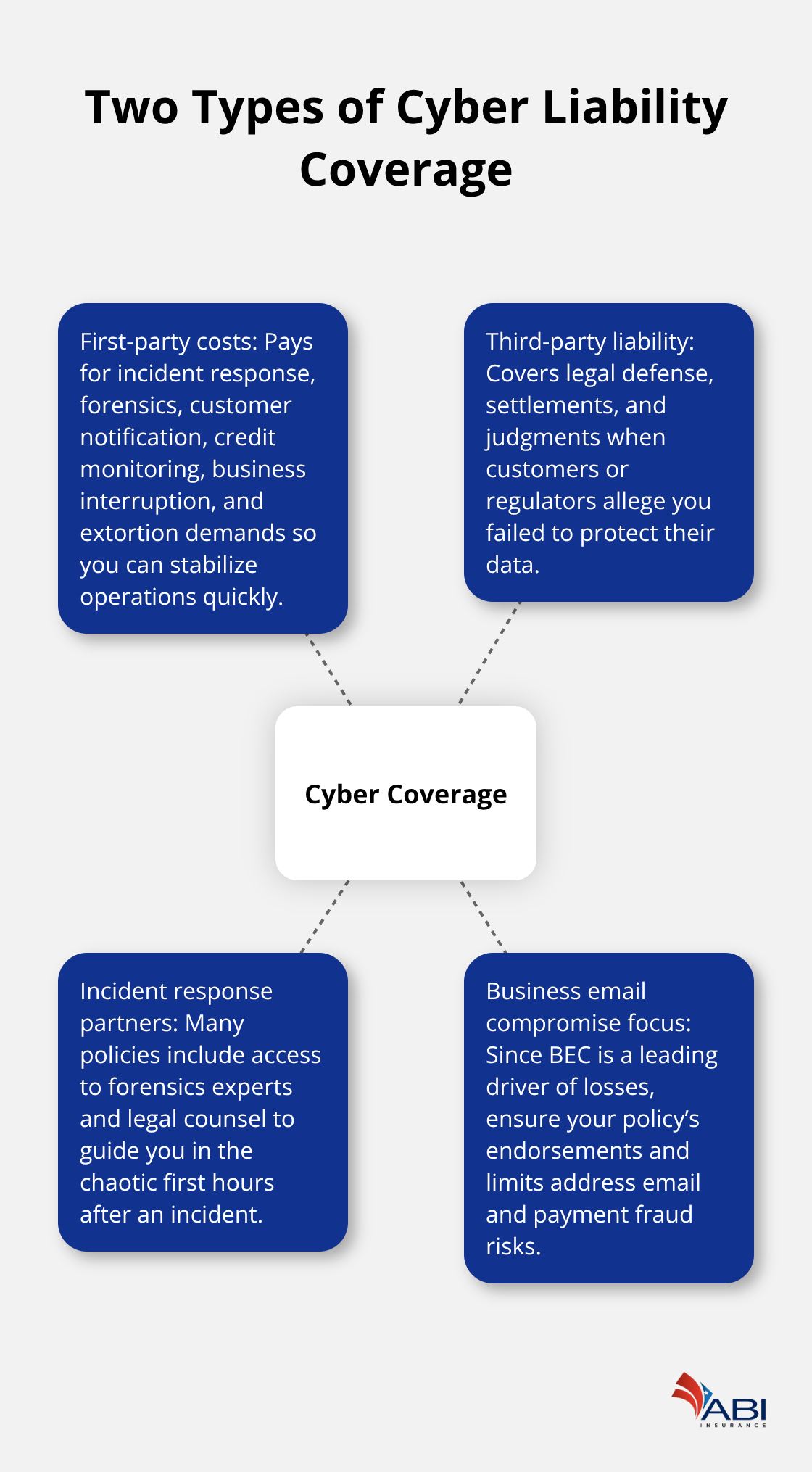
Third-party coverage covers legal defense when customers or regulators sue you for failing to protect their data. According to Coalition’s Cyber Claims Report, business email compromise is one of the most financially damaging online crimes, so your policy needs to address these specific threats. Most policies also include access to forensics experts and legal counsel who can navigate the chaos immediately after an incident. This matters far more than you might think when every hour of downtime costs money.
The Real Gaps Your Standard Business Policy Won’t Fill
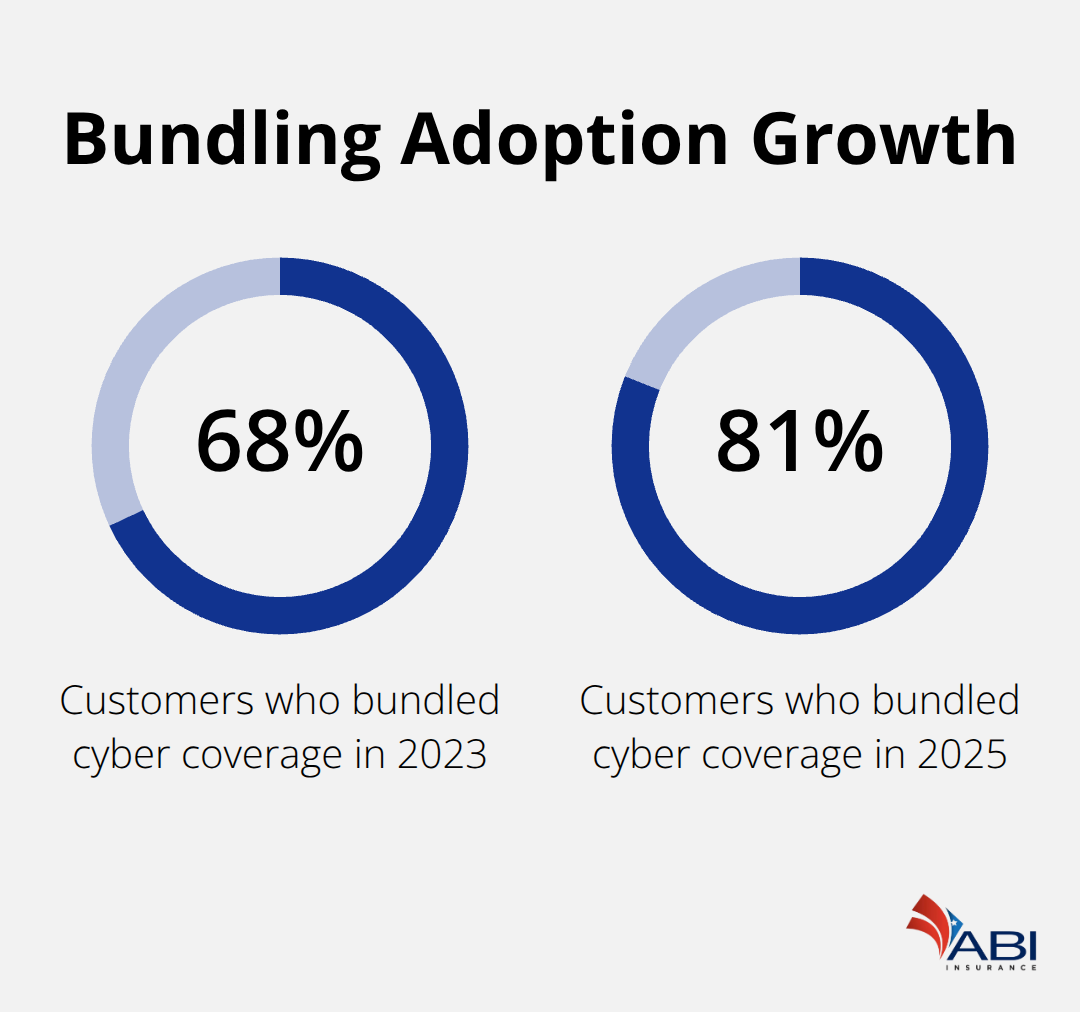
Your general liability or commercial property policy leaves massive blind spots for cyber incidents. Standard business insurance simply does not cover the costs of notifying customers about a breach, hiring forensics investigators, or paying ransom demands. It also skips business interruption from ransomware, legal liability from data exposure, and regulatory fines from privacy violations. The share of customers bundling cyber with other policies jumped from 68 percent in 2023 to 81 percent in 2025, which shows that business owners finally understand this gap and are taking action. Bundling cyber coverage with general liability or errors and omissions insurance closes these holes while simplifying your claims process and often reducing your overall premium. Without cyber liability, a single breach could drain your cash reserves on notification costs, forensics, legal fees, and lost income while your standard policies sit on the sidelines.
Why Attackers Target Small Businesses
Approximately 50 percent of cyberattacks target small to medium-sized businesses because you present an attractive target: valuable customer data and payment information without the security infrastructure of larger enterprises. Ransomware gangs know small business owners often lack dedicated IT staff and sophisticated defenses, making encryption and extortion straightforward. Most small business owners also operate with tighter cash flow, making them more likely to pay ransoms quickly. The Insureon platform tracked a 50 percent increase in cyber insurance usage from 2023 to 2025, with completed purchases up 59 percent, reflecting how many small business owners now understand this reality. Your competitors are already protecting themselves, which means falling behind on cyber coverage puts your business at a disadvantage not just in terms of security, but in terms of business continuity and customer trust.
What Comes Next in Your Coverage Strategy
The specific features you select in your cyber liability policy determine whether you recover quickly or face months of financial strain. The right combination of data breach response, business interruption protection, and legal defense coverage transforms your policy from a safety net into an active recovery tool.
What Your Cyber Policy Actually Needs to Cover
Data Breach Response Costs Add Up Fast
Data breach response costs blindside most small businesses because expenses pile up rapidly and standard coverage ignores them entirely. When a breach occurs, notification alone costs thousands. Data breach response costs average around $160 per record globally. Forensics investigators typically charge $5,000 to $50,000 depending on breach size, and you’ll also pay for credit monitoring subscriptions, public relations support to manage reputation damage, and legal consultation. Total first-party costs often reach $50,000 to $300,000 before you’ve even addressed the actual data loss. Your cyber policy must explicitly cover notification expenses, forensics retainers, credit monitoring for victims, and crisis communications support so these costs don’t drain your cash reserves in the critical days after discovery.
Business Interruption Coverage Protects Your Income
Ransomware doesn’t just steal data; it shuts down your operations entirely and stops your revenue cold. When attackers encrypt your files or payment systems, you lose income while your team works to restore systems, sometimes for days or weeks. Coalition data shows cyber claims for small businesses average around $139,000, but ransomware incidents alone push toward $1 million in total impact when you factor in downtime and recovery costs. Your policy needs to cover lost income during the outage period, not just the technical recovery costs, because that’s where the real financial damage accumulates.
Legal Defense and Regulatory Fines Require Specific Coverage
A breach exposes you to lawsuits and government penalties that extend far beyond your operational losses. If customer data was compromised on your watch, you face liability claims from those customers, plus potential regulatory fines from state attorneys general or federal agencies if you failed to meet privacy standards. Your policy should include defense costs for lawsuits, settlements or judgments, and regulatory fines related to data protection failures. Business email compromise and payment fraud claims accounted for 58 percent of cyber claims in 2026 according to the Coalition Cyber Claims Report. This means your policy must specifically address these attack vectors, which represent the most common source of actual losses.
Comparing Policies Requires Specific Dollar Limits
Don’t accept vague language about coverage. Instead demand specific dollar limits for each category because a $100,000 total limit sounds reasonable until you’re paying $50,000 in notification costs and have $50,000 left for everything else. Most small businesses paying between $500 and $999 annually receive solid baseline coverage, but businesses with higher revenue or more customer data should expect to pay $1,500 to $3,000 yearly for adequate limits. Bundling cyber with your general liability and commercial property policies typically reduces premiums by 10 to 15 percent while ensuring your coverages work together rather than creating gaps (customers who bundled cyber with other coverage jumped from 68 percent in 2023 to 81 percent in 2025). Request quotes and specifically ask what each policy covers for notification costs, business interruption, legal defense, and regulatory fines so you can see exactly where the differences lie.
Avoid Policies That Leave Your Response Costs Unprotected
Don’t settle for a policy that covers only third-party liability because that leaves your own incident response costs unprotected, precisely where your money goes in the first 72 hours after discovering a breach. The specific features you select in your cyber liability policy determine whether you recover quickly or face months of financial strain. Once you understand what coverage you need, the next step is to strengthen your overall cyber protection strategy through risk assessment and strategic bundling decisions.
Strengthening Your Protection Before and After Purchase
Assess Your Actual Cyber Exposure
Start with a candid assessment of your actual cyber exposure rather than guessing at what threats matter most to your business. Most small business owners focus on ransomware because it makes headlines, but your real risk depends entirely on what data you collect and how attackers can weaponize it. If you process credit cards, you face payment fraud losses averaging $202K per incident according to Coalition’s 2026 Cyber Claims Report. If you store customer emails or health information, notification costs and regulatory fines become your primary exposure. If you use cloud-based scheduling or accounting software, business interruption from service outages or account compromise matters far more than you might assume.
Spend 30 minutes documenting what customer data flows through your systems, where it lives, and who has access to it. This clarity transforms your insurance decision from a checkbox exercise into a strategic protection plan that actually addresses your vulnerabilities. Many agents will ask these questions during the quoting process, but arriving prepared with specific answers accelerates the conversation and produces better coverage recommendations.
Bundle Cyber Liability with Your Other Commercial Policies
Bundling cyber liability with your general liability and commercial property policies eliminates the coverage gaps that plague small businesses operating with fragmented policies. The shift toward bundling jumped dramatically from 68 percent of customers in 2023 to 81 percent in 2025. This trend reflects real financial benefits alongside operational simplicity. When cyber coverage integrates with your other commercial policies, claims professionals understand your full risk picture and coordinate response efforts rather than passing you between separate carriers.
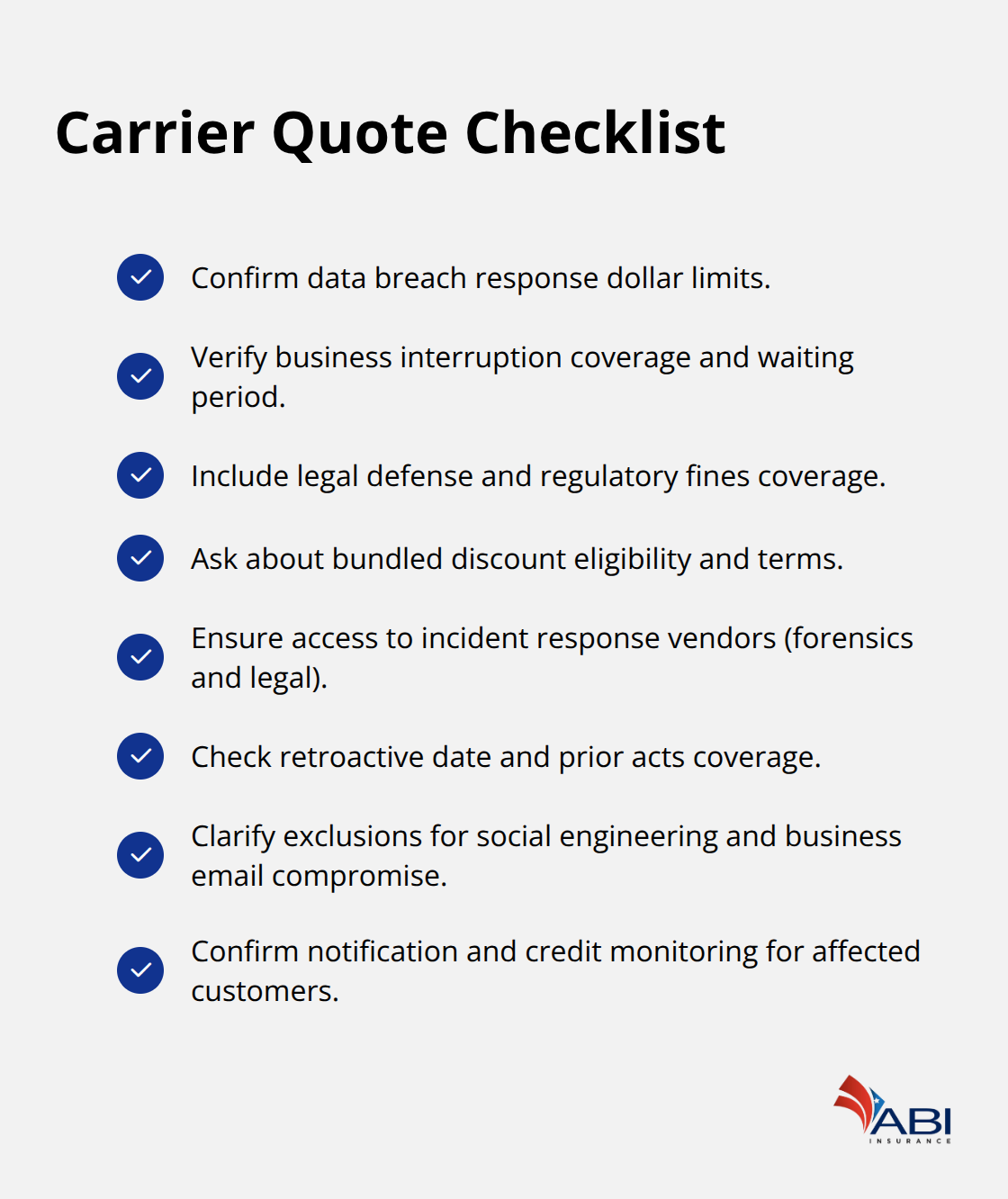
Bundling typically reduces your total premium by 10 to 15 percent compared to purchasing policies separately. This means a business paying $1,200 annually for general liability might add comprehensive cyber coverage for an additional $600 to $900 compared to $1,000 to $1,500 for a standalone policy. When requesting quotes specifically ask whether each quote includes data breach response, business interruption, legal defense, and regulatory compliance coverage with stated dollar limits for each category.
Review Policy Limits Against Your Actual Operations
Your insurance agent should review these policy limits against your actual data volume and customer base. A business with 500 customers needs different limits than one with 50,000. The agent should adjust coverage upward if your limits fall short of realistic incident costs. This review conversation often reveals that your initial quote underestimates your needs, which is precisely why working with an agent who understands your operations matters far more than simply accepting the first online quote you receive.
Final Thoughts
Cyber liability coverage is no longer optional for small businesses. Approximately 50 percent of cyberattacks target small to medium-sized businesses, and the financial consequences of inadequate protection can exceed $300,000 per incident when you factor in notification costs, forensics, legal fees, and lost income. Your standard business policies simply will not cover these expenses, which is why cyber liability policy tips consistently emphasize dedicated coverage that addresses data breach response, business interruption, and legal defense.
The practical steps outlined in this guide work because they address the real gaps in small business protection. Assessing your actual cyber exposure prevents you from purchasing coverage that misses your primary vulnerabilities, while bundling cyber liability with your general liability and commercial property policies reduces premiums by 10 to 15 percent and ensures your coverages coordinate during a crisis. Reviewing policy limits against your actual operations guarantees your coverage matches your risk rather than leaving you underinsured when an incident occurs.
Contact an insurance agent who understands both cyber threats and your specific business operations to move forward. Request quotes from carriers that offer bundled programs, and demand specific dollar limits for data breach response, business interruption, legal defense, and regulatory compliance. Contact ABI Insurance to discuss how cyber liability coverage fits into your overall risk management strategy and to receive personalized quotes that address your business’s unique vulnerabilities.


 Business Cyber Liability Insurance: Build a Strong Protective Layer









